










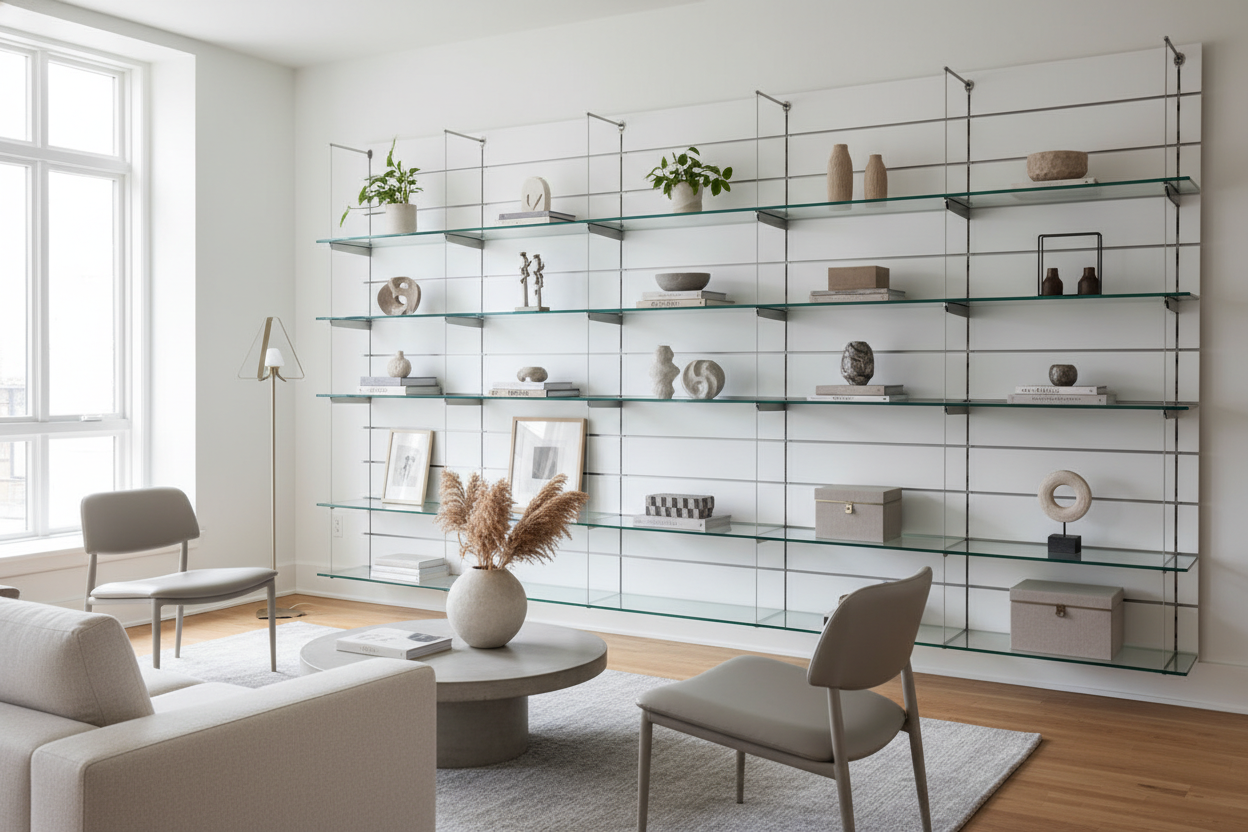
I spent three years trying to fit a massive streetwear collection into a 500-square-foot studio. Every time I copped a new pair of limited-edition sneakers, I had to play a high-stakes game of Tetris with my floor space. It felt like I was living in a warehouse, not a home. The breaking point came when I realized my furniture was the enemy. I was trying to display lightweight, beautiful items using heavy, light-blocking wood. Then I discovered glass slatwall shelves. By moving everything onto the walls, I finally stopped tripping over my own hobby.
- Zero Floor Footprint: Slatwall systems mount directly to studs, freeing up every inch of your carpet.
- Total Customization: You can move a shelf three inches to the left or two inches down in about five seconds.
- Light Flow: Glass doesn't cast the heavy shadows that wood or metal shelves do.
- Pro-Grade Durability: If it's designed to survive a busy retail store, it can handle your heavy art books.
Why I Finally Gave Up on Traditional Bookcases
Standard furniture is a space killer. I used to have a standard storage bookcase with glass doors that weighed about 150 pounds empty. It looked sophisticated, but it sat like a monolith in the corner, making the 12x14 room feel like a closet. The fixed shelves were the worst part; I had 10 inches of wasted air above my low-profile sneakers but couldn't fit a single tall art toy.
I tried DIY fixes first. I spent a weekend trading chunky wood ledges for floating glass, thinking the transparency would fix the vibe. It helped with the light, but the lack of adjustability was a nightmare. Once those brackets are drilled into the drywall, you're committed. If your collection grows or changes shape, you're back to patching holes and repainting. I needed a system that evolved as fast as my tastes did.
Stealing Display Secrets From Sneaker Boutiques
I was standing in a high-end sneaker boutique in Soho when it hit me. They weren't using 'furniture.' They were using retail fixtures. The walls were covered in clean, horizontal grooves, and they had dozens of glass shelves for slatwall holding everything from heavy hoodies to rare kicks. It looked like a gallery, not a store.
The beauty of the slatwall is the modularity. You aren't locked into a layout. I bought a few 4x8 foot panels, painted them the same matte grey as my walls, and suddenly I had a blank canvas. I could cluster three shelves together for a 'feature' look or spread them out to fill the entire wall. It’s the ultimate hack for anyone who likes to rearrange their room every three months when the 'new furniture' itch strikes.
Where to Actually Buy Retail-Grade Fixtures for a House
Don't just search for 'shelves' on a big-box site. You need to look for actual retail supply vendors. When you're hunting for a slatwall glass shelf, the most important spec is the glass type. If it isn't tempered, don't buy it. Tempered glass is about four times stronger than regular glass, and if it does break, it shatters into small, blunt chunks rather than dangerous shards.
Also, don't cheap out on the brackets. I've seen plastic ones, and they are trash. Look for chrome or powder-coated steel brackets with rubber 'bump-ons' to keep the glass from sliding. A standard 1/4-inch thick glass shelf can usually hold about 25-30 pounds if your slatwall is properly anchored to the studs. If you're planning on displaying heavy ceramic vases, go for the 3/16-inch or 1/4-inch thickness and keep the shelf depth under 12 inches to reduce leverage on the wall.
How to Stop Your Bedroom From Looking Like a Shopping Mall
The biggest risk with retail fixtures is that your bedroom can end up looking like a department store. To avoid the 'commercial' coldness, you have to balance the textures. I used warm LED strip lighting tucked into the slatwall grooves to give the glass a soft glow. Adding a few trailing plants like Pothos helps break up the hard lines of the glass and metal.
Balance is key. You can't have every wall be a floating glass display. I placed a heavy, grounded black cabinet with glass doors on the opposite wall. This provides a visual anchor for the room. The contrast between the 'heavy' traditional cabinet and the 'light' floating glass creates a designer look that feels intentional rather than just a storage solution. It makes the room feel lived-in and curated.
The Final Verdict: Are Modular Walls Worth the Hype?
After a year with this setup, I’m never going back to static shelving. Cleaning slatwall glass shelves is as simple as a quick wipe with Windex—no dusting deep, dark corners of a wooden box. The freedom to swap out a shelf for a hanging hook or a face-out bracket means my display never gets stale. I’ve even used the system to hang my bike during the winter months.
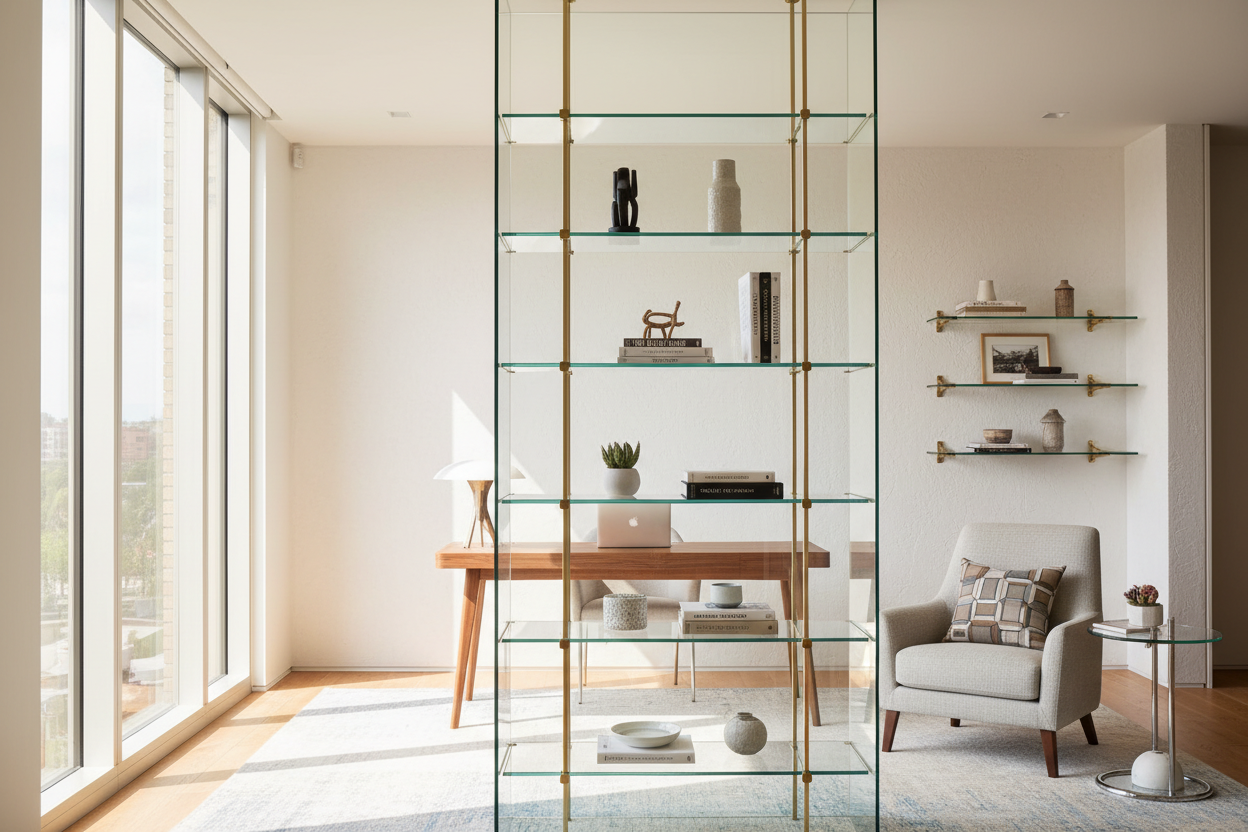
If you’re deciding between this and a four shelf glass display case, think about your future. A case is a box you fill; a slatwall is a system you grow with. My biggest mistake was not doing the whole wall from the start. I started with one panel and ended up adding three more because the look was so much cleaner than I expected. It’s the most 'pro' my apartment has ever looked.
How much weight can a glass slatwall shelf really hold?
If your slatwall is screwed into wall studs, a standard 12x24 inch tempered glass shelf can easily handle 25 pounds. Just make sure you use the proper metal brackets with support arms. Don't try to stack your entire encyclopedia collection on one, but for sneakers, cameras, or glass art, it's rock solid.
Is it hard to install slatwall panels at home?
It’s a two-person job because the panels are heavy (usually MDF), but it's not 'hard.' You just need a level, a stud finder, and a drill. Once the panels are up, adding the shelves takes zero tools—you just hook them into the grooves.
Does the glass get scratched easily by the metal brackets?
Not if you use vinyl or rubber 'cushions' on the bracket arms. Most retail-grade brackets come with these little clear stickers. They prevent the metal-on-glass contact, which stops scratches and keeps the shelf from sliding around if you bump into it.


Leave a comment
This site is protected by hCaptcha and the hCaptcha Privacy Policy and Terms of Service apply.