










I spent three years living with a black metal 'industrial' media unit that I bought during a late-night scrolling session. At the time, I thought it looked modern and edgy. In reality, it made my living room feel like a server room. Every time the bass kicked in during a movie, the thin metal shelves would rattle like a nervous snare drum.
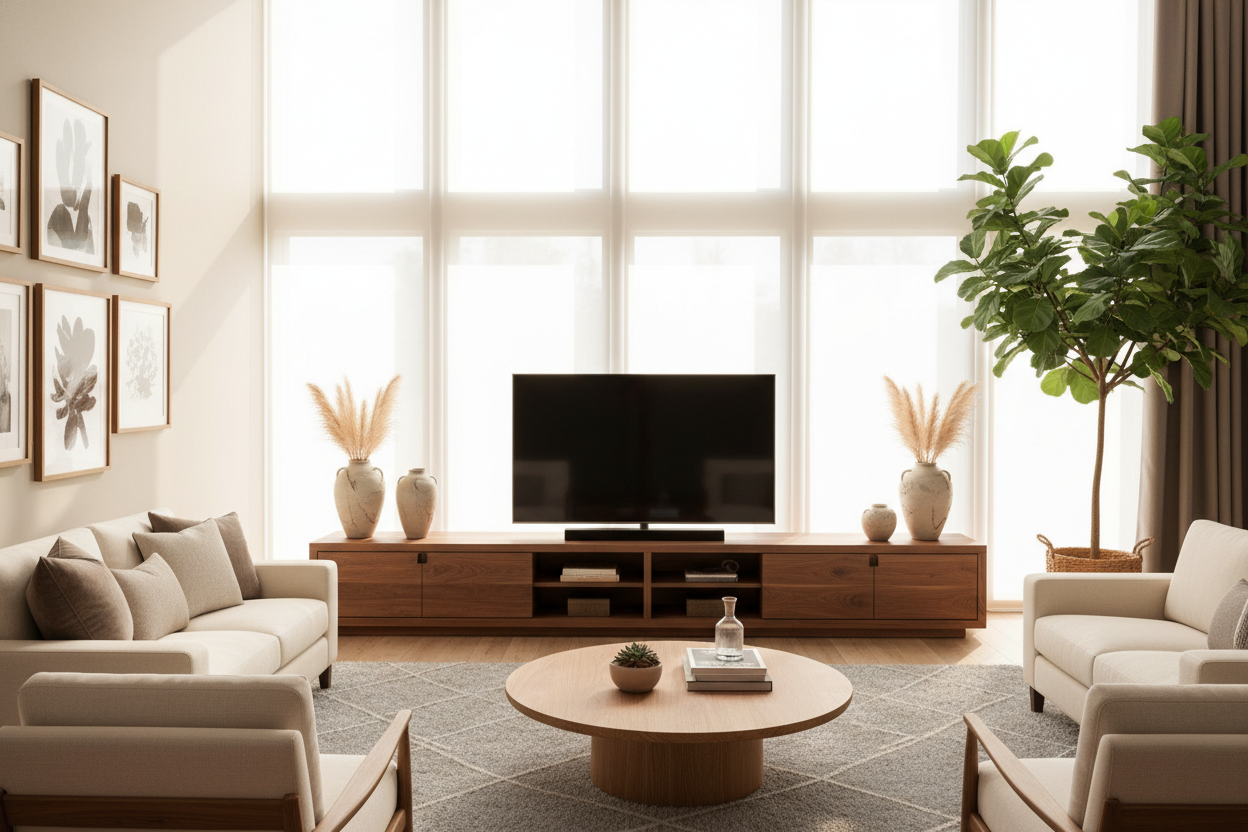
Last month, I finally swapped it for one of those wood tv stands 55 inch wide models I'd been eyeing. The change was instant. The room didn't just look better; it felt quieter, warmer, and significantly more adult. If you're still rocking a cold, wire-frame unit, it's time to talk about why timber is the superior choice for your 55-inch screen.
- Solid wood absorbs sound vibrations instead of rattling during action scenes.
- Wooden consoles naturally hide messy cable nests better than open metal frames.
- Real wood grain adds organic texture to a room full of glass and plastic electronics.
- A 55-inch width provides the perfect 'golden ratio' look for mid-sized TVs.
The Day I Realized My Metal Console Was Ruining the Vibe
The breaking point came during a rewatch of Dune. Every time a sandworm appeared, my TV stand joined the soundtrack with a high-pitched metallic buzz. I looked at the cold, black legs and the dusty glass top and realized my living room had zero personality. It looked like a college dorm that happened to have a nice rug.
I wanted a space that felt like a home, not a tech showroom. Metal is great for high-traffic kitchens or outdoor bistros, but in a cozy living room, it’s just harsh. I needed something with weight—something that didn't feel like it would tip over if I bumped it while vacuuming. Switching to a solid wood 55 inch tv table stand changed the entire energy of the corner.
Why Material Matters Just as Much as Dimensions
When you're shopping for Tv Stands, it’s easy to get obsessed with the length and height. But the material is what dictates the 'visual weight.' A metal stand is mostly negative space, which sounds good in theory but usually just exposes a tangled nightmare of HDMI cables and power strips. Wood offers a solid facade that grounds the television.
There's also the acoustic factor. Wood is a natural dampener. If you have a soundbar or speakers sitting directly on your console table for 55 inch tv setups, wood will provide a much richer, less 'tinny' sound than metal or glass. It’s the difference between a concert hall and a tin shed.
MDF, Veneer, or Solid Timber: What Actually Lasts?
Not all wood is created equal. When you’re hunting for wood tv stands 55 inch wide, you’ll see prices ranging from $150 to $1,500. The cheap stuff is usually MDF (medium-density fiberboard) with a paper 'wood-look' sticker. Avoid these if you can; the edges peel the moment they get hit by a vacuum or a spilled drink.
I usually recommend a high-quality wood veneer over a plywood core if you're on a budget, or solid mango or acacia wood if you can swing it. I remember when I Downsized To A Small Wood Tv Table And My Living Room Breathed Again, I was worried about losing storage, but the density of real timber made the smaller footprint feel much more substantial and premium than the 'manufactured wood' junk I had before.
Finding the Right 55 Inch TV Table Stand Proportion
A 55-inch TV is actually about 48 inches wide. If you buy a stand that is exactly 48 inches, the screen will overhang the edges, which looks top-heavy and precarious. A 55-inch wide stand gives you a few inches of breathing room on either side.
Because wood has more 'chunkiness' than metal, you don't need a massive unit to make a statement. Just ensure the depth is at least 15-18 inches. This gives you enough room for the TV legs and maybe a small plant or a stack of books to soften the look of the screen. Wood allows the stand to be a piece of furniture first and a tech support second.
The Coziness Payoff
The best thing about a wooden media unit is how it ages. Metal just gets scratched and looks dingy; wood develops a patina. It catches the light in the evening and makes the glow of the TV feel less clinical. My living room finally feels finished, and I no longer have to listen to my furniture vibrate every time there's an explosion on screen.
How much wider should a stand be than the TV?
Ideally, your stand should be at least 3 to 6 inches wider than the actual width of your TV screen. For a 55-inch TV (which is roughly 48 inches wide), a 55-inch or 60-inch stand is the sweet spot for a balanced look.
Is solid wood too heavy for an apartment floor?
Not at all. While a solid oak console is heavier than a metal one, it's nowhere near the weight limit of a standard floor. The weight actually helps with stability, making it much harder for pets or kids to accidentally wobble the screen.
How do I hide cables on a wood stand?
Look for units with 'cable management' holes pre-drilled in the back panel. If it doesn't have them, you can easily drill your own with a hole saw bit—something you definitely can't do with a metal or glass stand.


Leave a comment
This site is protected by hCaptcha and the hCaptcha Privacy Policy and Terms of Service apply.