










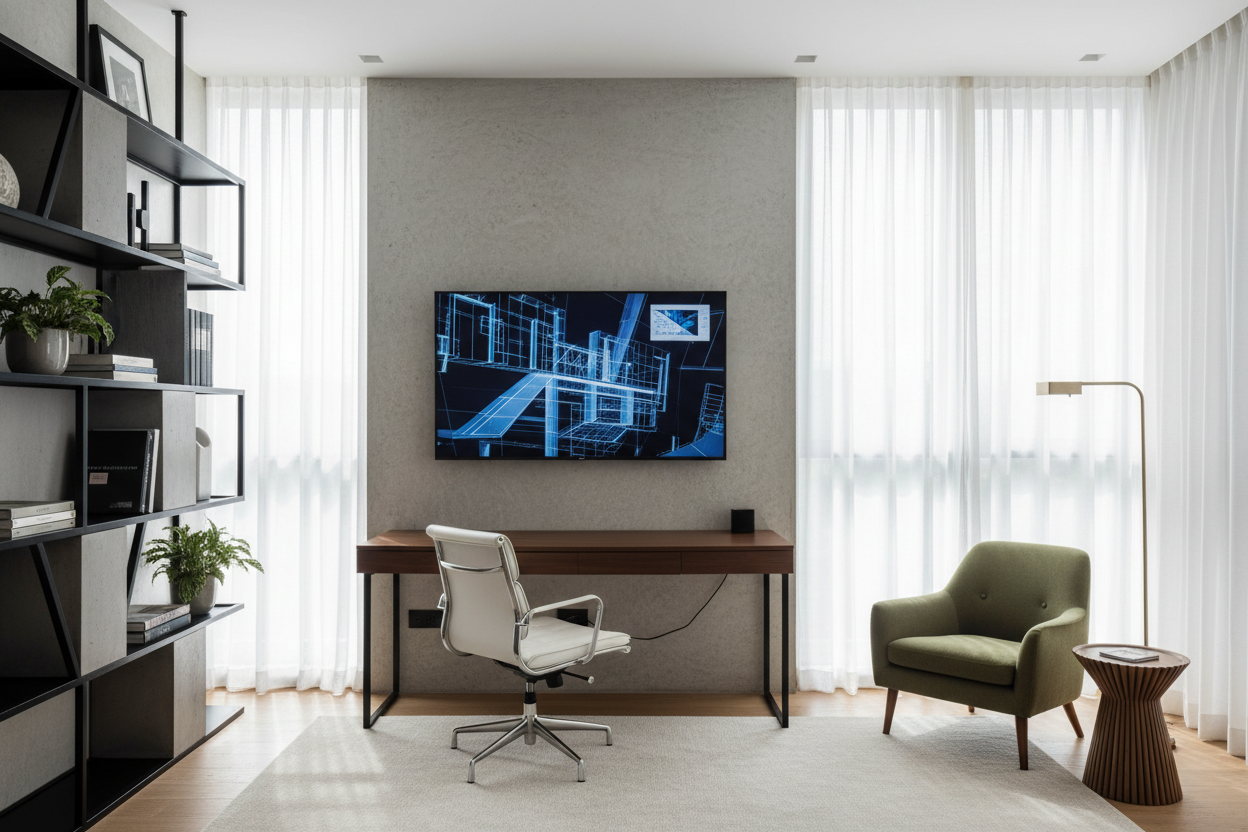
We have all seen it: a stunning living room aesthetic shattered by a clunky, industrial office chair or a desk that screams "cubicle." As a designer, I see clients struggle to integrate their professional requirements into their personal sanctuaries. The reality of the home work in job dynamic is that your environment must serve two masters: rigorous productivity and restorative comfort. It is not just about buying a desk; it is about curating a workflow that respects your architecture.
Quick Decision Guide: Office Integration
- Visual Weight: Choose desks with open legs or glass tops for small rooms to maintain an airy feel.
- Material Durability: For high-traffic surfaces, opt for high-pressure laminate (HPL) or sealed solid wood over delicate veneers.
- Ergonomic Discretion: Look for task chairs with hidden lumbar support rather than aggressive, exposed plastic spines.
- Lighting Temperature: ensure task lighting (4000K) can be dimmed or switched to match ambient room lighting (2700K) after hours.
Harmonizing Your Job with Home Aesthetics
When bringing your career into your living space, the primary challenge is maintaining visual continuity. We want to avoid the "pop-up office" look. The goal is to blend your job with home elements seamlessly.
Materiality and Texture
In a showroom, I always steer clients toward materials that age gracefully. If your workspace is within a living area or bedroom, avoid cold melamine or grey metals. Instead, look for walnut, white oak, or leather-wrapped surfaces. These materials bridge the gap between utility and luxury. A desk with a leather writing surface not only improves mouse tracking but adds a tactile warmth that standard office furniture lacks.
Accommodating Jobs in Home Layouts
Space planning is where most homeowners falter. Placing a desk directly against a wall is the default, but it is rarely the most inspired choice. To truly accommodate jobs in home settings, consider "floating" the desk.
By positioning your desk perpendicular to a window or facing into the room, you command the space rather than facing a blank wall. This layout creates a "command position," which psychologically separates work time from relaxation time. If space is tight, look for console desks with a shallow depth (under 20 inches) that can double as a vanity or display table when the laptop is closed.
Designing for Jobs by Home Standards
The criteria for jobs by home standards differ from corporate procurement. In a corporate office, durability is king. In a home, silence and scale matter more.
The Acoustic Footprint
Pay attention to the acoustics of your furniture. A metal filing cabinet clanging shut disrupts the domestic peace. Soft-close drawers and fabric-lined storage bins absorb sound, keeping the atmosphere serene. Furthermore, consider the silhouette of your chair. A high-back executive chair often dominates a room visually. A mid-back chair upholstered in boucle or velvet can offer necessary support without overwhelming the room's proportions.
My Personal Take on home work in job
I learned a hard lesson early in my career regarding the home work in job setup while designing a loft for a graphic designer. We selected a stunning, architectural glass desk. It looked incredible in the portfolio photos—sleek, modern, and invisible.
However, three weeks later, the client called me. The issue wasn't the look; it was the reality of daily use. Glass is cold to the touch on forearms during early mornings, and optical mice struggle on it without a pad, which ruined the "invisible" look we aimed for. Worse, the wire management was a nightmare because you could see every single cable dangling behind the glass. We ended up swapping it for a solid wood desk with a modesty panel and integrated cable channels. It taught me that tactile comfort and cable concealment are infinitely more important than a sleek silhouette for daily work.
Conclusion
Integrating a workspace into your home does not mean sacrificing your personal style. By prioritizing natural materials, smart positioning, and hidden ergonomics, you can create a space that invites productivity without looking sterile. Treat your office furniture as an extension of your home decor, not an interruption of it.
Frequently Asked Questions
How do I hide monitors when I am not working?
Consider a secretary desk (bureau) with a fold-down front or a cabinet with retractable doors. Alternatively, use a monitor arm to swing screens out of sight or drape a linen throw over them to soften the tech look.
What is the best rug size for a home office setup?
Ensure the rug is large enough that the chair casters do not catch on the edge. You need at least 30 inches of rug space behind the desk to allow for smooth movement without scratching the floor.
Can I use a dining chair as a desk chair?
Generally, no. Dining chairs lack the lumbar support and height adjustment needed for 8-hour shifts. If you dislike office chairs, look for "bridge" chairs—upholstered armchairs with hidden swivel bases and firmer foam density designed for longer sitting periods.


Leave a comment
This site is protected by hCaptcha and the hCaptcha Privacy Policy and Terms of Service apply.