










One of the most frequent complaints I hear from clients isn't that their workspace lacks equipment, but that it lacks soul. They often find themselves working from the dining table because their dedicated room feels sterile or uninspiring. Finding the right ideas for offices requires moving beyond simple utility and treating the space with the same design integrity as a living room or master suite. It is about balancing the tactile needs of comfort with the rigid requirements of productivity.
Key Features of a High-Performance Workspace
- Ergonomic Integrity: Prioritize chairs with adjustable lumbar support and seat depth over purely sculptural pieces.
- Lighting Layers: Combine ambient overhead lighting with task lighting (3000K-4000K) to reduce eye strain.
- Surface Durability: Choose materials like high-pressure laminate or sealed hardwoods that resist heat from electronics and coffee rings.
- Acoustic Control: Incorporate rugs, drapery, or acoustic panels to dampen echo and improve focus.
- Traffic Flow: Ensure a minimum of 36 inches of clearance behind the desk for chair movement.
Zoning and Layout: The Foundation of Focus
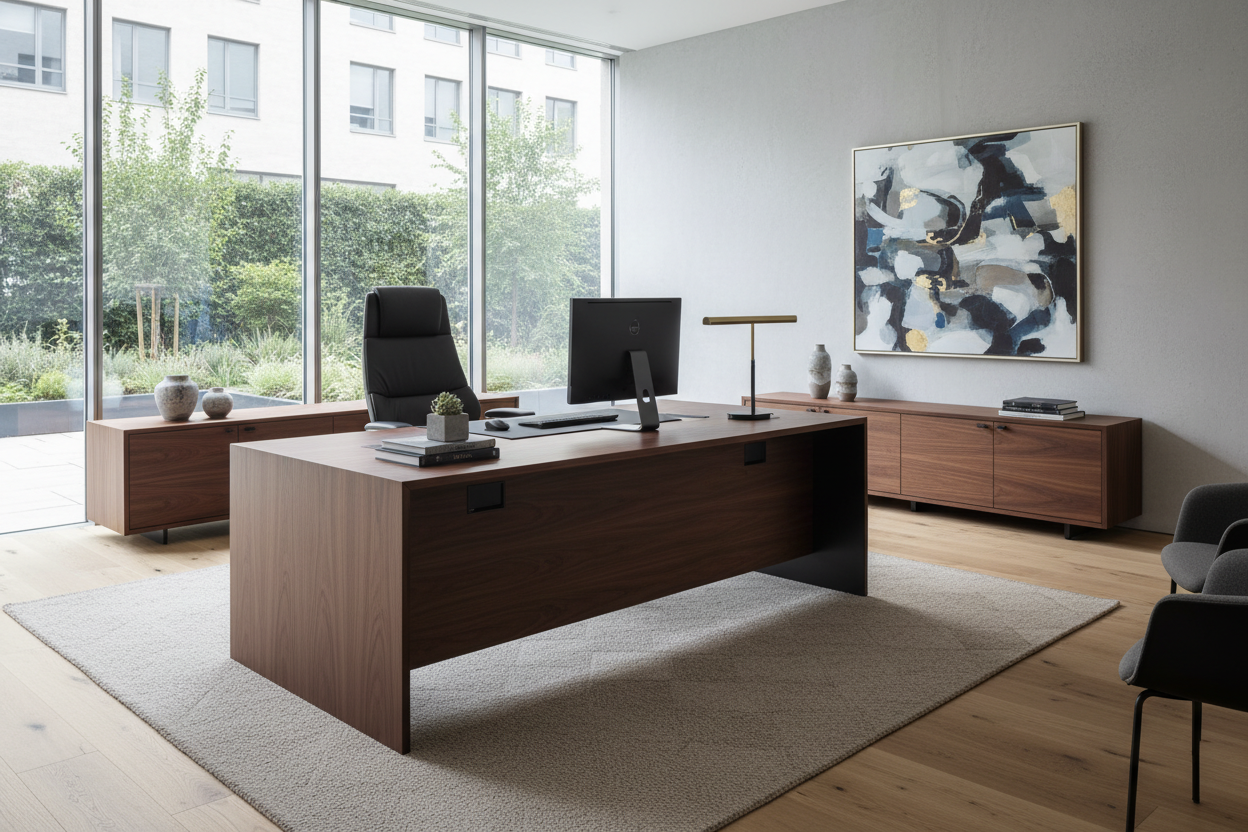
When generating ideas for office space, the biggest error is instinctively pushing the desk against a wall. This command position—facing the door—is not just Feng Shui; it is a psychological anchor that reduces subconscious anxiety. For a functional office room set up idea, consider 'floating' the desk. This allows you to utilize the wall behind you for accessible storage or a credenza, creating a professional backdrop for video calls.
Defining the Work Triangle
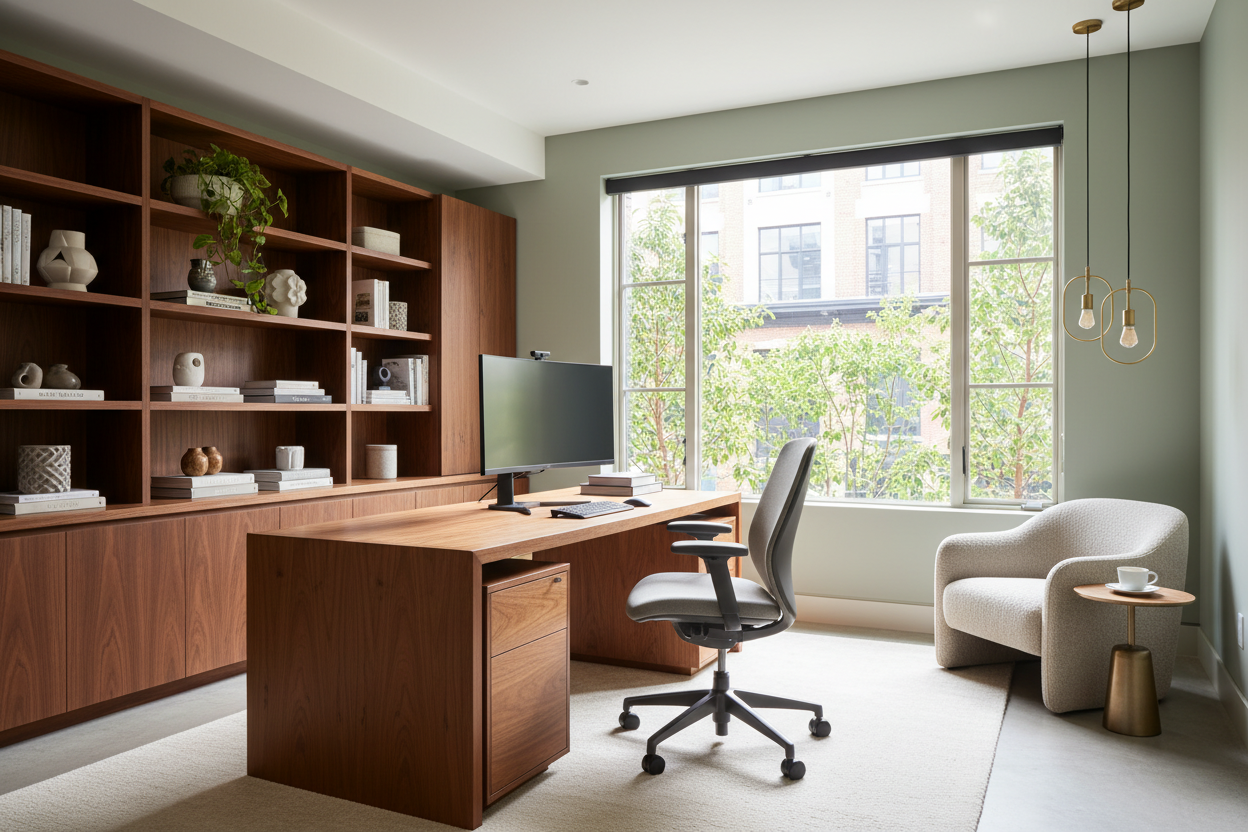
Just as in a kitchen, ideas for an office should revolve around a workflow triangle: your desk (active work), your reference area (filing/books), and your relaxation zone (a lounge chair or window seat). This separation prevents the feeling of being chained to a single spot and encourages micro-movements throughout the day.
Materiality: Choosing Furniture That Lasts
Office furniture ideas often prioritize the visual over the practical. However, as a specialist, I advise looking at the 'hand' of the material. If you are considering wood, solid walnut or oak offers warmth and can be refinished, whereas veneers, while cost-effective, are unforgiving of deep scratches.
The Seating Dilemma
When exploring furniture ideas for office seating, look at the rub count of the fabric. A commercial-grade fabric (over 50,000 double rubs) ensures your chair won't look tired after a year of daily use. Leather is classic, but ensure it is full-grain; bonded leather will peel within two years of heavy use.
Lighting and Ambiance
Great office ideas always hinge on lighting. Avoid the single 'boob light' in the center of the ceiling. Instead, layer your lighting. Use a floor lamp for soft, ambient glow in the corner, and a high-quality articulated desk lamp for task work. This reduces contrast glare on your monitor. If you are looking for office picture ideas to hang on the walls, select non-reflective glass for your frames to prevent distracting glare from these light sources.
My Personal Take on Ideas for Offices
I learned a hard lesson early in my career regarding ideas for office room surfaces. I once designed a sleek, monochromatic space for a client using a matte black, soft-touch laminate desk. Visually, it was stunning—architectural and moody. However, within a week, the client called me. The surface was a magnet for oils; every time they touched it, it left a greasy fingerprint that was nearly impossible to wipe off without specialized cleaner.
It taught me that office area ideas must survive the 'reality test.' Now, I always test surface samples with my own hands (and a coffee mug) before recommending them. If you are looking at room office design ideas, avoid high-maintenance finishes on horizontal surfaces. A textured wood grain or a quality linoleum top hides dust and fingerprints far better than pristine matte or high-gloss finishes ever will.
Conclusion
Curating the perfect workspace is less about decoration and more about behavioral design. By selecting durable materials, planning for movement, and layering your lighting, you create an environment that supports your best work. Don't settle for a generic setup; invest in pieces that offer both longevity and style.
Frequently Asked Questions
How do I make a small office feel bigger?
To maximize ideas for office space in small rooms, utilize vertical storage. Tall bookcases draw the eye upward. Also, consider a desk with exposed legs (parsons style) rather than a solid block desk, as seeing the floor underneath makes the room feel more expansive.
What is the best desk depth for computer work?
For adequate focal depth, aim for a desk that is at least 30 inches deep. This allows you to place your monitor at arm's length, reducing eye strain, which is a critical consideration in modern office furniture ideas.
Is a standing desk worth the investment?
Yes, but only if you actually use the function. A variable-height desk is one of the most practical great office ideas for long-term health. Look for dual-motor options for stability and smooth transitions between sitting and standing heights.

Leave a comment
This site is protected by hCaptcha and the hCaptcha Privacy Policy and Terms of Service apply.