










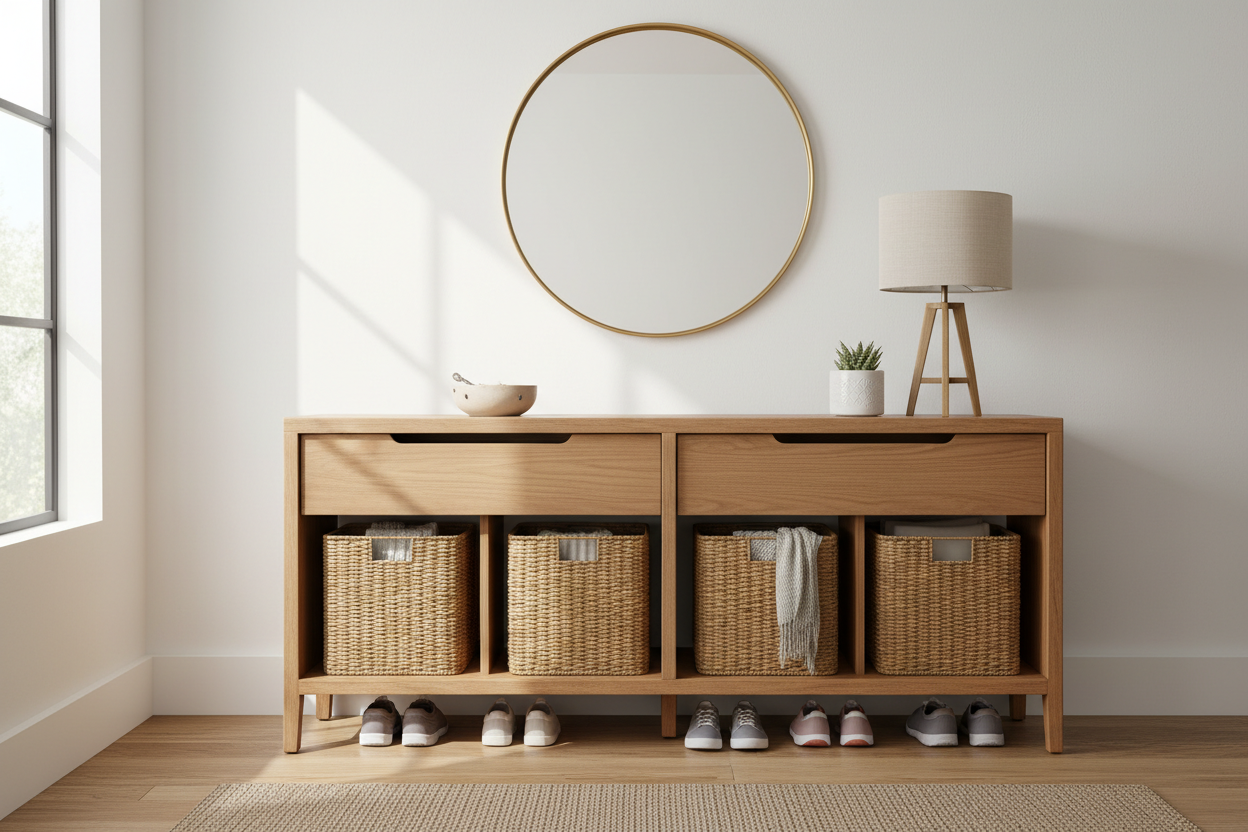
Your entryway sets the tone for the rest of your home, yet it is often the most chaotic space in the house. Between kicked-off shoes, piles of unopened mail, and keys that seem to vanish into thin air, the foyer can quickly become a source of stress rather than a welcoming transition zone. The most effective solution to this common problem is investing in the right furniture piece—specifically, hallway tables with storage capabilities. These units serve as the command center of the home, offering a designated spot for daily essentials while anchoring the design of your corridor.
Choosing the right piece goes beyond just picking something that looks nice in a catalog. You have to balance the specific dimensions of your walkway with the volume of items you need to hide. A table that is too deep will impede traffic flow, while one that lacks sufficient drawers or shelving will just become another surface for clutter to accumulate. The goal is to find a piece that acts as a functional drop zone without cramping the visual or physical space of your entry.
The Reality of a Cluttered Hallway
For years, my own front entrance was a disaster zone. I live in a house with a particularly narrow corridor leading from the front door to the living room. Without a dedicated surface, I developed a bad habit of tossing my keys on the stairs and leaving mail on the dining table, which then migrated to the kitchen counter. It wasn't until I actively measured the space and hunted down a slim hall console table with storage that the chaos subsided. I opted for a unit with two shallow drawers for papers and a lower shelf where I placed wicker baskets for winter gear. The difference was immediate. Having a specific drawer for keys and a basket for gloves meant I stopped losing things, and the hallway suddenly looked like a designed space rather than a dumping ground.
Measuring for Flow and Function
Before you fall in love with a specific aesthetic, you must understand the constraints of your architecture. Hallways are high-traffic zones. You need to ensure that adding furniture doesn't create a bottleneck. A good rule of thumb is to maintain at least 36 inches of walking clearance. If your hallway is standard width, you are likely looking for a table with a depth between 10 to 14 inches. Anything deeper than 15 inches usually starts to feel intrusive in a standard corridor.
Length is equally important. A tiny table in a long hallway looks lost, while a massive unit can overwhelm a small vestibule. Visual balance matters. If you have a long, blank wall, consider a wider console to fill the horizontal space. This also gives you more surface area for lighting and decor, which helps brighten what is often a dark part of the home.
Types of Storage Configurations
Not all hall tables with storage are created equal. The configuration you choose should depend entirely on what you are trying to organize. If your primary issue is paper clutter—menus, bills, school permission slips—you need drawers. Drawers are the best way to hide the "ugly" necessities of life while keeping them accessible. Look for units with smooth-gliding runners; in a narrow space, you don't want to be fighting with a stuck drawer every time you need a pen.
If your clutter is bulkier, such as backpacks, shoes, or dog walking gear, maximizing hallway table storage requires open shelving or lower cabinets. Open shelves are versatile because you can add baskets or bins that match your decor. This hides the visual noise of fifty different items while keeping them contained. For households with pets or small children, enclosed cabinets at the bottom of the console can prevent items from being dragged out onto the floor.
Material and Durability Considerations
Entryway furniture takes a beating. It gets bumped by grocery bags, scratched by keys, and occasionally damp from wet umbrellas. When selecting hallway tables with storage, prioritize durable materials. Solid wood or high-quality veneers are generally more forgiving than glass or high-gloss lacquer, which show fingerprints and dust instantly. A distressed wood finish or a matte metal frame can hide minor wear and tear much better than pristine white painted finishes.
Visual weight is another factor to consider. In a small or dark hallway, a solid block of wood might feel too heavy. A table with legs and an open bottom shelf feels airier and allows light to pass through, making the hallway feel larger. Conversely, if you have a large, grand foyer, a solid chest-style console can provide the necessary grounding and gravitas to the space.
Styling Your Console Table
Once you have the functional aspects covered, the fun part is styling. The surface of your table is prime real estate for setting the mood of your home. Since hallways often lack natural light, a table lamp is a practical addition that adds a warm glow. A mirror hung above the console is a classic designer trick for a reason: it reflects light and makes the narrow space feel twice as wide. It also gives you a place to check your appearance before rushing out the door.
To prevent the surface from becoming cluttered again, use a "catch-all" tray. This gives your keys, wallet, and sunglasses a specific home on the tabletop so they don't migrate across the entire surface. By grouping small items in a tray, the rest of the table remains clear for decorative objects like a vase of fresh flowers or a stack of art books.
Integrating the Table into Your Routine
The best furniture in the world won't help if you don't change your habits. When you introduce a hall console table with storage into your home, take a moment to assign a purpose to every drawer and shelf. The top drawer is for keys and outgoing mail. The bottom basket is for shoes. The middle shelf is for the dog leash. When everything has a home, maintenance becomes effortless. You stop thinking about where to put things and simply place them where they belong. This small shift in furniture and mindset turns the most stressful part of coming home into a seamless transition.
Frequently Asked Questions
What is the ideal depth for a hallway table?
For most standard hallways, a depth of 10 to 12 inches is ideal. This provides enough surface area for a lamp and keys without protruding too far into the walking path. If your hallway is exceptionally wide, you can go up to 15 or 18 inches, but ensure you maintain at least 3 feet of clearance for walking.
Can I use a console table if I have a radiator in the hallway?
Yes, you can find console tables designed to fit over radiators, often called radiator covers or console shelves. Alternatively, look for a table with high legs and no lower shelf that can clear the height of the radiator, but be mindful of heat damaging the material or items stored inside drawers directly above the heat source.
How do I keep the storage drawers from becoming junk drawers?
Use drawer dividers or small internal organizers. By compartmentalizing the drawer interior, you force yourself to put items in specific slots rather than tossing them in randomly. Make it a habit to declutter these drawers once a month to toss out old receipts or expired coupons.

Leave a comment
This site is protected by hCaptcha and the hCaptcha Privacy Policy and Terms of Service apply.