










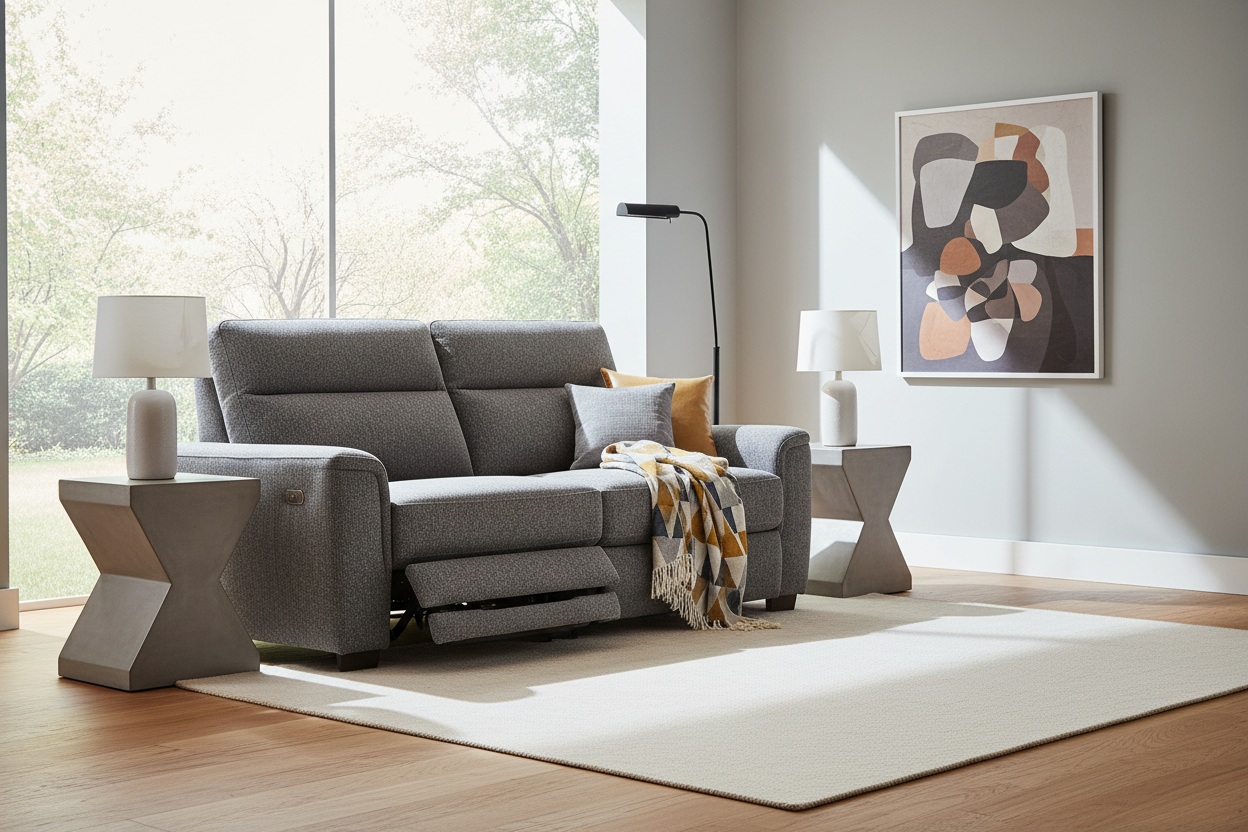
One of the most frequent dilemmas I encounter in residential projects is the tension between pure ergonomic comfort and visual elegance. Clients often crave the relaxation of a motion sofa but fear the bulky, dated aesthetic associated with traditional recliners. However, the modern cloth loveseat recliner has evolved significantly. It is no longer just a functional item for the den; with the right silhouette and textile selection, it can serve as a sophisticated anchor for your living space.
Key Features to Look For
If you are scanning the market for the perfect piece, prioritize these elements to ensure longevity and style:
- Performance Fabric Grade: Look for Crypton or high-performance weaves if you have pets or children; standard cotton blends may pill over time.
- Wall-Hugger Mechanism: Essential for tighter spaces, allowing the unit to recline fully while placed only inches from a wall.
- Seat Suspension: Sinuous springs paired with high-density foam (1.8 lbs or higher) prevent the dreaded "hammocking" effect.
- Frame Construction: Kiln-dried hardwood frames offer superior stability compared to plywood or particleboard.
Choosing the Right Upholstery: Texture and Durability
When selecting fabric reclining loveseats, the tactile experience is paramount. Unlike leather, which can feel cold initially, cloth offers immediate warmth. However, not all textiles are created equal. For high-traffic family rooms, I recommend a tight-weave polyester blend or a microfiber. These materials mimic the soft hand of natural fibers but offer the resilience required for a fabric double recliner that sees daily use.
The Visual Weight of Fabric
Textured fabrics like chenille or boucle add visual weight to a room. If your space is small, opt for a smoother, linen-look weave in a neutral tone. This reduces the heavy appearance often associated with motion furniture, keeping the room feeling airy.
Mechanism Matters: Power vs. Manual
The debate between manual levers and a fabric power reclining loveseat usually comes down to convenience and aesthetics. Power options often allow for infinite stopping positions, which is critical for finding that ergonomic "sweet spot." Furthermore, modern power units often feature internal motors, eliminating the unsightly handle on the side of the armrest, resulting in a cleaner, more tailored profile.
If you choose a power reclining loveseat fabric model, ensure you have a floor outlet nearby. Floating a power recliner in the center of a room requires a battery pack to avoid the tripping hazard of a cord snaking across the rug.
Functionality: The Console Debate
A fabric recliner loveseat with console is a polarizing choice in interior design. Functionally, it is brilliant for home theaters, offering storage for remotes and cup holders. Aesthetically, however, it breaks the visual continuity of the sofa, making it look distinctly like "theater seating."
If you are placing the piece in a formal living room, I advise against the console. Stick to a continuous seat design. However, for a basement lounge or media room, a cloth reclining loveseat with console is practically a requirement for the ultimate movie night experience.
Lessons from My Own Projects
I want to share a specific realization I had while specifying a cloth loveseat recliner for a client in a downtown loft. We chose a beautiful, deep charcoal velvet unit. It looked stunning on the showroom floor. However, two months later, the client called me about "shading."
Because it was a recliner, the friction from sliding back and forth to extend the footrest caused the velvet nap to crush in a very specific pattern on the lower back cushion. It looked permanently wet or stained, even though it wasn't. It was a harsh lesson in physics: motion furniture creates friction that stationary furniture does not. Now, I strictly avoid high-pile velvets for recliners. I always steer clients toward textured weaves or tweeds where the friction wear is invisible. Also, a practical tip for delivery: measure your doorways. Recliners often have removable backs, but the metal rails can still scratch narrow doorframes if you aren't careful.
Conclusion
Integrating motion furniture into a stylish home is no longer a compromise. By focusing on streamlined silhouettes, durable performance textiles, and appropriate scale, you can enjoy the luxury of a recliner without sacrificing your design vision. Assess your room's traffic flow, choose your fabric wisely, and prioritize the frame's integrity.
Frequently Asked Questions
How much space do I need behind a reclining loveseat?
Standard recliners typically require 8 to 12 inches of clearance behind the chair to fully recline. However, "wall-hugger" or "zero-wall" models track forward as they recline, requiring as little as 2 to 4 inches of clearance.
Are power reclining loveseats durable?
Yes, modern motors are tested for thousands of cycles. The most common failure point is actually the switch or the power transformer, both of which are easily replaceable parts, unlike a bent frame on a manual lever mechanism.
How do I clean a cloth loveseat recliner?
Check the cleaning code on the tag (usually under the footrest). "W" means water-based cleaners, "S" means solvent-based (dry clean only), and "WS" allows both. Vacuuming the crevices regularly is crucial, as crumbs can migrate into the mechanical gears and cause noise.

Leave a comment
This site is protected by hCaptcha and the hCaptcha Privacy Policy and Terms of Service apply.