










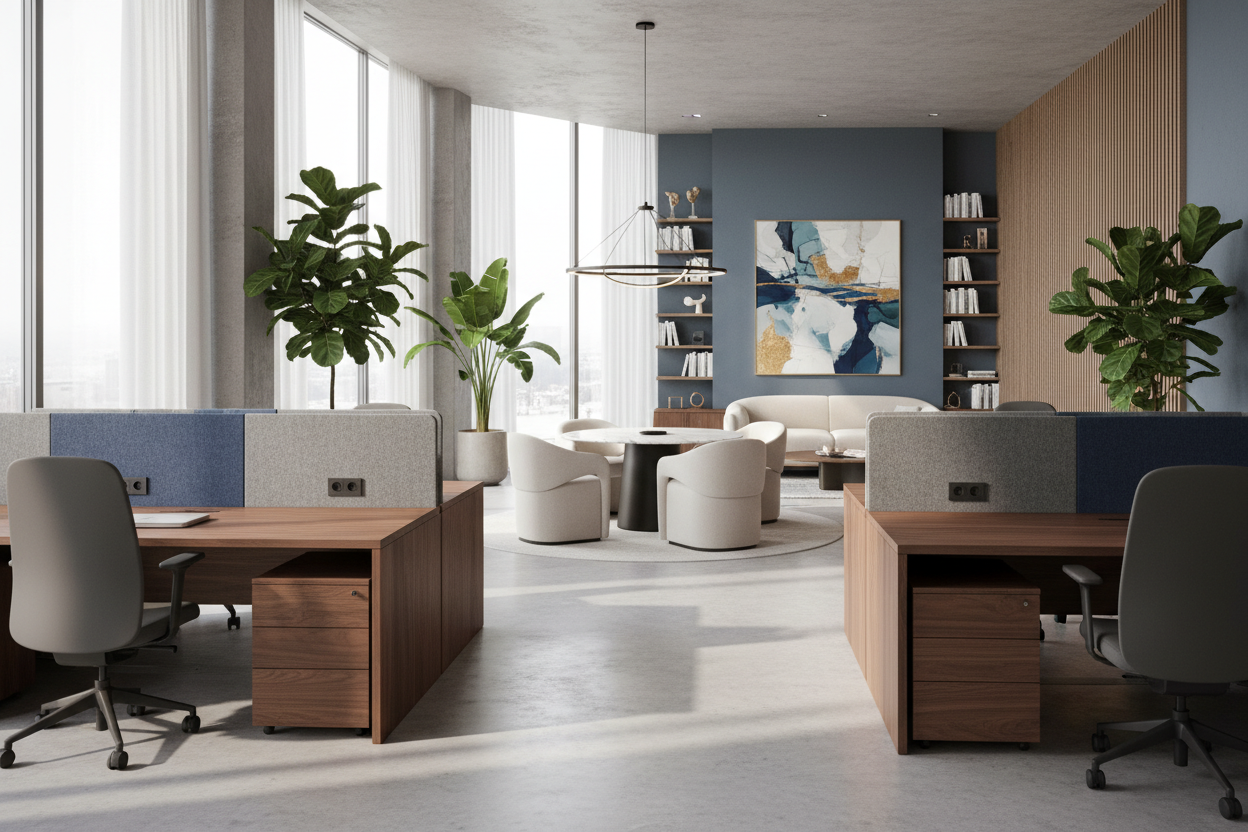
It happens more often than you would think. A client calls me into their commercial space, and the energy in the room is completely flat. The desks are crammed together, the overhead lighting is harsh, and the furniture looks like it was ordered from a big-box catalog a decade ago. When your workspace lacks intention, both productivity and morale take a direct hit.
If you are looking for business office makeover ideas, you need to think beyond just slapping a new coat of paint on the walls. A successful redesign requires balancing ergonomics, visual weight, and daily workflow. By the end of this guide, you will know exactly how to plan your layout, allocate your budget, and choose pieces that actually support your team's day-to-day tasks while looking incredibly sharp.
Quick Decision Guide
- Prioritize circulation: Always leave at least 36 to 42 inches of walkway space between back-to-back desks to prevent a cramped, stressful environment.
- Layer your lighting: Ditch the sole reliance on fluorescent overheads. Add ambient floor lamps and task lighting at individual workstations to reduce eye strain.
- Invest where you sit: Allocate the largest portion of your furniture budget to ergonomic seating rather than expensive desk frames.
- Use acoustic dampening: Incorporate soft materials like upholstered partitions, rugs, or acoustic ceiling baffles to absorb sound in open-concept spaces.
Space Planning and Workflow
The 36-Inch Rule for Commercial Layouts
The biggest mistake business owners make is trying to maximize headcount at the expense of human comfort. When mapping out your floor plan, negative space is just as important as the furniture itself. You must leave a minimum of 36 inches of clearance behind any desk chair. If that walkway is a main traffic artery to a printer or conference room, push that clearance to 48 inches. Cramped spaces create physical friction, which quickly turns into mental frustration for your team.
Defining Zones Without Walls
In open-concept layouts, you need to establish clear zones for different types of work. Use visual anchors like large area rugs or structural bookcases to separate high-collaboration areas from quiet, focus-heavy zones. A low-profile credenza can act as a subtle room divider while providing essential storage, keeping the sightlines open but the boundaries clear.
Style and Brand Coordination
Implementing Company Office Decor Ideas
Your workspace should subtly reflect your brand's identity without feeling like a theme park. When brainstorming company office decor ideas, focus on color psychology and texture layering. If your brand is energetic and modern, incorporate high-contrast accents like matte black metal frames mixed with warm walnut veneers. If your business requires a calming, trustworthy atmosphere—like a law firm or therapy clinic—lean into monochromatic palettes, natural oak, and heavy, textured fabrics like boucle or wool.
Comfort and Ergonomics
The Truth About Trendy Seating
We have all seen those sleek, minimalist office chairs on social media that look like modern art. Unfortunately, many of them offer zero lumbar support. When selecting seating for a full-time staff, look for adjustable seat depth, tilt tension, and breathable materials. The visual weight of the chair matters, too. A sea of bulky, high-back black leather executive chairs will visually shrink a room. Opt for mid-back mesh or tailored upholstered chairs with a slim silhouette to keep the room feeling airy.
Designer's Honest Take
I learned a hard lesson about practicality a few years ago when designing a boutique marketing agency. The client insisted on outfitting the entire bullpen with stunning, custom-cut tempered glass desks. They looked incredible on installation day.
By week two, it was a disaster. Glass shows every single fingerprint, coffee smudge, and speck of dust. Worse, there was nowhere to hide the cords, so the underside of every desk looked like a tangled nest of black wires. We ended up having to retrofit the desks with frosted film and expensive under-mount cable trays just to make the space functional. Now, I strictly advocate for wood veneer or high-quality commercial laminates with built-in grommets for any high-traffic workspace. Aesthetics should never sabotage daily function.
Frequently Asked Questions
How much should I budget for an office makeover?
Costs vary wildly, but a good rule of thumb for mid-tier commercial furniture and minor cosmetic updates (paint, rugs, lighting) is $1,500 to $2,500 per employee workstation. Always prioritize the chair and monitor arms before spending on decorative items.
How can I make a small office feel larger?
Maximize natural light by keeping window treatments minimal. Use furniture with exposed legs rather than heavy, solid-to-the-floor pieces, which allows the eye to travel underneath and creates the illusion of more square footage. Stick to a cohesive, light color palette.
What is the most durable material for office desks?
Commercial-grade high-pressure laminate (HPL) is the gold standard for durability. It resists scratches, heat, and moisture far better than solid wood or standard veneers, making it ideal for spaces where coffee spills and heavy equipment are daily realities.

Leave a comment
This site is protected by hCaptcha and the hCaptcha Privacy Policy and Terms of Service apply.