










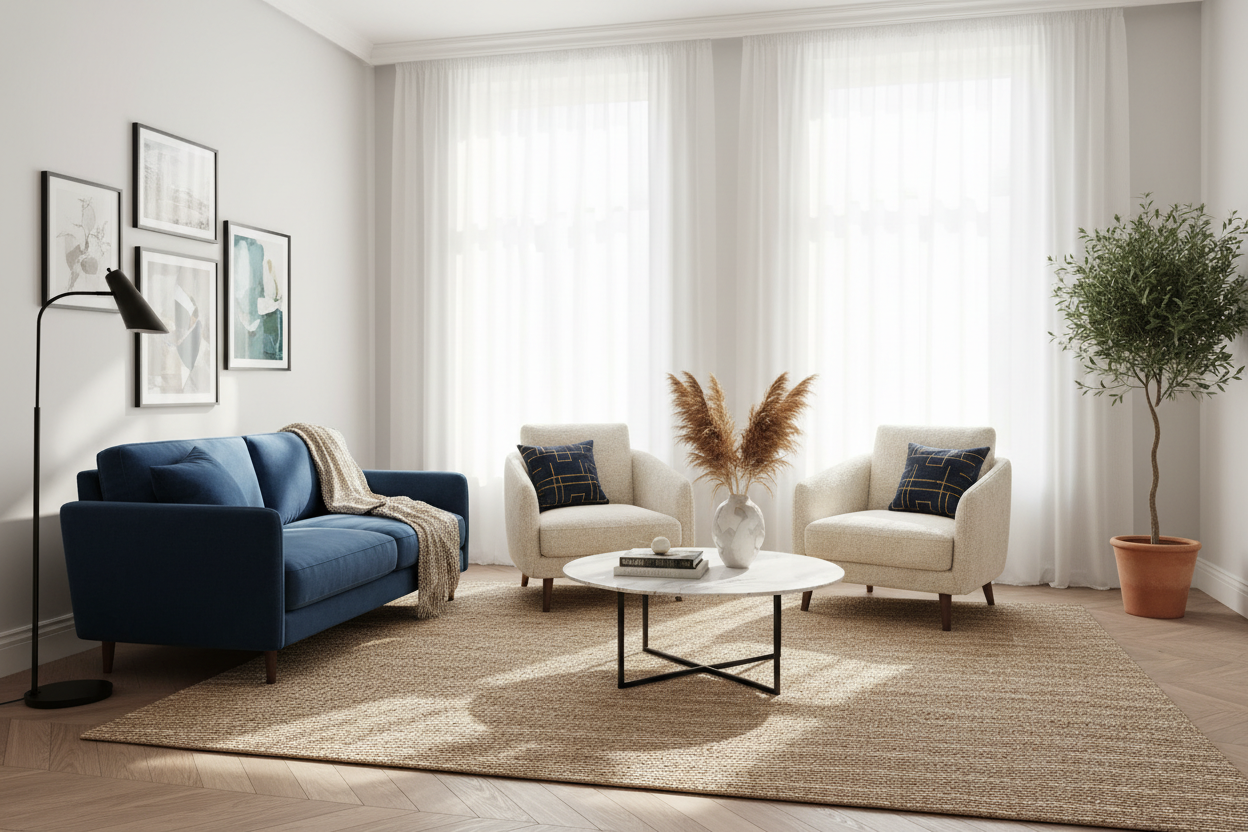
One of the most frequent dilemmas I encounter when consulting on living room layouts isn't choosing the color—it's mastering the scale. Many homeowners default to a massive sectional that swallows the room, ignoring the refined versatility of a **loveseat and chair** arrangement. This combination offers a sophisticated alternative that improves traffic flow and creates intimate conversation zones, but it requires a keen eye for proportion to avoid looking cluttered.
Quick Decision Guide: Key Features to Look For
- Scale & Proportion: Ensure the seat heights of both pieces are within 2 inches of each other to maintain a consistent visual horizon.
- Visual Weight: Pair a heavy, upholstered loveseat with a leggy, open-frame chair to prevent the room from feeling boxy.
- Fabric Durability: Look for 'high-performance' fabrics with a double-rub count over 30,000 if the furniture is for daily use.
- Functionality: Determine if the set is for lounging (deep seats, soft fill) or formal sitting (upright back, firm foam).
Mastering Visual Balance and Silhouette
The days of purchasing a 'suite' where everything matches perfectly are behind us. In high-end design, we aim for coordination, not replication. When selecting love seat chairs to pair with a larger piece, contrast is your best friend. If your loveseat features a skirted base and rolled arms (traditional), consider a chair with exposed wood legs and a cleaner track arm (transitional). This creates a dynamic interplay between the pieces.
However, you must respect the 'visual weight.' A delicate velvet slipper chair will look lost next to an overstuffed leather loveseat. The goal is to have the pieces occupy the same volume of space visually, even if their actual dimensions differ.
Materiality: Beyond the Aesthetic
As a specialist, I cannot stress enough the importance of what lies beneath the upholstery. When evaluating a sofa loveseat and chair combination, ask about the suspension system. Eight-way hand-tied springs remain the gold standard for longevity, but high-quality sinuous springs are acceptable for loveseats.
For the cushions, standard density is usually 1.8 lbs. If you want that sink-in luxury that retains its shape, upgrade to high-resiliency foam wrapped in down. This prevents the dreaded 'pancake' effect that plagues cheaper furniture after a year of use.
Space Planning for Tight Quarters
In urban apartments or cozy dens, a small loveseat and chair set is often the only viable solution. The trick here is 'negative space.' By choosing pieces raised on legs rather than sitting flush on the floor, you allow light to pass underneath, tricking the eye into perceiving the room as larger.
Position the loveseat as the anchor against the longest wall or floating in the center to define the zone. Angle the chair at 45 degrees toward the loveseat to encourage conversation. This layout is far superior to pushing everything against the walls, which paradoxically makes a small room feel empty yet cramped.
Lessons from My Own Projects: The 'Floating' Mistake
Early in my career, I designed a sitting room for a client in a historic row house. We selected a stunning, low-profile Italian loveseat and a high-back wing chair. On the floor plan, it looked perfect. However, once installed, I realized a critical error: we floated the loveseat in the center of the room, exposing its back.
The back of the loveseat had a visible zipper and a seam that wasn't pattern-matched perfectly—details you don't notice in a catalog but scream 'unfinished' in a luxury space. We had to scramble to add a console table behind it to hide the flaw. Now, I always physically inspect the back of any chair love sofa grouping if it's going to float away from a wall. Furthermore, I learned that in narrow rooms, mixing arm styles (one bulky, one slender) can save you a crucial 3 inches of walking path, which makes the difference between a bruised shin and a graceful exit.
Conclusion
Curating the perfect seating arrangement is about balancing form with function. By paying attention to scale, varying your textures, and investing in quality suspension, you can create a space that feels both collected and inviting. Don't be afraid to break the mold—your home should reflect your personal style, not a showroom catalog.
Frequently Asked Questions
How much space should be between a loveseat and a chair?
Ideally, you should allow 18 to 24 inches between seating pieces. This distance is close enough to pass a drink or converse comfortably without raising your voice, but far enough to allow for legroom and flow.
Can I mix leather and fabric in a loveseat and chair combo?
Absolutely. In fact, this is a designer favorite. A cognac leather loveseat paired with a boucle or linen chair adds immense textural interest. Just ensure the undertones (warm vs. cool) of the materials complement each other.
What is the standard size of a small loveseat?
A standard small loveseat, often called an 'apartment sofa,' typically ranges from 48 to 60 inches in width. Always measure your entryways and hallways before purchasing to ensure delivery is possible.

Leave a comment
This site is protected by hCaptcha and the hCaptcha Privacy Policy and Terms of Service apply.