










Have you ever stared at an empty dining room corner or a chaotic home office and realized you just need things hidden away? Floor space in modern homes is premium, which means the most efficient way to organize is to go vertical. A tall wood cabinet solves this exact problem, offering generous utility without eating into your room's footprint.
However, buying the wrong vertical piece can easily make your space feel top-heavy, cramped, or disjointed. In this guide, we will break down exactly how to size, select, and style these pieces so they function beautifully in your home.
Quick Decision Guide
- Measure ceiling clearance: Leave at least 12 to 18 inches between the top of the cabinet and your ceiling so the room retains a sense of breathing room.
- Assess your clutter: If you are hiding daily messes, prioritize a tall wood cabinet with doors rather than open shelving.
- Check baseboards: Look for pieces with recessed bases or adjustable feet to clear thick North American baseboards without leaving a massive gap behind the unit.
- Anchor everything: Any vertical furniture over 30 inches tall must be secured to a wall stud, especially if placed on carpet.
Scaling Your Cabinet to Your Room
When introducing a large vertical piece, proportion is everything. A massive, solid oak unit in a tight apartment will quickly overpower the living area, while a slender piece might get entirely lost in a vaulted suburban family room.
Ceiling Height and Visual Weight
In standard homes with eight-foot ceilings, an 80-inch tall wood storage cabinet leaves just enough negative space above the piece to prevent the room from feeling like a warehouse. If you need maximum utility but want to keep the room feeling airy, tall wooden cabinets with shelves draw the eye upward, making the ceiling feel higher than it actually is. Closed units carry more visual weight, so place them where they won't block natural light from windows.
Choosing the Right Configuration
Your storage needs should dictate the silhouette. Are you displaying curated ceramics, or hiding old tax documents and board games?
The Power of Concealed Storage
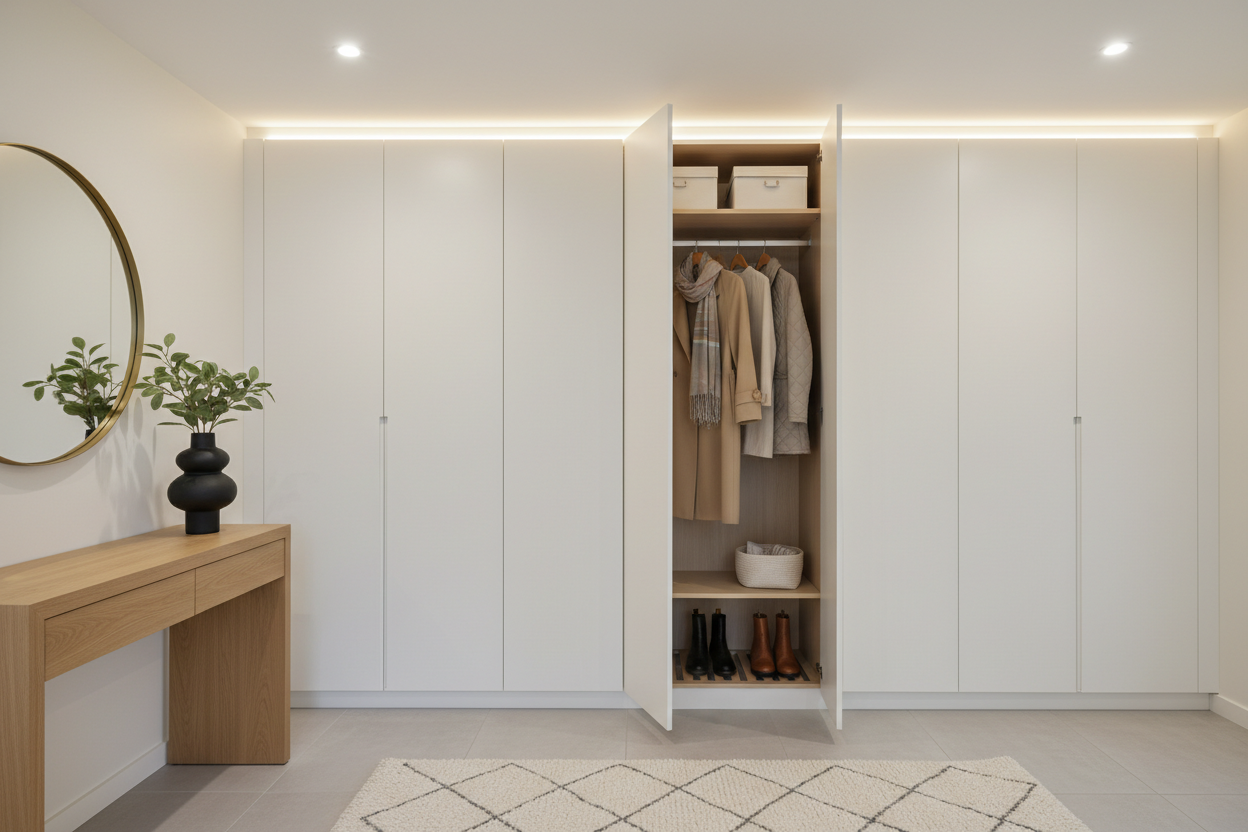
For high-traffic areas, a tall wood cabinet with doors and shelves is generally the smartest investment. It allows you to organize irregularly shaped items completely out of sight. When clients ask for maximum hiding spots, I always source a tall wood storage cabinet with doors and shelves. If you want the best of both worlds, look for a split design: glass doors on top for display, and solid wood at the base to hide the clutter. For dedicated pantries or linen closets, tall wooden storage cabinets with doors and shelves offer the structural support needed for heavy stacks of plates or towels.
Wood Tones and Room Coordination
Matching all your woods perfectly is a dated approach. Instead, aim for complementary undertones. A light wood tall cabinet in white oak or ash works beautifully in transitional and minimalist spaces, adding warmth without heavy bulk. Conversely, a rich walnut wooden tall cabinet with doors grounds a mid-century or traditional room.
When mixing woods, keep the undertones consistent—pair warm woods with warm woods, and cool with cool. This allows your tall wooden storage to feel intentional. For instance, pairing a cherry dining table with a cool-toned gray wash wood tall cabinet with doors will inevitably clash, whereas pairing it with a warm mahogany piece creates harmony.
Designer's Honest Take
Early in my career, I sourced a stunning, heavy mahogany tall wood storage cabinet for a client's 1920s craftsman home. It looked incredible in the showroom. But once delivered, we ran into a massive issue: the home's original, uneven hardwood floors made the piece lean precariously forward. Because the cabinet had a solid plinth base instead of individual adjustable legs, my installer had to spend two hours cutting custom shims just to make it safe and level.
Another hard truth? Solid wood tall storage cabinets with doors and shelves are incredibly heavy. If you are a renter who moves frequently, a fully solid piece will be a nightmare to transport. In those cases, a high-quality wood veneer over an MDF core is actually a more practical choice than solid timber, as it resists warping in fluctuating apartment humidity, costs significantly less, and won't break your movers' backs.
Frequently Asked Questions
How deep should a tall wood storage cabinet be?
For general living room storage or books, 12 to 15 inches is ideal. If you are using tall wood storage cabinets as a pantry or for large dinnerware, look for depths between 18 and 20 inches.
Can I use a wooden tall cabinet in a bathroom?
Yes, but humidity is the enemy of wood. Ensure the piece is sealed with a high-quality polyurethane finish. Avoid engineered wood tall storage cabinets with doors and shelves that feature cheap edge banding, as steam will eventually cause the edges to peel and swell.
How do I style the top of a tall cabinet?
Usually, less is more. If you have less than 12 inches of clearance, leave it completely empty to avoid a cramped look. If you have more space, a single trailing plant or a low, textured ceramic bowl adds interest without adding clutter.

Leave a comment
This site is protected by hCaptcha and the hCaptcha Privacy Policy and Terms of Service apply.