










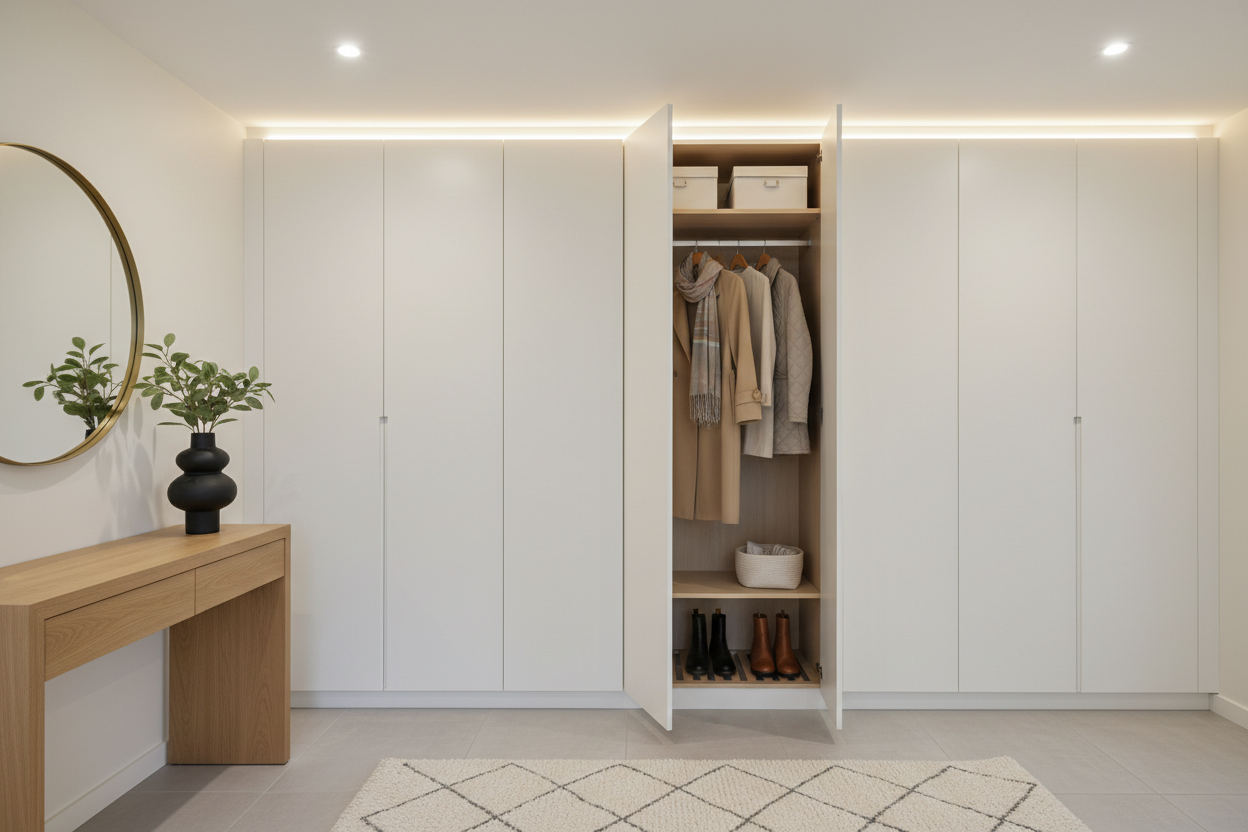
The foyer sets the immediate tone for your entire home, serving as the transition between the outside world and your personal sanctuary. Yet, without proper planning, this space often devolves into a chaotic "drop zone" of shoes, umbrellas, and heavy jackets. The solution is not merely storage, but sophisticated concealment. A well-executed entryway coat closet with doors bridges the gap between high-end aesthetics and essential everyday utility, ensuring your home makes an impeccable first impression.
Key Features to Look For
- Standard Depth: Ensure a minimum interior depth of 24 inches (61 cm) to allow coat hangers to sit perpendicular to the wall without impeding door closure.
- Ventilation: Look for louvers or breathable joinery to prevent musty odors from damp outerwear.
- Hardware Durability: Heavy winter coats require robust hinges and rods; opt for reinforced steel over standard aluminum.
- Swing Clearance: Measure the arc of the door swing to ensure it does not conflict with the front entry door or traffic flow.
Architectural Integration and Layout
When planning an entry door closet, the goal is to make it feel like part of the architecture rather than an afterthought. In my design practice, I often advocate for built-in millwork over freestanding units for a seamless look. If you are working with a recessed niche, ensure the trim work matches the baseboards and crown molding of the adjacent hallway. This visual continuity tricks the eye into perceiving the space as larger and more cohesive.
Choosing the Right Material and Finish
The durability of your closet exterior is paramount, as this high-traffic area is prone to scuffs from bags and shoes. While solid wood offers timeless appeal and repairability, high-quality engineered veneers are often more stable against humidity changes near the front door.
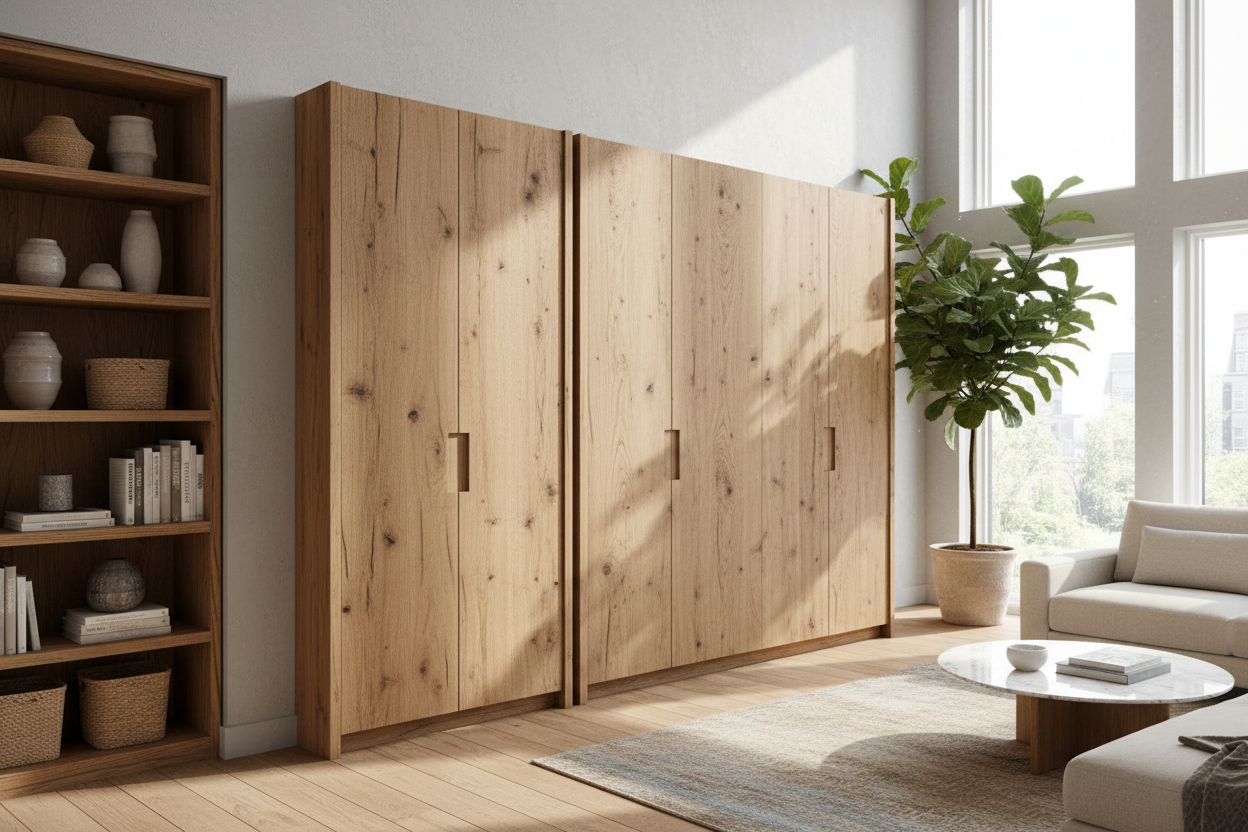
For a modern entryway closet, consider a flat-panel design in a matte lacquer finish. This resists fingerprints better than high-gloss options and provides a soft, tactile surface. If your aesthetic leans traditional, raised panel doors in white oak or walnut add texture and warmth immediately upon entry.
Door Mechanics and Visual Balance
The type of door you select dictates the flow of the entryway. Exploring various entryway coat closet door ideas is crucial for spatial ergonomics:
Hinged vs. Sliding Systems
Standard hinged doors offer full visibility of the closet's contents but require significant floor space to open. In narrow corridors, I almost exclusively recommend sliding doors or bi-fold systems. However, be wary of cheap track hardware; invest in soft-close, top-hung systems to avoid the dreaded "rattle" and to keep the floor threshold smooth and trip-free.
Mirrored Surfaces
Incorporating mirrors onto the door fronts serves a dual purpose. It allows for a final outfit check before leaving and bounces natural light around the foyer, making a cramped entry feel expansive.
Internal Ergonomics and Lighting
A dark closet is a useless closet. Integrated LED strip lighting triggered by a door sensor is a non-negotiable feature in luxury design. Furthermore, adjustable shelving is superior to fixed joinery. Boot heights vary, and the ability to reconfigure the bottom 18 inches of your entryway closet with doors can double your shoe storage capacity.
Lessons from My Own Projects
I once designed a stunning, seamless floor-to-ceiling closet for a client in a humid coastal town. We focused heavily on the visual aspect, using a flush, airtight seal to mimic a wall panel. It looked incredible, but I learned a hard lesson about physics.
Because the closet was practically airtight, damp wool coats from the rainy season never dried properly, leading to a lingering musty smell that greeted guests. I had to retrofit the joinery with discreet ventilation slots at the top and bottom. Now, I always insist on passive airflow mechanisms—even hidden routed channels behind the door trim—to ensure the closet breathes as well as it looks. It’s a small detail that saves the client from an embarrassing odor later.
Conclusion
Investing in a high-quality closet transforms your entryway from a cluttered pass-through into a curated experience. By focusing on durable materials, proper depth, and ergonomic door mechanisms, you create a space that is as welcoming as it is functional. Take the time to measure twice and select finishes that endure.
Frequently Asked Questions
What is the minimum depth for a coat closet?
The standard minimum depth is 24 inches. However, if you are tight on space, you can reduce this to 12-14 inches by using a front-facing valet rod, where hangers face you rather than sitting sideways.
How do I modernize a dated entryway closet?
Swapping out hardware is the easiest fix. Replace standard round knobs with long, linear pulls in matte black or brushed brass. Additionally, painting the doors the same color as the walls can create a contemporary, monochromatic look.
Should I use a bi-fold or a swing door for a small foyer?
For tight spaces, bi-fold doors are generally superior as they require half the swing radius of a standard door. However, ensure you buy high-quality tracks, as bi-folds are notorious for coming off their rails if the hardware is low-grade.

Leave a comment
This site is protected by hCaptcha and the hCaptcha Privacy Policy and Terms of Service apply.