










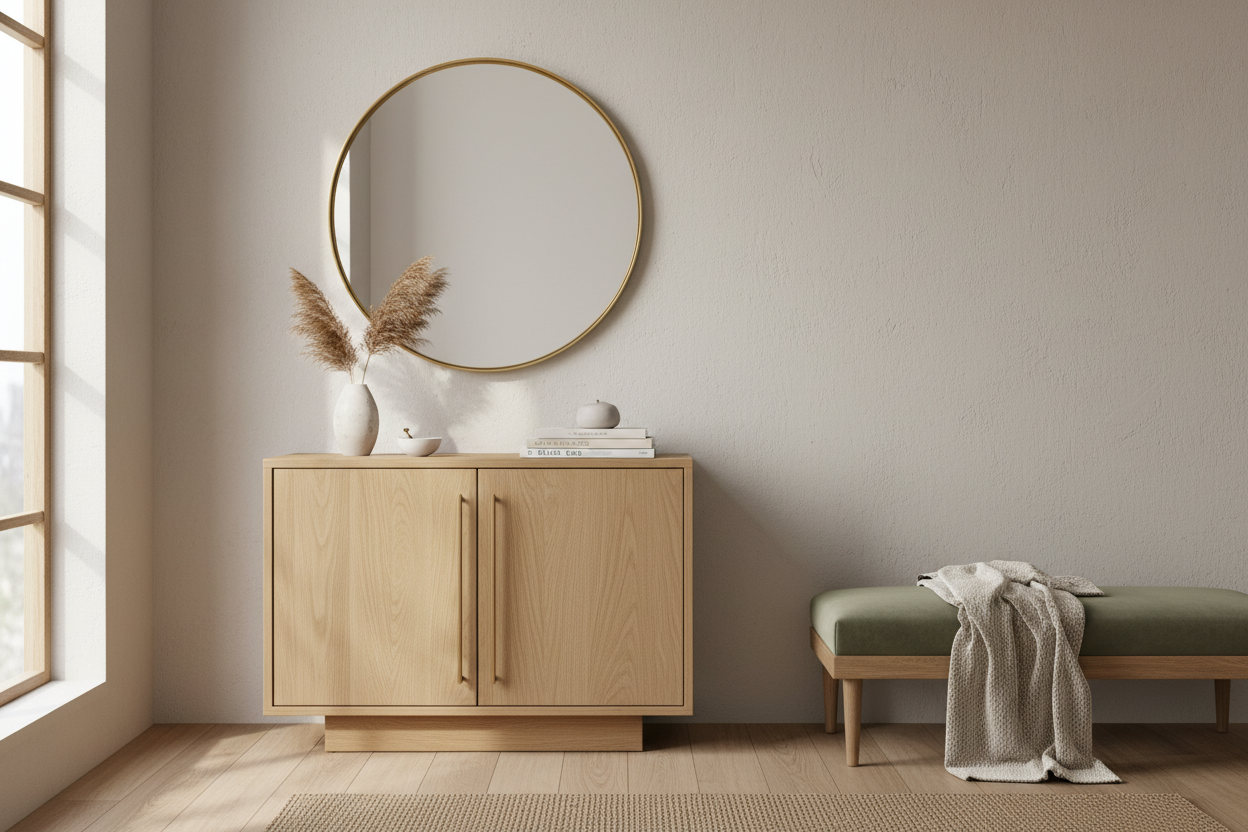
You know that 36-inch gap next to your fridge or the space between the window trim and the doorframe? You measure it, find it is exactly three feet, and buy a standard piece of furniture to fill it. Then it arrives, and you realize you forgot about the baseboard molding. Suddenly, that perfect fit is a nightmare of scratched paint and doors that can't actually swing open. I have spent a decade trying to wedge standard-sized pieces into non-standard lives, and I am here to tell you: the 35 inch wide cabinet is the secret weapon you are overlooking.
- The 'One-Inch' Rule: A 35-inch cabinet provides the clearance needed for baseboards and light switches that a 36-inch piece blocks.
- Proportions Matter: Pairing a 35-inch width with a 35-inch height creates a grounded, square silhouette that looks custom-built.
- Visual Breathing Room: That half-inch of space on either side makes a room feel curated rather than 'shoved in.'
- Versatility: These pieces transition perfectly from entryways to dining alcoves without overwhelming the floor plan.
The Problem With 'Standard' 36-Inch Furniture
Standard 36-inch furniture is the industry default, but it is rarely your friend in a tight spot. Most builders leave exactly 36 inches for a 'standard' opening, which means a 36-inch cabinet will literally scrape the drywall on its way in. If you have the luxury of a massive open floor plan, you are better off going big with something like a 60 Inch Wide Storage Cabinet With Doors to ground the room. But in a hallway? That extra inch of clearance is the difference between a professional-looking layout and a cramped mess.
I have seen too many people force a 3-foot dresser into a 3-foot nook. The result is always the same: you can't clean the dust bunnies on the sides, and the drawers might catch on the door casing. Going with a 35 cabinet gives you the utility of a large piece without the architectural headache.
Enter the 35 Inch Wide Cabinet (My Unlikely Hero)
A 35-inch cabinet is that rare, slightly undersized find that actually lets your walls breathe. It is the Goldilocks of storage. When you use a 35 inch wide cabinet with doors, you get enough interior volume for a full set of linens or a mountain of board games, but you do not lose the ability to actually reach the light switch located just outside the nook. That missing inch changes the entire visual weight; the piece looks like it was chosen specifically for the spot, rather than just being the only thing that would fit.
Finding a 35-inch cabinet can feel like a scavenger hunt because most filters jump from 30 to 36 inches. But when you find one, buy it. The 35 wide cabinet (or even a 35.5) allows for a shadow line on the sides, which is a high-end design trick that makes the furniture feel like a freestanding piece of art rather than a built-in gone wrong.
Where This Exact Dimension Works Best
Think about the 'dead zones' in your home. The space between two windows where a 36-inch piece overlaps the trim, or a shallow dining room alcove that feels too empty but won't accommodate a full sideboard. I usually find that browsing storage furniture with a filter set specifically for 34-35 inches reveals pieces that solve these transitional zone problems instantly.
In a tight entryway, a 35" wide cabinet keeps the path clear for groceries and strollers. In a bathroom, a 35-inch high cabinet provides a perfect surface for towels without being so tall it feels top-heavy in a small footprint. It is the ideal size for a 35 inch wide storage cabinet that needs to hold heavy items like kitchen stand mixers or printers while staying tucked out of the main traffic flow.
Don't Forget About Height (Because Proportions Matter)
Height is the other half of the battle. A 35 inch tall cabinet creates a nearly square silhouette that feels incredibly stable. If you go too tall with a narrow footprint, the piece starts to look like a chimney. Keeping it around 35 inches high—essentially a 35-inch tall storage cabinet—means it sits just below most window sills. This makes it a natural fit for sunrooms or under a gallery wall where you want the furniture to support the art, not compete with it.
Doors, Drawers, or Glass? Choosing Your Fighter
If you are hiding a mess—and let's be honest, most of us are—go for a solid 35 inch wide cabinet with doors. It hides the mismatched Tupperware or the kids' craft supplies perfectly. However, if you are styling a moody dining room, a black cabinet with glass doors adds depth without feeling like a heavy block of wood. The glass reflects light, which is essential when you are working with a 35-inch high cabinet in a darker corner.
For those who need organization, a 35 inch wide cabinet with drawers is a lifesaver in a home office. It is wide enough to hold legal-sized files or oversized art paper, but compact enough to fit under a standard-height floating shelf. Personally, I avoid the 35 inch wide wall cabinet unless it is for a laundry room; on a main wall, the floor-standing version feels much more intentional.
How to Style It Without Making It Look Cluttered
The top of a 35-inch cabinet is prime real estate. Because the footprint is compact, you have to be disciplined. Skip the 'tray of trinkets' and go for one large, statement lamp on the left, a small stack of two thick books on the right, and a single piece of art leaning against the wall. This 'rule of three' keeps the 35 in cabinet from looking like a junk drawer for your mail. If it is a 35-inch tall cabinet, the height is perfect for a catch-all bowl for keys that doesn't require you to lean over awkwardly.
Personal Experience: The Baseboard Blunder
I once spent $600 on a gorgeous mid-century sideboard that was exactly 36 inches wide. My nook was 36.25 inches. I didn't account for the 0.75-inch baseboard on both sides. I ended up having to pry the baseboards off the wall just to slide the thing in, and it looked terrible—like the house was eating the furniture. Now, I always hunt for a 35-inch cabinet to give myself that 'oops' room. It saves your walls and your sanity.
FAQ
Is 35 inches a standard furniture size?
Not really. 24, 30, and 36 are the industry standards. That is why a 35-inch cabinet often looks more expensive—it doesn't look like it came off a massive assembly line designed for builder-grade homes.
Can I use a 35-inch cabinet in a bathroom?
Yes, but check the depth. A 35-inch wide storage cabinet is great for towels, but if the bathroom is narrow, make sure the doors have room to swing open without hitting the toilet or tub.
Will a 35-inch cabinet fit in a 36-inch closet?
Yes, and it is actually the better choice. It gives you room to reach around the sides to plug in a vacuum or grab something that fell behind it, which is impossible with a 36-inch unit.

Leave a comment
This site is protected by hCaptcha and the hCaptcha Privacy Policy and Terms of Service apply.