










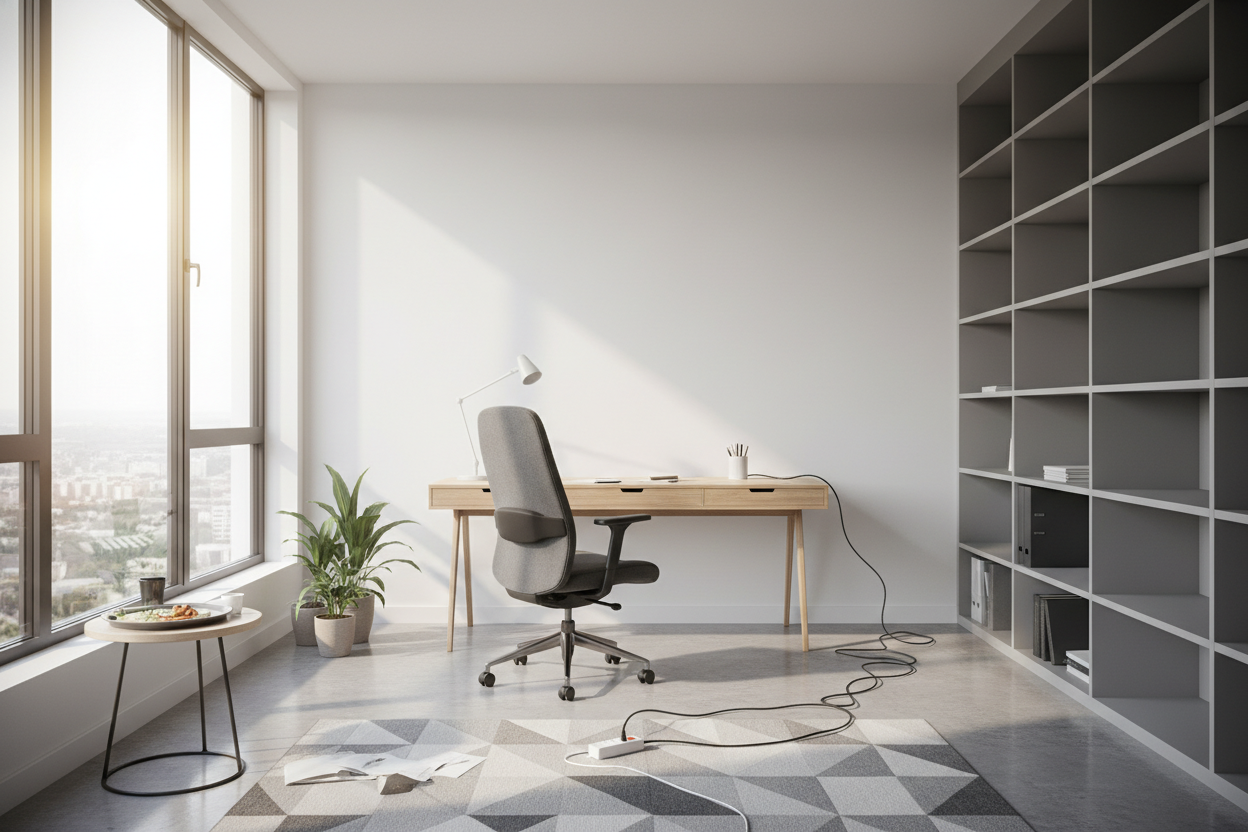
Securing one of the coveted home office jobs in uk offers immense flexibility, but it often brings a hidden design challenge: trying to integrate professional productivity into a domestic setting without compromising on style. Many professionals land these roles only to find themselves working from a dining table that wreaks havoc on their posture and focus. As a designer, I see clients treat their workspace as an afterthought, yet the environment you curate is directly linked to your output and mental clarity. Let’s dismantle the makeshift setups and build a workspace that commands respect.
Quick Decision Guide: The Essentials
- Desk Depth: Ensure a minimum depth of 60cm to accommodate monitors and maintain focal distance.
- Material Choice: Opt for solid wood (oak or walnut) over hollow-core veneer for durability and acoustic dampening.
- Lighting Layers: Combine ambient overhead lighting with a dedicated task lamp to reduce eye strain.
- Ergonomics: Prioritize a chair with adjustable lumbar support and seat depth over purely aesthetic velvet tub chairs.
- Acoustics: Incorporate soft furnishings (rugs, curtains) to absorb echo during calls.
Zoning Your Space for UK Home Office Careers
When preparing for uk home office careers, the first hurdle is often spatial. Unlike sprawling American studies, UK housing stock—from Victorian terraces to modern new builds—often requires clever zoning. The biggest error I see is facing the desk directly against a blank wall. This feels claustrophobic and limits creative thinking.
Instead, position your desk perpendicular to a window. This allows for natural light to wash across your work surface without creating the glare that occurs when the window is directly behind or in front of you. This layout also establishes a 'power position,' giving you a command of the room which psychologically boosts confidence during video conferences.
Materiality and Texture: Beyond the Laminate
If you are browsing uk home office jobs vacancies, you are likely planning for a long-term arrangement. Consequently, your furniture investment should reflect that longevity. Cheap laminate desks chip easily and often have a 'hollow' sound when you type or set down a coffee mug. This subtle auditory feedback feels temporary and cheap.
Solid Wood vs. Veneer
For a luxury aesthetic that ages gracefully, solid timber is superior. An oiled oak desk develops a rich patina over time and can be sanded down if scratched. If solid wood is outside the budget, look for high-grade architectural veneers applied to MDF, which is more stable than chipboard and resists warping in fluctuating temperatures.
The Ergonomic Silhouette
Many uk home office jobs require long hours of sedentary focus. While that mid-century modern accent chair looks stunning in a portfolio, it is a disaster for your lumbar spine. You need a chair that offers a 'synchro-tilt' mechanism, moving the backrest and seat together.
However, you don't have to settle for a bulky, ugly plastic task chair. Look for ergonomic chairs upholstered in breathable wool or high-quality leather in neutral tones like cognac or charcoal. These materials bridge the gap between commercial functionality and residential warmth, ensuring your office doesn't look like a corporate cubicle dropped into your sanctuary.
Lighting: The Video Call Aesthetic
With the rise of remote work, your background and lighting are now part of your professional presentation. A single overhead pendant casts unflattering shadows under the eyes (the 'raccoon effect').
Layer your lighting. Use a warm LED task lamp (2700K-3000K) for your desk surface. For the room, consider a floor lamp with a linen shade to provide soft, diffused ambient light. This setup not only looks better on camera but also reduces the contrast ratio between your screen and the room, saving you from headaches.
My Personal Take on home office jobs in uk
I recall a project in a cramped London townhouse where the client had just transitioned to a full-time remote role. They insisted on a glass desk to make the small room feel 'airy.' I advised against it, but we proceeded. Two weeks later, they called me back. The issue wasn't the look—it was the temperature and the sound.
Glass is cold to the touch, which is miserable during a British winter, and every time they put a pen down, it made a sharp clink that disrupted their train of thought. We swapped it for a leather-topped walnut desk. The difference was immediate. The leather was warm, provided just enough friction for writing, and dampened sound. It’s these tactile, unpolished details—how a surface feels under your forearms at 4 PM—that truly define whether a workspace succeeds or fails.
Conclusion
Whether you are already employed or looking for uk home office jobs, remember that your environment dictates your workflow. By prioritizing solid materials, correct lighting orientation, and ergonomic support, you create a space that is not just functional, but a joy to inhabit. Treat your home office as a destination, not a compromise.
Frequently Asked Questions
What is the best desk depth for a small UK bedroom office?
Ideally, aim for a depth of 60cm. Anything shallower than 50cm will force your face too close to the monitor, causing eye strain, though 50cm can work if you use a laptop only.
How do I hide cables in a vintage style home office?
If you are using a vintage desk without grommets, use cable spines that attach to the back leg of the desk, or mount a cable tray underneath the desktop to keep power strips off the floor.
Is a standing desk worth the investment for home working?
Yes, but focus on stability. Many budget standing desks wobble at full height. Look for a dual-motor frame with a heavy base to ensure the monitor doesn't shake while you type.

Leave a comment
This site is protected by hCaptcha and the hCaptcha Privacy Policy and Terms of Service apply.