










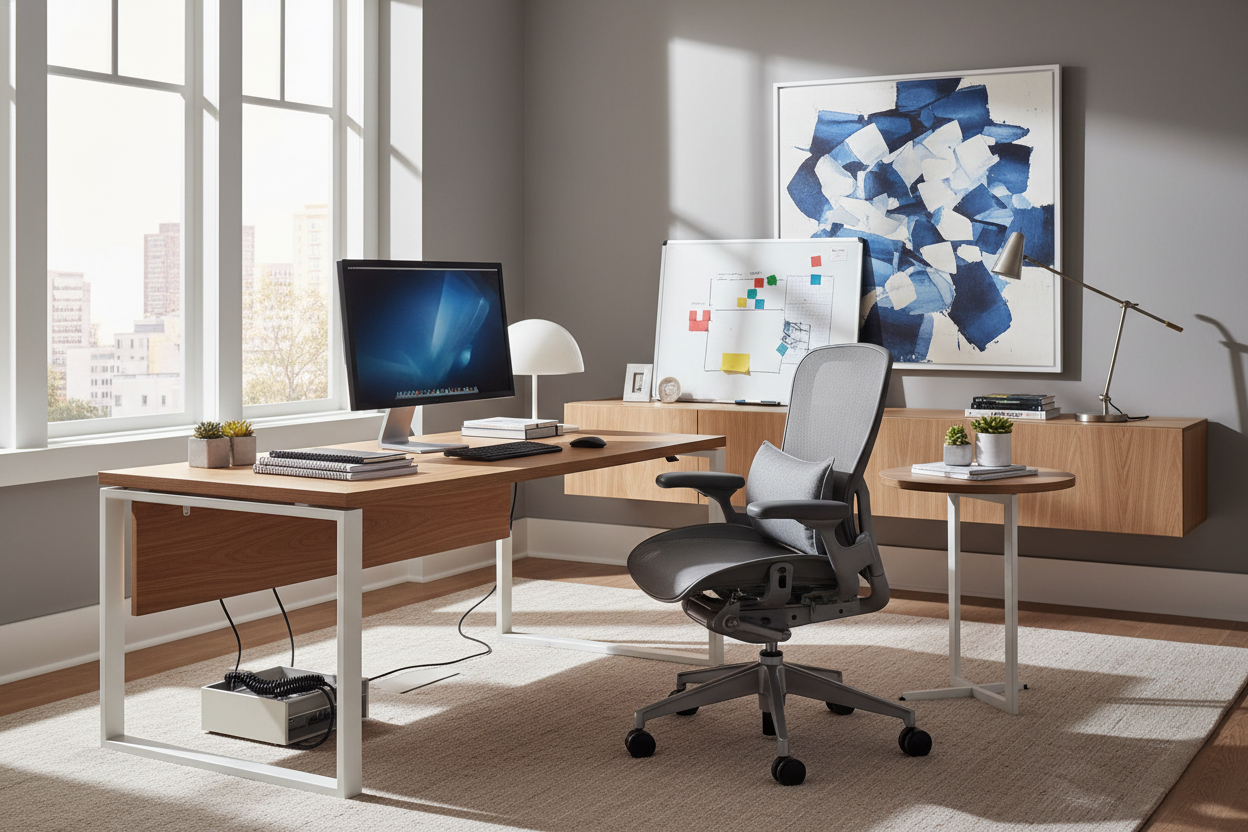
We have all been there. You see a massive discount tag, and suddenly, that mahogany-finished executive desk seems like the answer to your productivity prayers. However, the biggest error homeowners make during a home office furniture sale is prioritizing the price reduction over the piece's architectural integrity and ergonomic fit. As a designer, I treat sales not as a chance to buy more, but as an opportunity to buy better quality than the budget would normally allow. Let’s navigate the showroom floor strategy to ensure you invest in a workspace that serves you, rather than just filling a corner.
Quick Decision Guide: What to Check Before You Buy
- Material Composition: Distinguish between solid wood, high-grade veneer, and low-pressure laminate. The latter often peels at the edges within months.
- Joinery Details: Look for dovetail or mortise-and-tenon joints in drawers. Staples and glue are red flags for longevity.
- Ergonomic Adjustability: Ensure chairs have lumbar support and seat-height toggles; desks should allow your elbows to rest at 90 degrees.
- Scale and Proportion: A massive desk in a small room disrupts visual flow. Tape out dimensions on your floor before purchasing.
- Hardware Quality: Test drawer glides and hinges. Soft-close mechanisms are a hallmark of quality construction.
Assessing Material Quality on Clearance
When prices drop, it is usually because inventory is moving to make way for new collections, or the manufacturing quality is lower to begin with. Your job is to spot the difference. In a high-traffic zone like a home office, surface durability is paramount.
Solid Wood vs. Veneer vs. Laminate
Solid wood is the gold standard for repairability; scratches can be sanded out. However, high-quality wood veneers over MDF are excellent for stability against humidity changes. Be wary of paper-thin laminates often found in doorbuster deals. Run your fingernail gently along the underside edge of a desk. If you feel a rough seam or the strip catches, that edge banding will likely lift after a few weeks of friction from your arms or chair.
The Ergonomics Equation
Aesthetically pleasing furniture is useless if it causes fatigue. When scouting a sale, do not just sit in the chair for five seconds. Sit for five minutes. Mimic typing. If the chair is a fixed height, does it pair with the clearance height of the desk you are eyeing?
Visual Weight vs. Physical Comfort
Mid-century modern chairs with low backs and wooden armrests offer a stunning silhouette, but they often lack the support needed for an eight-hour workday. If you fall in love with a sculptural chair that lacks padding, consider it for a guest seat or reading nook, not your primary task chair. Prioritize mechanism over upholstery style when selecting your daily driver.
Space Planning & Layout
Sales often lead to impulse buys regarding size. "It's 50% off, I'll make it fit," is a dangerous mindset. Overcrowding a room creates visual noise, which hampers focus.
Creating Flow and Focal Points
Your desk should command the room, typically facing the door (the "power position"), but it must allow for at least 36 to 48 inches of clearance behind it for your chair to roll freely. If you are eyeing a large L-shaped desk on sale, ensure you have the square footage to float it in the room or anchor it without blocking natural light sources. Darker woods add visual weight and can make a small room feel claustrophobic, while glass or acrylic desks keep the sightlines open.
My Personal Take on Home Office Furniture Sales
I learned the hard way about "bargain" office furniture early in my career. I once sourced a stunning, deep-discounted velvet office chair for my own studio. It had a brass base and looked incredibly chic in photos. However, I failed to check the fabric breathability and the cushion density.
Within three months, the seat cushion had completely bottomed out—I was essentially sitting on plywood. Worse, the velvet trapped heat, making it impossible to sit comfortably for more than an hour during the summer. I ended up spending twice as much replacing it than I would have if I’d just bought the higher-end, ergonomic mesh chair initially. Now, when I walk a client through a sale, I flip the chair over. I look at the underside. If the stapling looks haphazard or the foam feels sparse, we walk away, no matter how pretty the silhouette is.
Conclusion
Navigating a home office furniture sale requires a discerning eye and a bit of skepticism. By focusing on material integrity, ergonomic support, and proper scale, you can curate a workspace that feels luxurious and functions seamlessly. Ideally, the pieces you choose now should still be serving your career a decade down the road.
Frequently Asked Questions
Is it safe to buy floor models during a furniture sale?
Generally, yes, and it is often where the best value lies. However, inspect the piece thoroughly for structural damage. Scratches on wood can be refinished, but bent metal frames or wobbly joinery on a desk are deal-breakers that cannot be easily fixed.
How do I mix wood tones if I buy pieces from different sales?
The trick is to keep the undertones consistent. Mix warm woods (cherry, oak, mahogany) with other warm woods, and cool tones (ash, maple, grey-washed) together. To bridge the gap, use a rug that contains both tones to ground the space.
What is the standard desk height I should look for?
Most standard desks are 29 to 30 inches high. If you are shorter or taller than average, this standard height might cause shoulder strain. In this case, ensure you purchase an adjustable task chair or look for a height-adjustable standing desk to customize the fit.


Leave a comment
This site is protected by hCaptcha and the hCaptcha Privacy Policy and Terms of Service apply.