










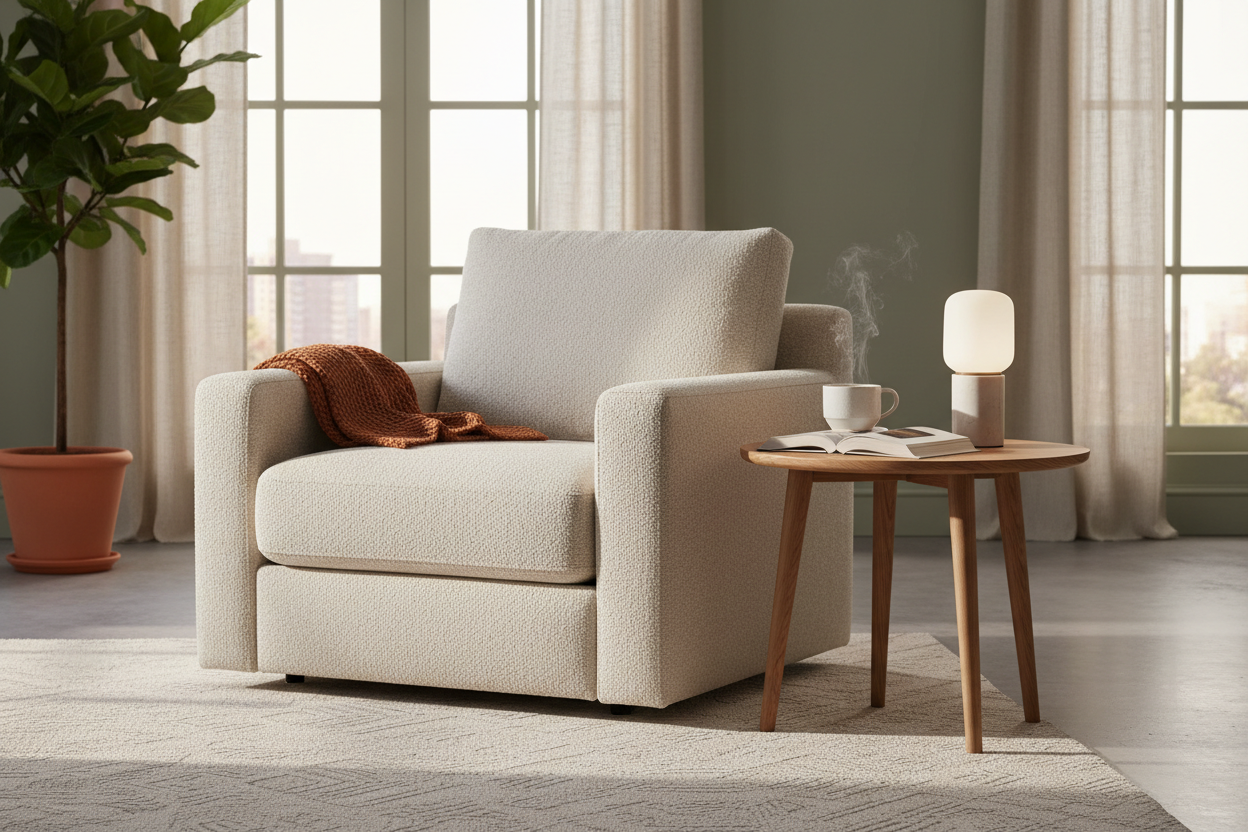
Finding furniture that fits perfectly into tight spaces while serving multiple purposes can transform how you use your living areas. A chairside table bridges the gap between functionality and style, offering a convenient surface right where you need it most—beside your favorite reading chair, recliner, or accent seating.
These compact tables come in countless variations, from sleek modern designs to traditional wood pieces with storage compartments. The key is understanding what works best for your specific space and needs.
Why Chairside Tables Make Sense
Unlike standard end tables that often dominate floor space, a narrow chairside end table slips easily into those awkward gaps between furniture pieces. I discovered this myself after struggling for months with a bulky coffee table that required me to stretch uncomfortably every time I wanted to set down my reading glasses or coffee mug. Once I switched to a slim table positioned right next to my armchair, everything became more accessible and the room felt significantly larger.
The beauty of these tables lies in their adaptability. Whether you're furnishing a cozy reading nook, setting up a home office corner, or simply trying to maximize a small living room, there's a configuration that works. A chair side desk can transform any comfortable seat into a productive workspace, while a chairside end table with storage keeps your essentials organized and within arm's reach.
Materials and Styles That Match Your Space
Wood remains the most popular choice for these tables, and for good reason. A wood chair side table brings warmth and durability that synthetic materials struggle to match. The natural grain patterns ensure each piece has character, and wood ages beautifully over time. Oak, walnut, and cherry varieties offer rich tones that complement traditional interiors, while lighter woods like maple or birch suit contemporary spaces.
For those preferring a more modern aesthetic, a chair side table black finish provides striking contrast against lighter furniture. These pieces work particularly well in minimalist settings or when you want to create visual anchors in an otherwise neutral room. Metal frames combined with wood tops offer industrial charm, while glass-topped versions maintain an airy feel in compact areas.
Storage Solutions That Work
A small chairside table with drawer gives you hidden storage for remote controls, reading glasses, medications, or whatever else tends to accumulate around your favorite sitting spot. Some designs feature multiple drawers stacked vertically, maximizing storage without expanding the footprint. These narrow chairside table with drawers options prove especially valuable in bedrooms or living rooms where visible clutter disrupts relaxation.
Open shelving presents another approach. A chairside chest end table typically includes both drawers and open compartments, letting you display decorative items while tucking away less attractive necessities. Magazine racks integrated into the side panels keep current reading material organized without requiring additional floor space.
Sizing Considerations
Proportion matters enormously when selecting these pieces. A small armchair table should align roughly with the arm height of your chair, making it comfortable to reach items without awkward stretching or bending. Too high, and you'll constantly knock things over; too low, and the table becomes inconvenient to use.
Width is equally important. A narrow chairside table with storage might measure just 10-12 inches deep, perfect for tight spaces where every inch counts. Wider versions around 15-18 inches provide more surface area but require additional clearance. Measure your available space carefully, remembering to account for the table's visual weight, not just its physical dimensions.
Coordinating Furniture Sets
While mixing and matching furniture creates eclectic charm, a chair and side table set ensures cohesive design from the start. Manufacturers design these combinations with complementary proportions, finishes, and styling details. This approach eliminates guesswork and often proves more economical than purchasing pieces separately.
That said, creative combinations can yield stunning results. Using a chair as side table creates unexpected visual interest—an antique wooden chair positioned beside a modern sofa, for instance, adds character while serving a practical purpose. This works particularly well with sturdy vintage pieces that have flat, stable seats.
Functional Additions
Modern chairside tables often incorporate features beyond simple surface space. A chair lamp table includes integrated lighting, eliminating the need for separate floor or table lamps. This proves especially useful in reading nooks or bedroom corners where overhead lighting creates harsh shadows.
USB charging ports and power outlets built into the table design reflect our device-dependent lives. These tech-friendly additions let you charge phones, tablets, or e-readers without running extension cords across the room. Some models even include wireless charging pads embedded in the tabletop.
Placement Strategies
An accent chair with side table creates an inviting spot for guests or provides you with a dedicated relaxation zone. Position this combination near a window for natural reading light, or tuck it into a corner to maximize floor space. The table should sit on the dominant-hand side of the chair—right side for right-handed users—making it naturally convenient to use.
Multiple seating areas benefit from coordinated side chair and table arrangements. Rather than one large coffee table everyone must reach across, individual chairside tables give each person their own space. This works beautifully in conversation areas where you want to encourage interaction without sacrificing personal convenience.
Bedroom Applications
A chairside end table with drawer serves double duty in bedrooms, functioning as both a nightstand alternative and companion to a reading chair. This versatility matters in smaller bedrooms where space for dedicated nightstands might not exist. The drawer provides secure storage for personal items, while the top surface accommodates a lamp, books, and your evening water glass.
The narrow profile of these tables makes them ideal for positioning between the bed and wall in tight quarters. Unlike traditional nightstands that might block pathways or overwhelm small rooms, a slim chair side stand maintains accessibility while providing necessary function.
Maintenance and Longevity
Quality construction determines how well these tables withstand daily use. Dovetail joints in drawers, solid wood construction rather than particleboard, and smooth-gliding drawer mechanisms indicate pieces built to last. Cheaper alternatives might save money initially but often require replacement within a few years.
Wood tables need occasional care to maintain their appearance. Dusting regularly prevents buildup that can scratch finishes during cleaning. Coasters protect surfaces from water rings and heat damage. Annual application of furniture polish or wax, depending on the finish type, keeps wood nourished and prevents drying or cracking.
Metal and glass components require different care. Glass tops show fingerprints readily but clean easily with standard glass cleaner. Metal frames benefit from occasional wiping with a damp cloth to remove dust and prevent oxidation, particularly in humid environments.
Making the Right Choice
Your ideal end table for chair depends on how you'll actually use the space. Someone who reads extensively needs adequate surface area for stacking books plus good lighting options. A person who primarily watches television might prioritize a small side table for accent chair that holds just a drink and remote control without visual distraction.
Consider your storage needs honestly. If you tend to accumulate items around your sitting area, a side chair table with drawers keeps things organized. Minimalists might prefer the clean lines of a simple surface without compartments. Think about what currently clutters your space and choose storage features that address those specific items.
Budget plays a role, but investing in quality furniture often proves economical long-term. A well-made piece lasts decades and can transition through multiple rooms and design schemes. Inexpensive alternatives might fit immediate needs but rarely provide the same satisfaction or longevity.
FAQ
What's the ideal height for a chairside table?
The table surface should align with or sit slightly below the arm height of your chair, typically 24-26 inches from the floor for standard seating. This height lets you comfortably reach items without straining. Measure your chair's arm height before shopping to ensure proper proportion.
Can I use a chairside table as a nightstand?
Absolutely. Many people use narrow chairside tables as space-saving nightstand alternatives, especially in small bedrooms. Models with drawers provide storage for bedside essentials, while the slim profile leaves more floor space than traditional nightstands. Just ensure the height works comfortably with your mattress height.
How much space should I leave between my chair and the table?
Leave 2-4 inches of clearance between the chair arm and table edge. This gap prevents the table from interfering with sitting down or getting up while keeping items easily accessible. The table should feel like a natural extension of your seating area rather than an obstacle.


Leave a comment
This site is protected by hCaptcha and the hCaptcha Privacy Policy and Terms of Service apply.