










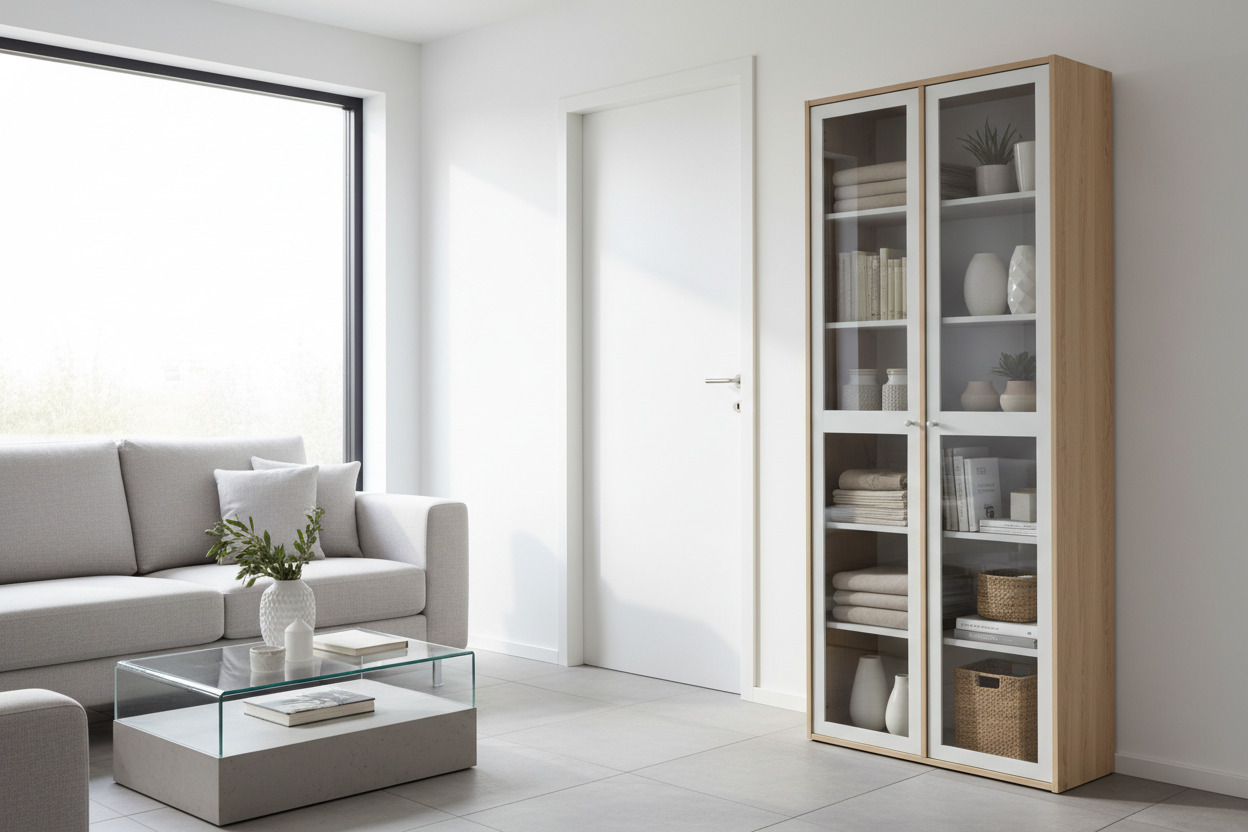
Finding furniture that fits into narrow hallways, cramped bathrooms, or tight entryways often feels like a losing battle. Standard furniture depths usually hover around 15 to 24 inches, which can choke the flow of traffic in a smaller home. The sweet spot for these tricky areas is almost always the 12-inch mark. A 12-inch deep storage cabinet provides just enough room to house essentials without encroaching on your walking path.
Choosing this specific depth isn't just about saving space; it is about reclaiming the functionality of a room. Whether you are looking to hide shoe clutter in a mudroom or organize toiletries in a powder room, going shallow allows you to utilize vertical space that would otherwise go wasted. The key lies in selecting the right configuration—specifically how the doors operate and how the interior is organized.
Why 12 Inches is the Magic Number
In the world of cabinetry, twelve inches is a standard dimension for upper kitchen cabinets, but it is less common for floor-standing units. However, this dimension corresponds perfectly with many everyday items. Most hardcover books, dinner plates, folded linens, and men’s shoes (up to about size 10-11) fit comfortably within a one-foot depth.
When you place a standard 18-inch console in a 36-inch wide hallway, you are left with only 18 inches of walking space. That feels claustrophobic. Swapping that out for a 12-inch unit leaves you with two full feet of clearance. That six-inch difference transforms a tight squeeze into a comfortable passage.
Personal Experience: The Hallway Bottleneck
I learned the value of shallow storage the hard way in my first apartment. The entryway was a long, narrow corridor that served as the only route to the living room. Desperate for storage, I bought a standard 16-inch deep sideboard. It looked great in the store, but once installed, I found myself turning sideways just to walk past it with groceries. It became a hip-bruising hazard rather than a helpful storage unit.
Replacing it with a 12 inch deep storage cabinet with doors changed everything. Suddenly, the hallway felt open again. I didn't lose much storage capacity either; I just had to be smarter about how I stacked things. Instead of deep piles of clutter, the shallower shelves forced me to organize items in single rows, making everything easier to see and access. It was a lesson in ergonomics that I have applied to every small space project since.
The Benefit of Sliding Doors in Tight Spaces
While the depth of the cabinet is the primary concern, the door mechanism is the secondary factor that often gets overlooked. If you are placing a cabinet in a narrow area, hinged doors can be problematic. When you swing open a standard cabinet door, it extends into the room, temporarily blocking the path.
This is where a 12-inch deep cabinet with sliding doors becomes the superior choice. Sliding mechanisms keep the footprint of the furniture static. You can access the contents of the cabinet without stepping back or blocking the hallway for others. This is particularly useful in high-traffic zones like the area behind a sofa or a corridor leading to a bathroom. You get the visual cleanliness of hidden storage without the functional drawback of swinging doors eating up your floor space.
Repurposing Wall Cabinets as Floor Units
One of the biggest challenges homeowners face is finding stylish floor cabinets that are truly only 12 inches deep. The market is flooded with deeper units. A practical workaround used by interior designers is to purchase stock upper kitchen cabinets and install them as floor units.
Since standard wall cabinets are 12 inches deep, they are perfect for this application. You can mount them directly to the wall so they "float" off the floor, which increases the perception of space, or add furniture legs to give them a traditional sideboard look. This method opens up a massive variety of door styles and finishes that aren't usually available in dedicated hallway furniture.
What Actually Fits Inside?
Understanding the capacity of shallow storage helps in planning where to put it. Here is a realistic breakdown of what works well in a 12-inch depth:
- Pantry Items: Canned goods, pasta boxes, and jars are usually 3 to 5 inches in diameter. You can store them several rows deep or use tiered organizers.
- Media: Video game consoles, routers, and cable boxes usually fit, though you must check the depth of the cords plugging into the back. You may need to cut out a section of the back panel to accommodate plugs.
- Shoes: This is tricky. If you have smaller feet, shoes fit straight in. For larger sizes, you might need to store shoes at a slight angle or purchase a cabinet specifically designed with tilt-out drawers, which are often even shallower than 12 inches.
- Bathroom Supplies: Rolled towels, extra toilet paper, and cleaning supplies fit perfectly.
Safety and Installation Crucials
Physics dictates that a tall, shallow cabinet is less stable than a deep, low one. The center of gravity on a 12-inch deep unit is precarious, especially if you open both doors at once or have heavy items on the top shelf. Anchoring these units to the wall is not optional; it is a necessity.
If you have baseboards, the cabinet won't sit flush against the wall, creating a gap that can cause the unit to wobble. You have two options here: scribe the legs of the cabinet to fit over the baseboard (a more advanced carpentry move) or use a mounting batten on the wall to bridge the gap. Ensuring a solid connection to a wall stud prevents the cabinet from tipping forward, keeping your home safe for children and pets.
Visual Weight and Aesthetics
Beyond utility, shallow cabinets offer an aesthetic advantage. Bulky furniture tends to dominate a room, making small spaces feel even smaller. A 12 inch deep storage cabinet with doors hugs the wall, receding into the architecture rather than standing out as a separate, heavy object.
To maximize this effect, consider painting the cabinet the same color as the wall. This built-in look makes the storage disappear visually, reducing mental clutter while hiding physical clutter. If you prefer a contrast, a wood tone with a 12-inch deep cabinet with sliding doors can add warmth and texture without the physical bulk of a dresser.
Where to Look
You generally won't find these in the "bedroom dresser" section of furniture stores. Instead, search in specific categories:
- Console Tables: Many enclosed consoles are designed for entryways and stick to shallow dimensions.
- Bookcases with Doors: The standard depth for a bookcase (like the IKEA Billy) is roughly 11 to 12 inches. Adding doors to the lower half creates the exact cabinet described here.
- Bathroom storage: Freestanding bathroom cabinets are designed for tight quarters and often hit the 12-inch mark exactly.
By shifting your focus to this specific dimension, you unlock the ability to add storage to the "dead" spaces in your home, turning empty walkways into functional assets.
Frequently Asked Questions
Can I use a 12-inch deep cabinet for a kitchen island?
Yes, using 12-inch deep cabinets back-to-back with standard 24-inch cabinets is a great way to create a kitchen island. This setup provides extra storage for seasonal items on the seating side of the island without requiring a massive footprint.
Will standard hangers fit in a 12-inch deep cabinet?
No, standard clothing hangers require at least 20 to 22 inches of depth. To hang clothes in a 12-inch cabinet, you need to install a forward-facing valet rod, allowing clothes to face you rather than hanging sideways.
How do I handle electrical outlets behind a shallow cabinet?
Because the cabinet sits so close to the wall, plugs can prevent it from sitting flush. The best approach is to cut a precise hole in the back panel of the cabinet to access the outlet directly from the inside, or use a flat-profile extension cord that requires very little clearance.


Leave a comment
This site is protected by hCaptcha and the hCaptcha Privacy Policy and Terms of Service apply.