










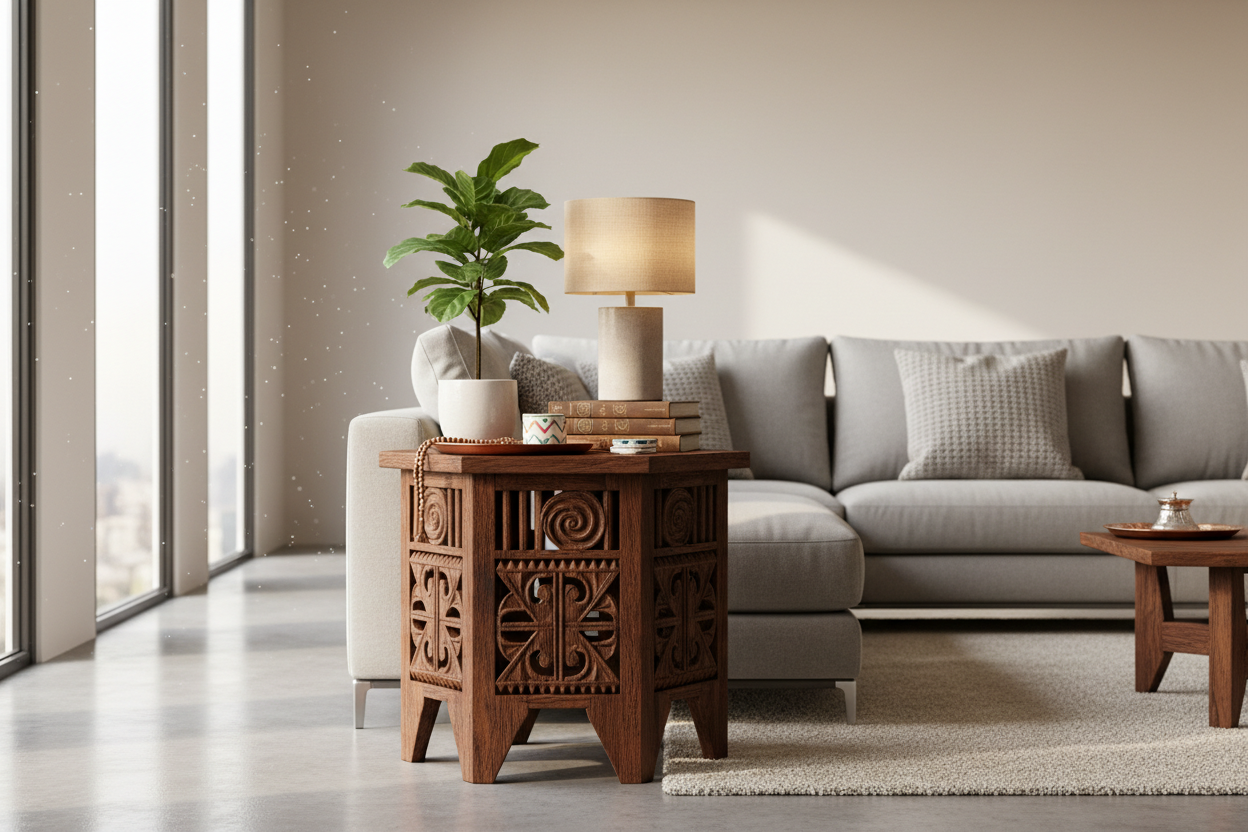
Bringing global charm into a living space doesn't require a plane ticket or a complete renovation. It often starts with a single, distinct piece of furniture that disrupts the uniformity of modern design. An ethnic side table is more than just a surface for your coffee cup or a stack of books; it is a narrative anchor. These pieces inject soul, history, and texture into interiors, acting as a bridge between contemporary comfort and traditional craftsmanship. Whether carved from indigenous woods, hammered from copper, or inlaid with bone, these tables offer an immediate focal point that mass-produced furniture simply cannot replicate.
I remember stumbling upon a heavy, dark wood Naga stool in a dusty antique shop years ago. It wasn't perfectly symmetrical—one leg was slightly thicker than the others, and the surface bore the marks of hand tools rather than industrial sanders. At the time, my living room was a wash of safe, neutral greys and clean lines. Placing that imperfect, rugged piece next to a sleek velvet sofa didn't just fill a gap; it changed the entire energy of the corner. It stopped the room from feeling like a showroom and made it feel like a home. That contrast is exactly why adding a touch of global heritage works so effectively in almost any design scheme.
Defining the Aesthetic: What Makes a Table "Ethnic"?
The term is broad, often serving as a catch-all for designs rooted in non-Western cultures or indigenous craftsmanship. However, in the context of interior design, we are usually talking about pieces that prioritize natural materials, artisanal techniques, and cultural symbolism. Unlike the invisible joinery of a modern minimalist piece, an ethnic side table often celebrates its construction. You might see the joinery, feel the grain of reclaimed teak, or trace the hand-painted motifs on a ceramic garden stool.
These tables usually fall into a few distinct categories based on origin and material. Moroccan tea tables, typically featuring intricate brass tray tops on folding wooden legs, bring a metallic sheen and geometric complexity. Conversely, African Bamileke stools, carved from a single trunk of wood with a lattice pattern, offer an earthy, sculptural weight. Indian bone inlay tables provide color and intricate detail, perfect for brightening a dark corner. Understanding these differences helps you choose a piece that complements, rather than clashes with, your existing decor.
The Art of Mixing and Matching
Integrating ethnic end tables into a contemporary or traditional home can sometimes feel daunting. There is a fear of the space looking too much like a souvenir shop or a themed hotel room. The secret lies in curation and contrast. If your room is filled with mid-century modern furniture, a rustic, hand-carved wooden table adds warmth to the tapered legs and smooth veneers of the 1950s style. The rough texture of the wood creates a dialogue with the smooth leather or fabric of your seating.
For those who love a bohemian vibe, layering is key. You might pair a low, mother-of-pearl inlaid table with a plush Moroccan rug and floor cushions. Here, the goal isn't contrast but rather a harmony of patterns. However, even in maximalist spaces, breathing room is necessary. If your side table is heavily patterned, keep the lamp or decor objects placed on top of it relatively simple. Let the craftsmanship of the table speak for itself without competing for attention.
Materials Matter: Wood, Metal, and Stone
The longevity and vibe of the furniture depend heavily on the material. Wood is the most versatile choice. Pieces made from mango wood, acacia, or reclaimed teak are common in ethnic furniture. These woods are durable and often feature rich grain patterns. Over time, they develop a patina that enhances their character. If you are looking for something with a bit more glamour, hammered metal tables—often found in Middle Eastern or Indian designs—reflect light and can make a small room feel larger.
Stone or ceramic stools are excellent options for adding diverse textures. A glazed ceramic stool with Asian motifs works beautifully as a drink stand and is durable enough to handle spills without the risk of water rings. These heavier materials ground the space, providing a sense of permanence and stability.
Sourcing Authenticity vs. Inspired Reproductions
When shopping for an ethnic side table, you will inevitably face the choice between authentic antiques and modern reproductions. Authentic pieces carry the energy of their past lives. They might have dings, repairs, or uneven surfaces. These imperfections are not flaws; they are the certificate of authenticity. Sourcing these usually requires visiting estate sales, specialized importers, or flea markets.
Reproductions, on the other hand, offer the aesthetic of global decor with the reliability of modern manufacturing. They are often more affordable and sized to standard dimensions, which can be helpful if you need a specific height for a sofa arm. If you choose a reproduction, look for pieces that still utilize hand-finishing techniques. A machine-printed pattern on particle board will never capture the warmth of a hand-stenciled solid wood piece. Look for evidence of the human hand in the work.
Care and Maintenance of Artisanal Furniture
Because these tables are often made from natural, untreated, or specifically finished materials, they require a different approach to cleaning than a standard polyurethane-coated table. Wood that has been oiled or waxed needs to be fed periodically to prevent drying and cracking, especially in homes with central heating or air conditioning. A simple beeswax polish is usually sufficient.
Metal tables, particularly copper or brass, will tarnish over time. Some owners prefer this aged look as it adds to the antique feel. If you prefer the shine, regular polishing with a specialized metal cleaner is necessary, but be gentle to avoid rubbing away etched details. For bone inlay, avoid harsh chemicals entirely; a damp cloth is all you need, as acidic cleaners can eat away at the resin and bone.
Ultimately, incorporating ethnic end tables into your home is about storytelling. It is about rejecting the sterile and embracing the human. Whether it is a heavy wooden block from Indonesia or a delicate mosaic table from Morocco, these pieces remind us that beauty often lies in heritage, craft, and the unique touch of the artisan.
Frequently Asked Questions
How do I mix different ethnic styles without the room looking chaotic?
Stick to a cohesive color palette to unify the disparate elements. If you have a busy, colorful Indian table, try to echo one of those colors in your textiles or wall art. Keeping the larger furniture pieces neutral also allows the unique accent tables to stand out without overwhelming the eye.
Are ethnic side tables suitable for small apartments?
Absolutely. Many global designs, such as ceramic garden stools or folding tray tables, have a small footprint and are visually lightweight. Drum tables or hollow carved stools can also provide storage or be easily moved around to serve as extra seating when guests arrive.
How can I tell if a wood table is good quality?
Check the weight and the joinery. Solid wood pieces, such as those made from teak or rosewood, should feel heavy and substantial. Look at the underside of the table; traditional joinery (like dovetails or mortise and tenon) rather than staples or excessive glue usually indicates better craftsmanship and durability.


Leave a comment
This site is protected by hCaptcha and the hCaptcha Privacy Policy and Terms of Service apply.