











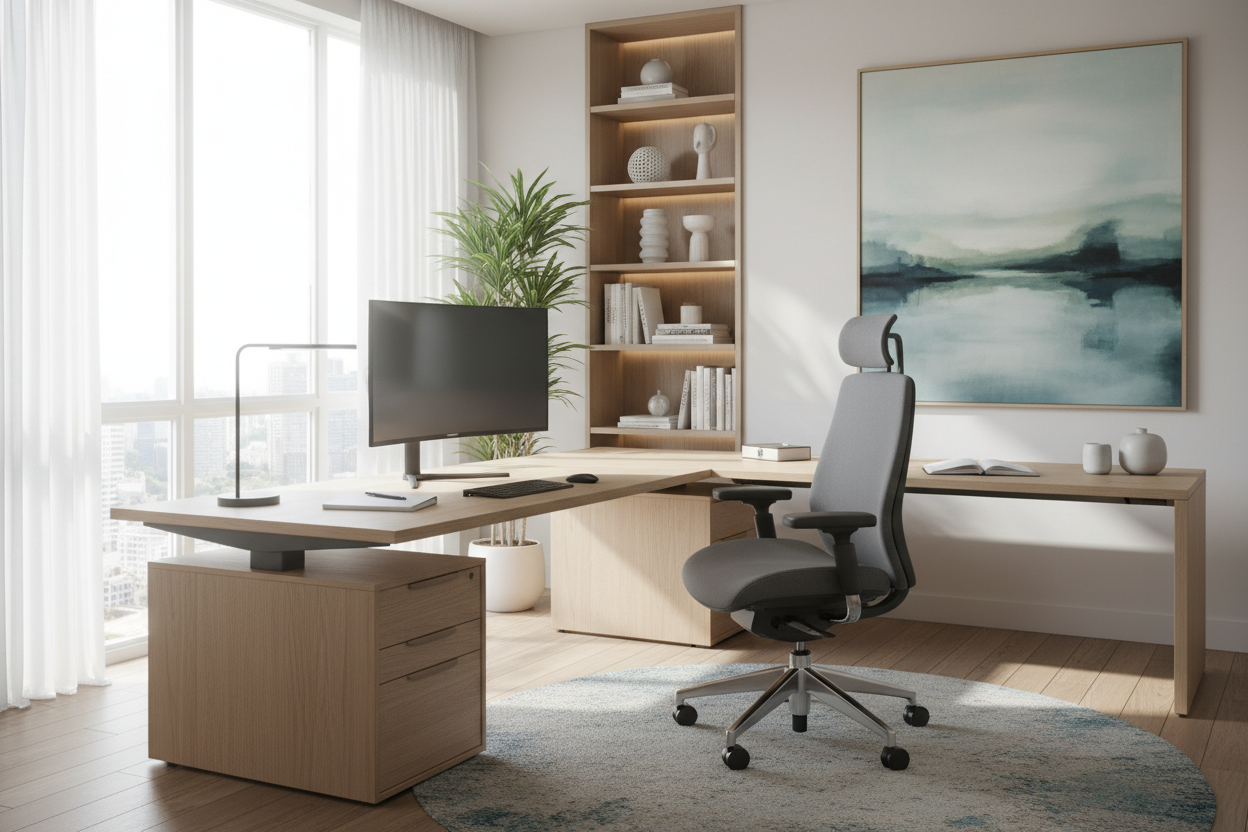
We have all seen the makeshift setups: a laptop perched precariously on a kitchen island or a dining chair that looks beautiful but offers zero lumbar support. As an interior designer, I see clients treating their home office as an afterthought rather than a primary living space. When you are working from home, the environment must bridge the gap between high-performance functionality and residential warmth. It is not just about buying a desk; it is about curating a space that signals to your brain that it is time to focus, without disrupting the visual harmony of your sanctuary.
Quick Decision Guide: The Essentials
If you are rushing to furnish your space, use this checklist to ensure you invest in pieces that balance form and function. These are the non-negotiables for a professional setup.
- Ergonomics Over Aesthetics: Always prioritize a chair with adjustable seat depth and lumbar support over a trendy silhouette.
- Surface Depth: Ensure your desk is at least 24–30 inches deep to accommodate monitors without causing eye strain.
- Lighting Layers: Combine ambient ceiling light with dedicated task lighting to reduce glare and fatigue.
- Material Tactility: Choose natural materials like solid wood or high-grade veneer to add warmth and reduce the sterile "cubicle" feel.
Zoning: The Art of Separation
One of the most frequent questions I receive is, "how does working from home work when I don't have a spare room?" The answer lies in zoning. You do not need physical walls to create psychological boundaries. We need to define where "home working" begins and ends.
Visual Anchoring
Use an area rug to ground your desk setup. This creates a distinct island within a larger room. If your desk floats in a living area, orient it so your back is to the leisure space. This prevents you from staring at the television or unfinished chores while trying to focus on a spreadsheet. This simple orientation shift changes the mental narrative from "I work from home" to "I have a workspace within my home."
Selecting the Right Materials
When curating furniture for working from home, how you select materials impacts longevity and feel. In a corporate office, you see high-pressure laminates. In a residence, we want texture.
Solid Wood vs. Veneer
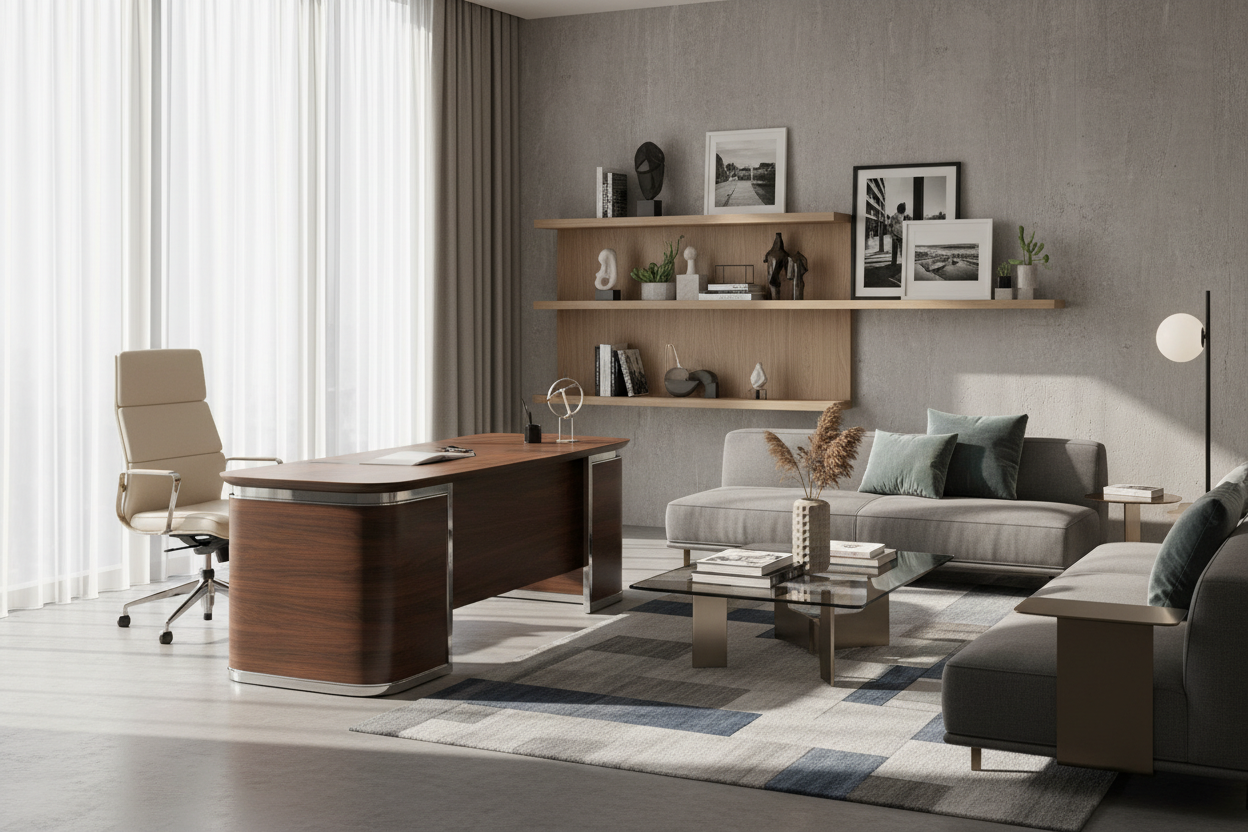
For the primary desk, I always advocate for solid wood—walnut or white oak are favorites. Solid wood ages gracefully; a scratch becomes a story rather than a defect. However, high-quality architectural veneers are acceptable if you are watching the budget. Avoid hollow-core cheap laminates; they amplify the sound of typing and writing, creating a tinny, distracting acoustic environment.
Ergonomics Meets Style
The phrase "wfh working from home" has become synonymous with back pain for many. The challenge is finding an ergonomic chair that doesn't look like a piece of industrial machinery.
The Chair Dilemma
Look for "hidden ergonomics." Many high-end manufacturers now produce chairs with internal tension mechanisms and lumbar curves hidden beneath tailored upholstery. However, be wary of heavy velvets or boucle fabrics for a chair you sit in for eight hours. They retain heat. Instead, opt for a tightly woven linen blend or a high-quality semi-aniline leather that breathes and develops a patina over time.
Lighting: Setting the Stage
Proper lighting is often the missing link in the work from home process. Relying solely on overhead recessed cans creates harsh shadows under the eyes—unflattering on video calls and tiring for the retina. Layer your lighting. A sculptural desk lamp provides task lighting, while a floor lamp nearby adds soft, ambient glow to soften the contrast. This approach mimics the "home to work" transition by shifting the mood of the room.
My Personal Take on Working From Home
I want to share a mistake I made in my own home office renovation last year. I fell in love with a vintage, reclaimed teak table. It had incredible texture and a raw, unfinished edge. Visually, it was a masterpiece. Practically? It was a nightmare.
Every time I tried to sketch or write on a single sheet of paper, the texture transferred through, ruining the line work. Furthermore, the rough edge snagged my cashmere sweaters. I realized that while I loved the look of rustic charm, the utility required a smooth, sealed surface. I ended up having to commission a custom glass top to make it usable, which slightly killed the aesthetic I was going for. The lesson? Always run your hand across the surface before buying. If it catches your skin, it will annoy you daily. Function must precede form in high-touch areas.
Conclusion
Designing a space for working at home is about respect—respect for your career and respect for your interior architecture. By investing in quality materials, prioritizing ergonomic silhouettes, and mastering your lighting layout, you create a space that invites productivity without sacrificing style. It is time to stop working at the kitchen counter.
Frequently Asked Questions
How working from home affects furniture durability?
Residential furniture is often rated for occasional use. When you shift to working home full-time, you are putting 40+ hours a week of wear on these pieces. Look for "contract grade" or "commercial rating" on fabrics and chair mechanisms to ensure they can withstand the increased usage.
How does work from home jobs work with small spaces?
For tight footprints, utilize verticality. Wall-mounted shelving units with drop-down desks (secretaires) are excellent. They allow you to physically close up the workspace at the end of the day, helping you mentally disconnect work and home.
Is it working from home if I use my dining table?
Technically yes, but ergonomically, no. Dining tables are generally 28-30 inches high, which is often too high for typing comfortably without elevating your shoulders. If you must use a dining table, invest in a height-adjustable chair and a footrest to align your elbows at 90 degrees.


Leave a comment
This site is protected by hCaptcha and the hCaptcha Privacy Policy and Terms of Service apply.