











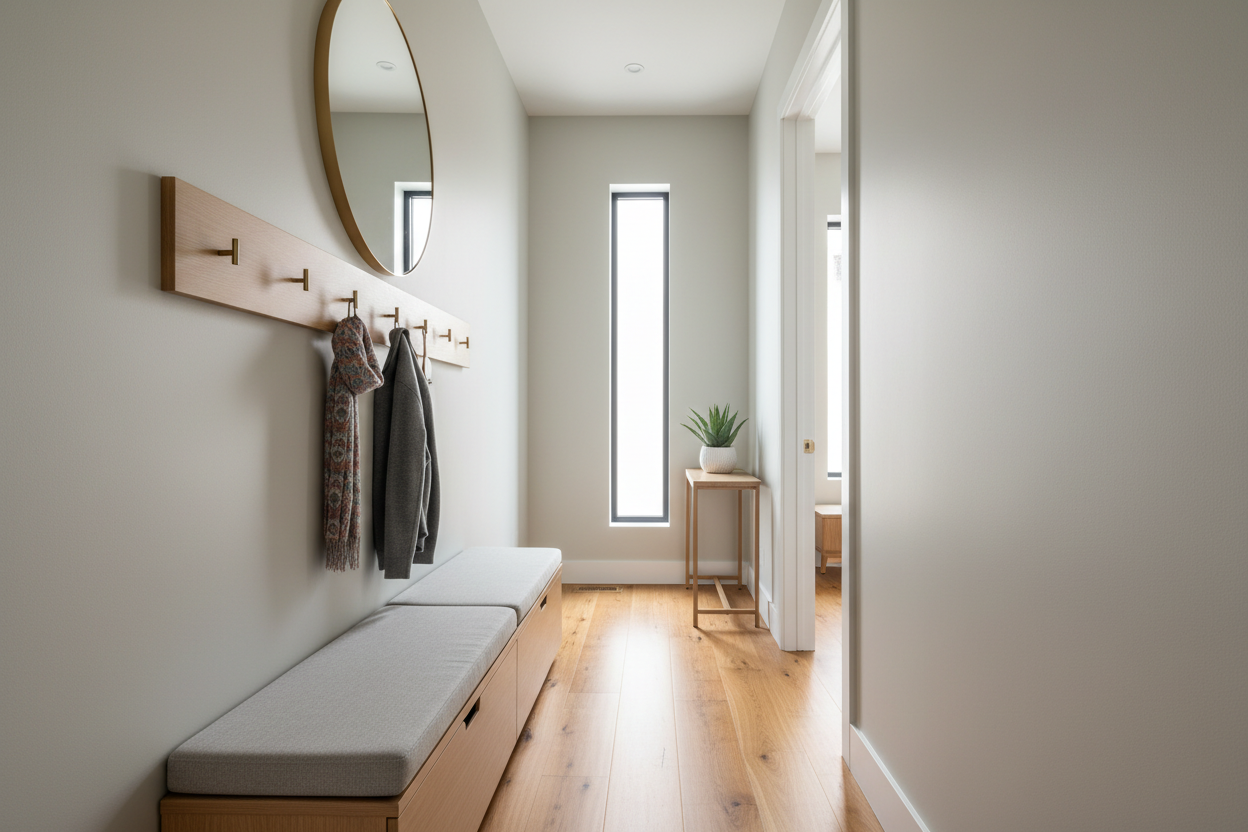
Most people assume that if they have a small foyer or a corridor-style entrance, furniture is out of the question. This is a misconception that leads to cluttered floors and nowhere to sit while putting on shoes. The solution isn't to forego furniture entirely, but to specifically hunt for an entryway bench narrow enough to preserve your walking path while providing that crucial "drop zone" functionality. If your hallway feels cramped, the magic number you are likely looking for is a depth between 10 and 14 inches.
Finding the right piece requires ignoring standard furniture dimensions. Most dining or bedroom benches sit at a depth of 16 to 20 inches. In a tight foyer, those extra six inches make the difference between a welcoming entrance and a tripping hazard. By focusing on slim-profile furniture, you can reclaim functionality in spaces you thought were unusable.
My Battle with the "Tunnel" Hallway
I learned the importance of depth the hard way in my second apartment. The entry hall was long, dark, and incredibly tight—barely 40 inches wide. I fell in love with a vintage farmhouse bench that looked perfect online. It arrived, I set it up, and immediately realized my mistake. To get groceries past it, I had to lift the bags over my head and shuffle sideways. It wasn't an entryway; it was an obstacle course.
I eventually swapped that piece for a custom-built, ultra-slim console bench that was only 11 inches deep. It looked impossibly thin, but it worked. I could sit to tie my laces (admittedly, not for lounging), and more importantly, the visual flow of the hallway returned. That experience taught me that in small spaces, inches aren't just measurements; they are the difference between frustration and comfort.
Defining the "Narrow" in Entryway Benches
When shopping for a narrow bench for entryway use, you need to be ruthless about dimensions. The golden rule of hallway design is maintaining a clearance width of at least 36 inches for comfortable walking. If your hallway is 48 inches wide, a 12-inch deep bench is your maximum limit. If your hallway is tighter, say 42 inches, you are looking at very slim options, likely wall-mounted or custom-built.
Standard seating comfort usually dictates a deeper seat, but foyer seating serves a different purpose. You aren't settling in to read a book; you are pausing for thirty seconds to pull on boots or drop a bag. A 10-to-12-inch seat depth is sufficient for these momentary tasks. Prioritizing the flow of traffic over deep-seated comfort ensures the space remains usable.
The Illusion of Space: Open vs. Closed Storage
The structural design of the bench dictates how large the room feels. A solid wooden box bench with a flip-top lid offers maximum storage, but it can look blocky and heavy in a narrow corridor. It physically takes up the same amount of space as an open-frame bench, but visually, it dominates the room.
For the tightest spaces, benches with open legs or metal frames are superior. Being able to see the floor and the baseboards underneath the bench tricks the eye into thinking the floor area is larger than it is. If you need storage, look for a bench with a slatted bottom shelf. You can place attractive woven baskets there to hide clutter while maintaining that airy, open feel.
Material Selection for High-Traffic Zones
Narrow spaces mean you are more likely to bump into the furniture with grocery bags, umbrellas, or wet coats. The material you choose for your entryway bench narrow profile needs to be more durable than a piece sitting safely in a corner of the living room. Solid wood and metal are generally the safest bets.
Upholstered benches in narrow hallways can be risky. If the fabric isn't performance-grade, it will quickly show scuffs from bags brushing against it or dirt from outdoor clothing. If you prefer the softness of upholstery, opt for a bench with a wood or metal base where the fabric seat is elevated and less likely to catch friction from passersby. Leather or high-quality faux leather is also a smart choice as it wipes down easily.
Wall-Mounted and Floating Options
Sometimes, even the slimmest legs get in the way. In these instances, a floating bench is the ultimate space-saver. Mounted directly into the studs, these benches have zero footprint on the floor. This makes cleaning easier—no vacuuming around legs—and allows you to tuck shoes directly underneath without any structural interference.
Floating benches often require a bit more DIY know-how to install securely, but the payoff is a sleek, modern look that maximizes every square inch. Just ensure you check the weight capacity limits, as these rely entirely on your wall anchors and studs rather than gravity and legs.
Styling Without the Clutter
Once you have secured a narrow bench for entryway functionality, styling it requires restraint. Over-styling a small surface defeats the purpose of choosing a slim piece. Avoid large, bulky pillows that push you off the seat. Instead, use flat seat cushions that add comfort without bulk.
Vertical space is your best friend here. Since the bench has a small footprint, draw the eye upward. Install a row of hooks or a floating shelf above the bench. A mirror is particularly effective in narrow hallways; it reflects light and doubles the perceived width of the space. By keeping the decor on the walls rather than the bench surface, you keep the seating area functional.
Multi-Functionality is Key
In a small home, every piece of furniture should earn its keep. A simple slab of wood is fine, but a narrow bench that incorporates a shoe rack or a small drawer for keys is better. Look for designs that utilize the space between the legs. Even a clearance of six inches off the floor is enough to tuck away a row of sneakers or slippers.
Some modern designs feature a "telephone bench" style, with a raised side table integrated into the seat. This breaks up the visual line and provides a designated spot for mail and keys, preventing them from ending up on the seating area. This separation of zones—sitting vs. dropping items—helps keep a small entryway organized.
Choosing furniture for a narrow hall is about compromising on depth without compromising on utility. By measuring carefully and selecting a piece with a light visual weight, you can transform a pass-through corridor into a functional, welcoming part of your home.
Frequently Asked Questions
How much walking space do I need to leave in front of an entryway bench?
Ideally, you should maintain a clear path of 36 inches (3 feet) to walk comfortably without turning sideways. In very tight spaces, you might get away with 30 to 32 inches, but anything less will feel claustrophobic and impede traffic flow.
Is a 10-inch deep bench actually comfortable to sit on?
It is comfortable enough for short-term tasks like tying shoes or waiting for someone to get ready. While you wouldn't want to lounge on it for an hour, a 10-inch depth provides adequate support for a quick perch, which is the primary function of foyer seating.
Can I use a narrow console table as a bench?
Generally, no. Console tables are designed to hold lamps and decor, not human weight. Unless the manufacturer explicitly states a weight capacity suitable for seating (usually 250+ lbs), sitting on a console table is dangerous and likely to break the furniture.


Leave a comment
This site is protected by hCaptcha and the hCaptcha Privacy Policy and Terms of Service apply.