




The main types of cabinet doors can be sorted three ways: by how they open (hinged, sliding, flip-up, tambour or no door at all), by the door front (slab, Shaker, raised panel, glass, frosted, mirrored or louvered) and by how they sit on the cabinet box (full overlay, partial overlay or inset). For hidden storage, solid hinged doors are the most practical; for display, glass doors, ideally tempered, show items while keeping dust off; and any closed door protects better against dust than open shelving.
This guide is for anyone choosing storage cabinets, bookcases or display cabinets for a living room, dining room or bedroom, where the door type decides what you see, what you hide and how much dusting you do. It uses real door types from the FUFU&GAGA modular storage cabinets collection as examples.
Types of Cabinet Doors by How They Open
| Door type | Best for | Pros | Cons |
|---|---|---|---|
| Hinged (swing) | Almost everything | Full access to the shelf; simple, adjustable hardware | Needs clearance in front to swing open |
| Sliding | Tight rooms, walkways, display cases | No swing space needed | Only part of the cabinet is open at a time |
| Flip-up (lift-up) | Upper wall cabinets, media niches | Stays out of the way overhead | Needs lift hardware; rare on tall freestanding units |
| Tambour (roll-up or roll-across) | Compact cabinets, mid-century style | Rolls aside with no swing | Slats collect dust; less airtight |
| Push-to-open | Handle-free modern fronts | Clean lines, no knobs to catch | Fingerprints on the door face |
| No door (open shelving) | Everyday items, styled display | Fastest access, lowest cost | Dust and visual clutter |
Hinged doors
Hinged doors are the default on storage and display cabinets, and nearly every cabinet in our collection that lists a door mechanism uses hinges. They open fully, so you can reach every corner of a shelf. Plan for the swing: a door opens out roughly as far as it is wide. The tall glass doors on the Varda 63" bookcase, for example, are 15.75" wide, so leave at least that much clear space in front, and more at the end of a run where a wall could stop the door.
Sliding doors
Sliding doors run on tracks and never swing into the room, which suits hallways and spots next to a sofa or dining chair. The trade-off is access: with two panels, only half the cabinet is open at a time. Examples include the 39.4" black display cabinet with sliding glass doors and LED lighting and a 63" rustic china cabinet with 4 sliding glass doors.
Flip-up and tambour doors
Flip-up doors hinge at the top and lift, which works well above head height in kitchens and media walls but is uncommon on tall freestanding furniture. Tambour doors are made of narrow slats on a flexible backing that roll aside; our 23.6" mid-century walnut cabinet uses one. Both are style choices more than storage workhorses.
Push-to-open and handle-free doors
A push latch lets a door pop open when pressed, so the front stays smooth. The 31.4" black display cabinet with push-to-open doors pairs this with 8-color LED lighting for a minimal look.

Popular Cabinet Door Styles: Slab, Shaker, Raised Panel and Glass Inserts
The door front, or cabinet door style, sets the look. This Old House describes the three styles you will see most often this way:
- Slab (flat panel): a single flat piece of material with no panels or decorative detail. Slab cabinet doors have clean lines, a streamlined appearance and the easiest smooth surface to wipe; they are common in modern kitchens, contemporary kitchens and on modular furniture.
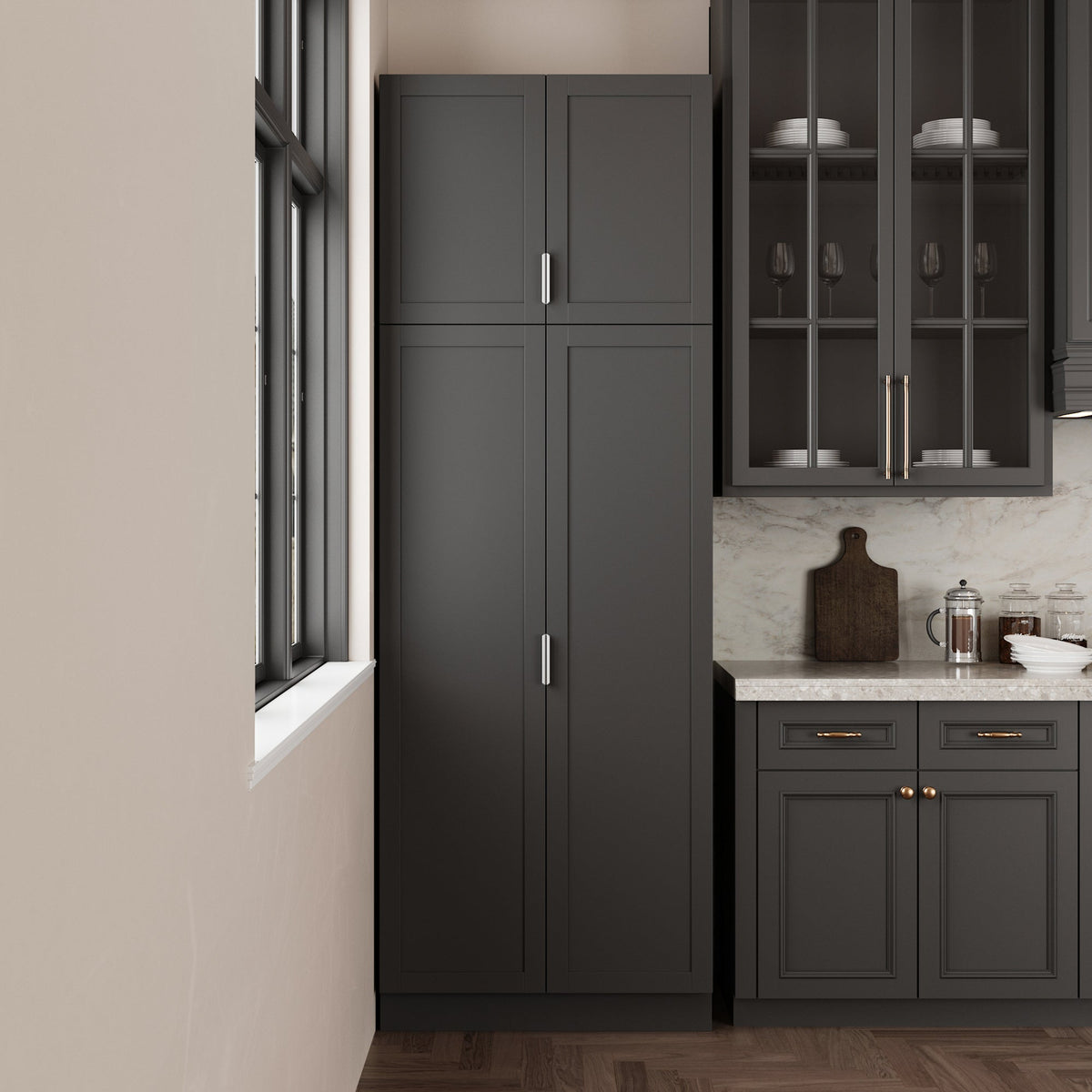
- Shaker: typically a five-piece construction, a surrounding frame of two rails and two stiles around a recessed flat center panel. Shaker doors are the best-known of the recessed panel cabinet doors and suit both traditional designs and transitional kitchens.
- Raised panel: the center panel rises toward the middle for a three-dimensional, traditional look. Raised panel doors take more time to dust.
Beyond these three styles, storage furniture uses several other styles of door front:
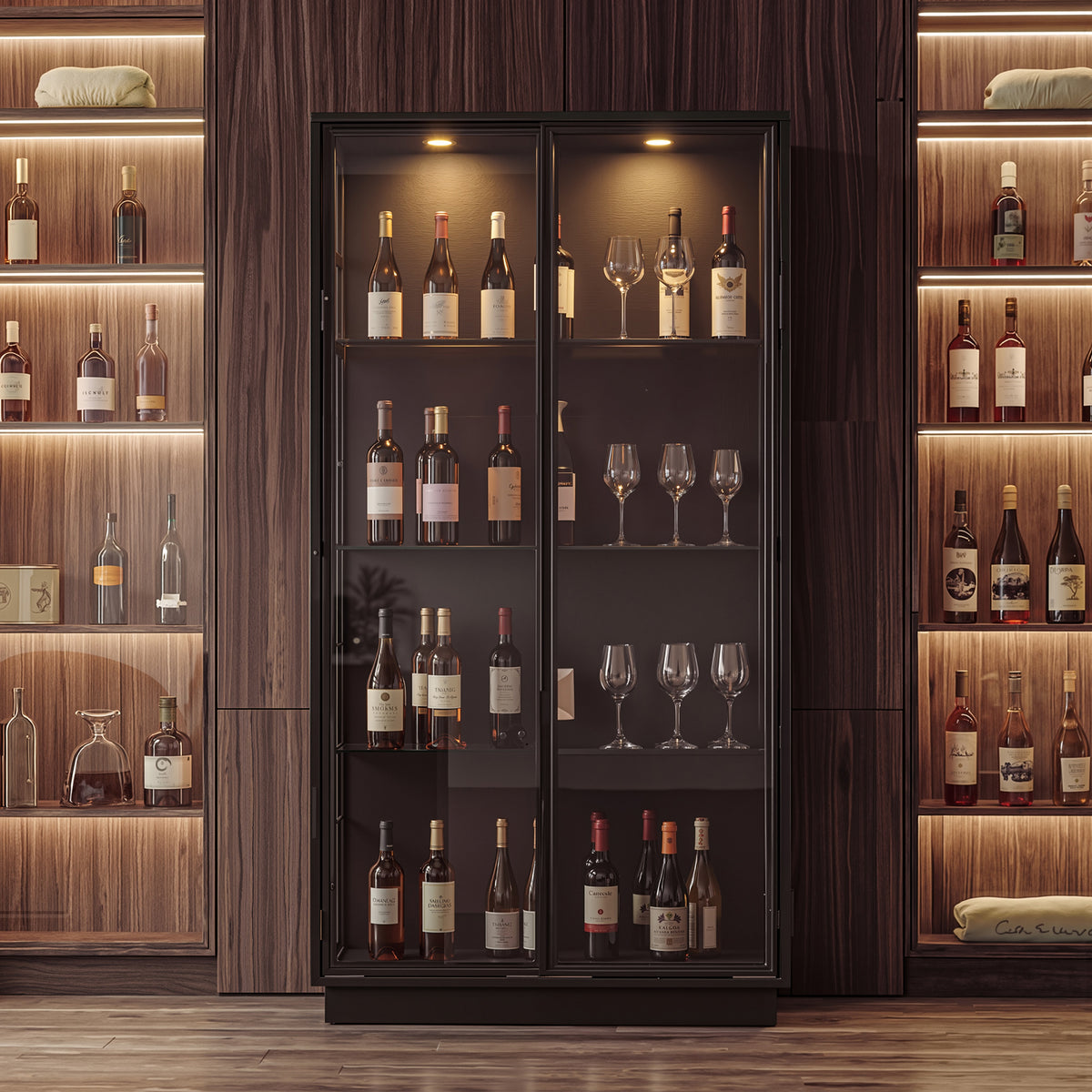
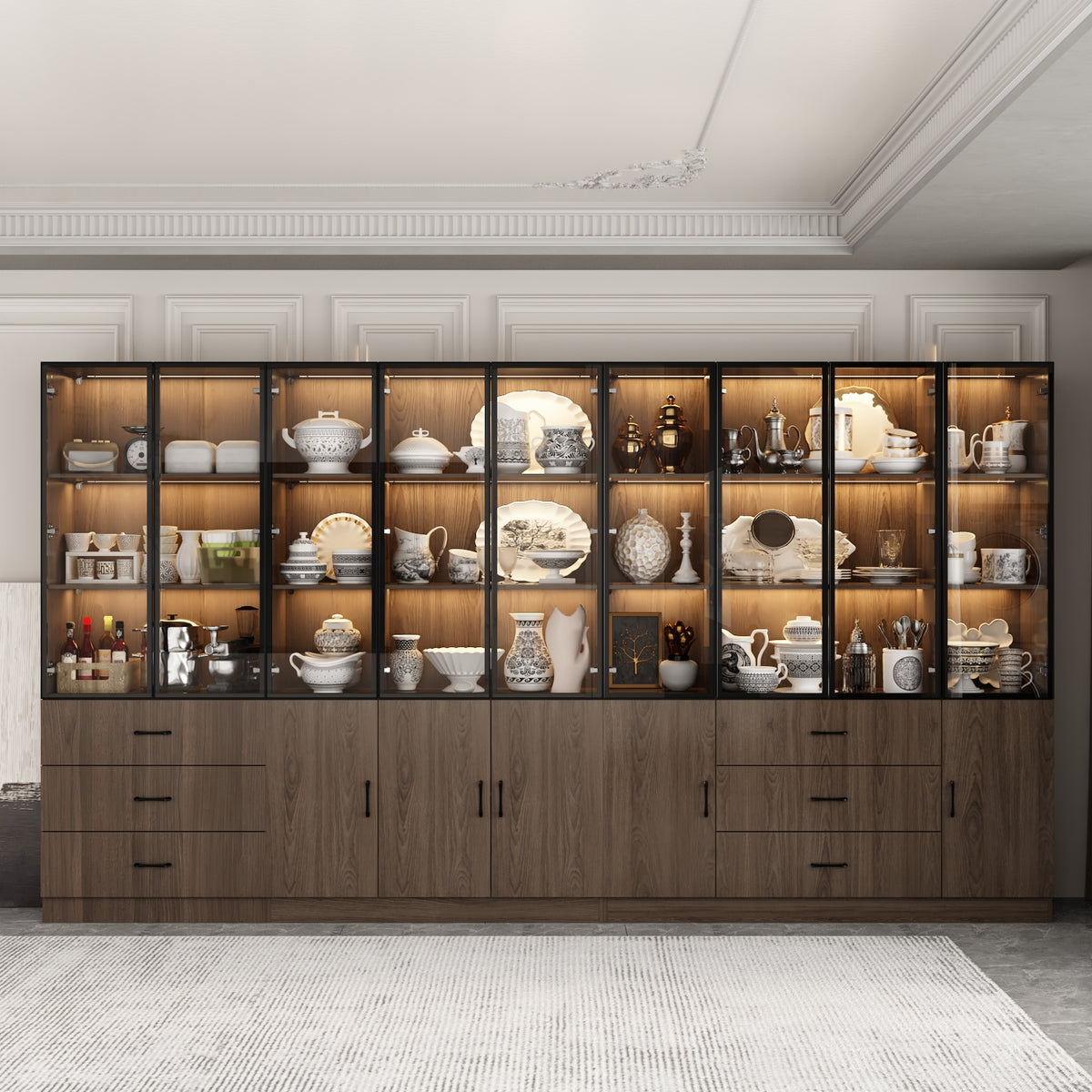
- Clear glass: a full glass panel or glass inserts in a frame. Glass cabinet doors show collections, books and dishes while keeping dust out.
- Frosted or fluted glass: lets light through but blurs what is behind it, a middle ground between display and hiding. The Skira 63" wardrobe with frosted glass doors is a bedroom example.
- Mirrored: doubles as a full-length mirror and makes a small room feel larger, as on the Hylja 63" mirrored wardrobe with 4 doors.
- Louvered: horizontal slats that allow airflow, useful for linens, shoes or electronics. The 31.5" white bookcase with glass and louvered doors combines both looks.
Choosing the right cabinet door material
The right cabinet door material depends on the finish you want and the room. Solid wood doors in white oak or red oak show natural grain and take stained finishes well, but solid wood can move with humidity. Medium density fiberboard (MDF), made from compressed wood fibers, gives a smooth, consistent surface for painted finishes, and a wood veneer over MDF adds real wood grain at a lower cost. For laundry rooms and other high humidity spaces, slab doors with a laminate or thermofoil surface wipe clean and resist moisture, though thermofoil should be kept away from heat.
Kitchen cabinet door styles vs furniture doors
On a kitchen cabinet you usually pick the door style separately from the cabinet box, especially with semi custom cabinetry, and match the drawer fronts to it; upper wall cabinets often get glass inserts to show decorative items. Freestanding storage furniture comes with its doors chosen for you, so compare door types before you compare anything else.
Full Overlay, Partial Overlay or Inset Cabinet Doors
How a door sits on the cabinet box changes the look and the gaps:
- Full overlay cabinet doors cover the whole front of the cabinet, leaving only small gaps between doors. This Old House notes the face frame is not visible with full overlay doors. It is the standard on frameless cabinets and most modern storage furniture.
- Partial overlay doors cover part of the cabinet face frame and leave some of it showing, a more traditional look.
- Inset cabinet doors sit inside the cabinet frame, flush with the front. Inset doors look crisp and furniture-like and suit vintage inspired spaces, but they need precise fitting in the door frame, so they usually cost more.
Storage vs Display vs Dust: Which Door Wins?
| Door | Hides clutter | Shows items | Keeps dust out | Easy to clean |
|---|---|---|---|---|
| Solid slab | Yes | No | Yes | Very |
| Shaker / raised panel | Yes | No | Yes | Edges collect dust |
| Clear glass | No | Yes | Yes | Shows fingerprints |
| Frosted or fluted glass | Partly | Partly | Yes | Shows fingerprints |
| Louvered | Yes | No | Partly | Slats take time |
| Open shelving | No | Yes | No | Dust every shelf |
For a modular storage wall, the most practical mix is glass at eye level for display and solid doors or drawers below for hidden storage space. Many units come that way: the Sofna 63" bookcase has tempered glass doors and 2 drawers, and other Sofna widths use the same white glass-door style. See how to plan a modular storage wall for where to put each door type.

Glass Door Safety: Why Tempered Glass Matters
Tempered glass is heat-treated so that, if it breaks, it shatters into small granular chunks instead of large jagged shards, and it is about four times stronger than ordinary annealed glass, according to the overview of tempered glass on Wikipedia. It cannot be cut after tempering, so it is made to size at the factory. Check the "Door Material" or "Glass Features" line in a product's specifications; several FUFU&GAGA display cabinets list tempered glass.
Glass doors add weight to the front of a cabinet, and an open door shifts that weight forward, which is one more reason to anchor tall units to the wall. If you need to keep children or guests out of a glass cabinet, look for a lock, such as the 27.6" black display bookcase with glass swing doors and a lock.
How to Choose the Right Cabinet Door Style
- Mostly storage, little display: solid slab doors, full overlay, with drawers at the base.
- Collections, china or books you love: clear tempered glass, with LED lighting if the room is dim.
- Bedroom wardrobes: mirrored or frosted glass to brighten the room without showing the clothes.
- Tight walkways: sliding doors, so nothing swings into the path.
- Dust-sensitive items: any closed door over open shelving.
Not sure whether you need a curio, china or display cabinet? Our guide to curio vs china vs display cabinets explains the differences. To compare door options side by side on real cabinets, browse the modular storage cabinets collection.
FAQ
What are the five types of doors on cabinets?
By how they open, the five common types are hinged, sliding, flip-up, tambour (roll) and push-to-open doors. Open shelving, with no door at all, is the sixth option many storage pieces offer.
What is the least expensive cabinet door style?
Slab doors are generally the least expensive: one flat piece with no frame, panel or profile to machine. Painted MDF or laminate slab doors cost less than solid wood Shaker or raised panel doors.
What type of cabinet door is easiest to clean?
Flat slab doors are the easiest to clean because there are no grooves or edges for dust to collect in. Glass doors wipe clean quickly but show fingerprints; raised panels and louvers take the most time.
Are glass cabinet doors safe?
Tempered glass doors are the safer choice: tempered glass is stronger than standard glass and breaks into small granular pieces rather than sharp shards. Anchor any tall glass-door cabinet to the wall to prevent tipping.

Leave a comment
This site is protected by hCaptcha and the hCaptcha Privacy Policy and Terms of Service apply.