










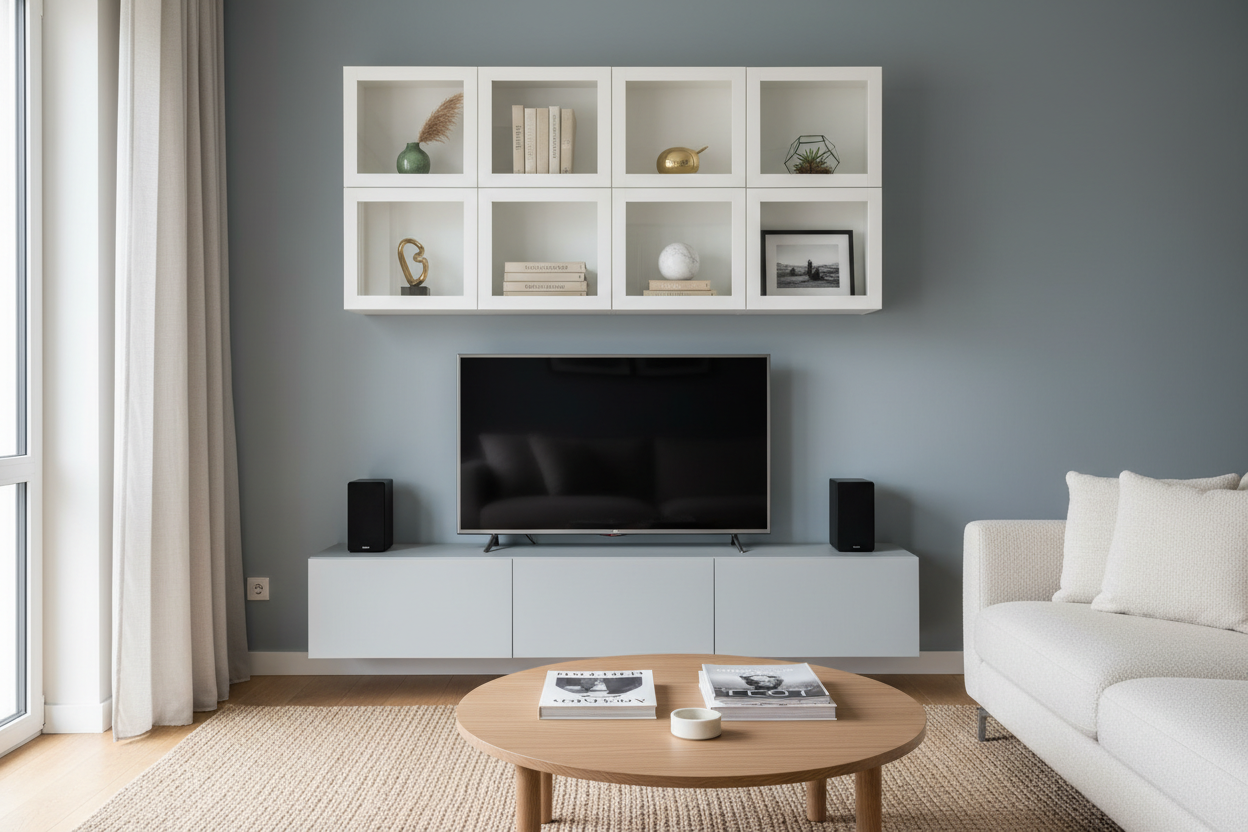
It happens in almost every project: the living room layout is finalized, the sofa is perfectly proportioned, but there is a lingering, awkward blank wall. You could hang another piece of mass-produced art, but sometimes a room needs more than just a 2D fix. It needs depth, architecture, and a place to house the objects that actually mean something to you.
Enter the wall display cabinet. When executed correctly, this piece acts as a focal point that bridges the gap between storage and gallery space. But getting it right requires more than just buying a glass-front box and finding a stud. In this guide, we will break down exactly how to select, secure, and style these pieces so they add character rather than visual clutter.
Quick Decision Guide
- Check your studs: Never trust standard drywall anchors for heavy cabinetry; always mount directly into wall studs or use structural blocking.
- Mind the depth: Keep cabinet depth under 10 inches if placing it in a hallway or high-traffic walkway to avoid a cramped feel.
- Curate, don't hoard: Leave at least 30 percent of the interior shelf space empty to allow the eye to rest.
- Match the hardware: Coordinate the cabinet's hinges and knobs with the dominant metal finishes already in your room.
Space Planning: Finding the Right Scale
Clearances and Visual Weight
A common mistake is treating a wall mounted display cabinet like a standard picture frame. Because these pieces project into the room, you have to account for visual weight and physical clearance. If you are hanging one above a credenza or a sofa, leave at least 18 to 24 inches of negative space between the top of the furniture and the bottom of the cabinet. For tighter hallways or awkward bathroom nooks, a small wall display cabinet is highly effective, provided it has a shallow depth (ideally under 8 inches) so it doesn't encroach on the walkway.
Construction Matters: Materials and Hardware
Glass, Metal, and Wood
The materials you choose dictate the entire mood of the room. Black powder-coated steel with ribbed glass leans industrial or modern transitional, while a solid walnut frame with arched mullions feels inherently traditional. Keep in mind that wall mounted display cabinets made of solid wood are incredibly heavy before you even put anything inside them. If you rent or have older drywall, consider lighter engineered wood options or minimalist metal frames.
Curating the Interior: How to Style
The Rule of Thirds and Negative Space
The quickest way to ruin the look of your cabinet is to pack it full. Treat the interior shelves like a curated museum exhibit. Group objects in odd numbers—threes and fives—and vary their heights. Mix textures by placing a smooth ceramic vase next to a stack of vintage, linen-bound books. Most importantly, give your items room to breathe. Negative space allows the eye to rest and makes the objects you do display feel intentional rather than haphazard.
Lessons from My Own Projects
Early in my career, I specified a stunning, oversized solid oak cabinet for a client's dining room. It looked brilliant on the design board. But during installation, I learned a brutal lesson about structural integrity. The cabinet was so heavy that hitting just one wall stud wasn't enough; it started pulling away from the drywall within a week. We had to take it down, open the wall, and install horizontal wood blocking between the studs just to hold the weight. Always over-engineer your mounting strategy.
Another honest caveat: glass shelves are a dust magnet. If you live in an older home, have pets, or use forced-air heating, be prepared to wipe down the interior glass every two weeks. The dust settles visibly, and backlit glass shelves highlight every single speck. If you hate dusting, opt for solid wood shelves inside the cabinet instead of glass.
Frequently Asked Questions
How high should I hang a wall display cabinet?
As a general rule, the center of the cabinet should sit at eye level, which is roughly 57 to 60 inches from the floor. However, if you are hanging it above a piece of furniture, ensure there is enough clearance so it feels connected to the piece below without crowding it.
How much weight can a wall mounted display cabinet hold?
This depends entirely on the mounting hardware and wall structure. A cabinet secured directly into two wall studs with heavy-duty lag screws can hold upwards of 100 pounds. Drywall anchors, even the heavy-duty toggle bolts, should generally be trusted with no more than 30 to 40 pounds total, including the weight of the cabinet itself.
Are these cabinets good for small spaces?
Absolutely. Taking advantage of vertical space is a fundamental rule of small-space design. A narrow, vertically oriented cabinet draws the eye upward, making the ceiling feel higher while providing storage that doesn't eat up your valuable floor square footage.


Leave a comment
This site is protected by hCaptcha and the hCaptcha Privacy Policy and Terms of Service apply.