










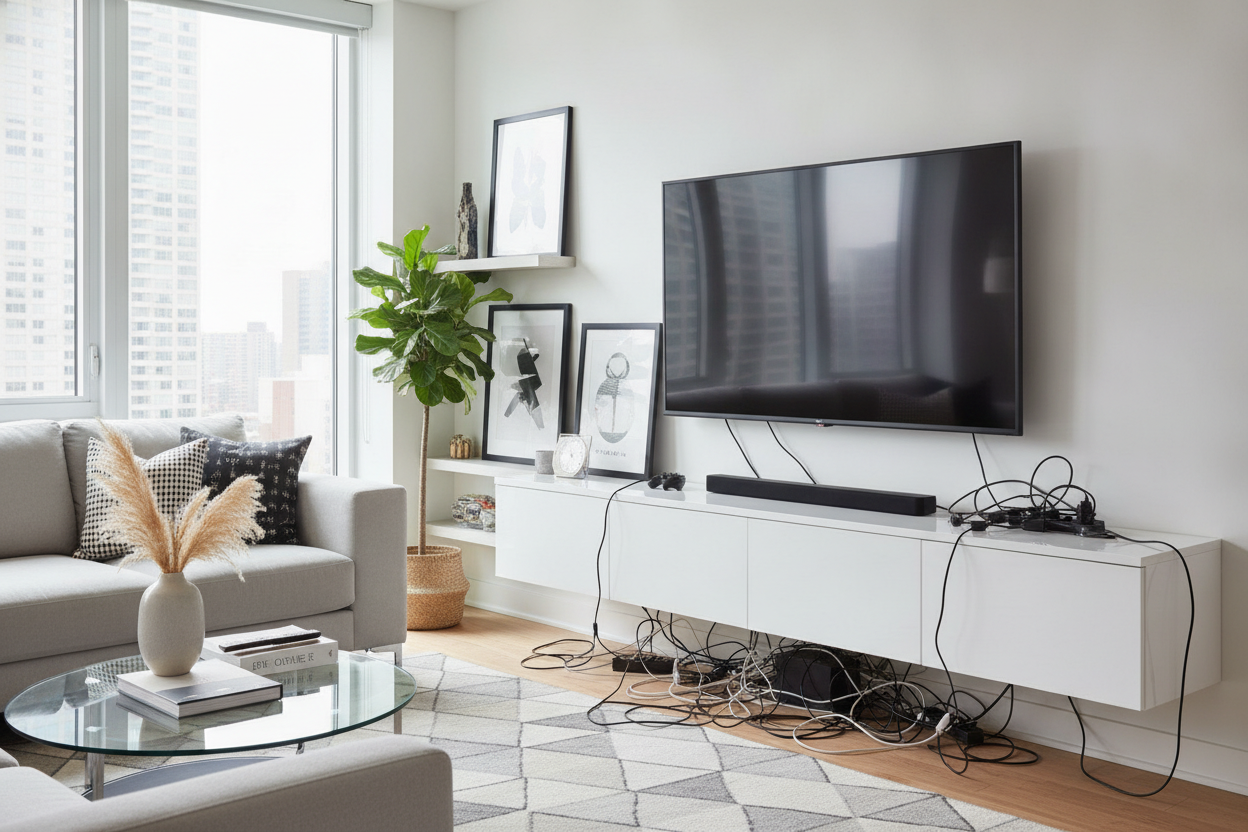
I remember the exact moment I decided I needed a floating tv rack. I was vacuuming, and the wheels of my Dyson got caught in a dusty web of HDMI cables and power strips behind my old bulky cabinet. I wanted that sleek, Pinterest-ready look where the furniture just hovers, weightless and clean. I thought the furniture itself would solve my problems, but I was wrong.
The truth is, a floating entertainment center is a commitment to a specific kind of lifestyle—one that involves a drill, a stud finder, and probably a few holes in your drywall. If you aren't prepared for the installation reality, that 'modern' look ends up looking like a science experiment gone wrong. Here is the unfiltered truth about what it takes to make a floating tv unit actually work in your living room.
Quick Takeaways
- Wires don't disappear on their own; you need to route them behind the wall.
- Drywall anchors are for picture frames, not for a floating media console holding expensive gear.
- Your unit should be at least 20% wider than your TV to avoid the 'mustache' look.
- Mounting height is determined by your sofa, not your standing eye level.
The 'Floating' Illusion Is Actually Just Good Drywall Surgery
The biggest lie in interior photography is the cord-free floating entertainment unit. When you see a floating media shelf online, there are zero wires. In reality, your TV has a power cord, an HDMI for the PS5, and maybe an optical cable for the soundbar. If you just bolt a floating tv shelf to the wall and let those wires dangle, you’ve basically just created a pedestal for your clutter.
To get that clean, professional look of a wall mounted media console, you have to perform 'drywall surgery.' This means installing recessed cable plates or 'bushes' behind the TV and another set behind the console. You’re essentially fishing wires through the wall cavity. If you’re a renter or you have concrete walls, a floating media center becomes a lot more complicated. You might need to use cord covers, but even the best paintable ones never truly disappear.
Please Stop Trusting Plastic Drywall Anchors
I’ve seen too many 'fail' videos of a floating wood tv stand ripping out of the wall because someone trusted those little plastic butterfly anchors. A standard floating tv cabinet can weigh 40 to 60 pounds on its own. Add a receiver, a gaming console, and a few heavy coffee table books, and you’re asking a lot from half-inch gypsum board. This is not the time to 'wing it.'
You must find the studs. Period. Most floating media stand designs have a mounting rail or specific bracket points. If your studs aren't perfectly centered where you want the TV, you’ll need to use a mounting board or heavy-duty toggle bolts, but even then, I’m a stud-purist. If you are planning on a large floating entertainment center that spans six feet, you need to be hitting at least three different studs to ensure that your floating tv mount doesn't become a floor-resting unit by mid-afternoon.
Why Your Unit Looks Like a Tiny Mustache Under Your TV
Proportions are where most people trip up. I see it all the time: a massive 75-inch TV paired with a 50-inch floating shelf tv stand. It looks like a giant face with a tiny, poorly groomed mustache. It makes the room feel top-heavy and cramped. The 'visual weight' of the TV needs to be anchored by something wider than itself.
As a rule of thumb, your floating tv console shelf should be at least 10 to 12 inches wider than the TV on both sides. A long floating tv console creates a horizontal line that draws the eye across the room, making the space feel bigger. If you buy a unit that is the same width as the screen, you’re missing the point of the aesthetic. I always recommend people look into fixing your TV wall stand design by measuring twice and erring on the side of 'too long' rather than 'too short.'
The 'Eye-Level' Rule Everyone Gets Wrong
The most common mistake with a floating wall unit is mounting it way too high. We have a tendency to stand up while we’re measuring, but you don’t watch TV standing up. If you mount your floating stand under tv at chest height while standing, you’ll be craning your neck back every time you sit on the couch. This is the fast track to a chiropractor appointment.
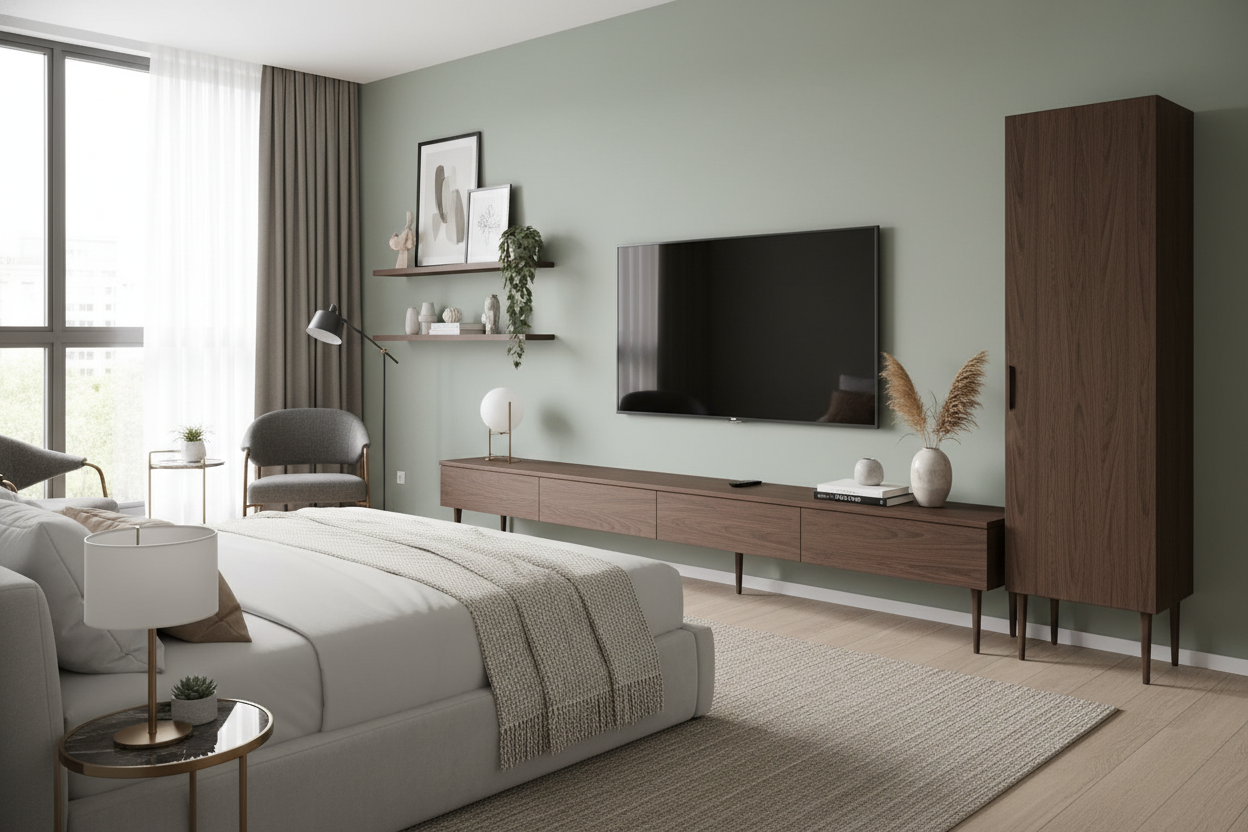
Sit on your sofa. Mark your eye level on the wall. The center of your TV should be right there. This usually means your floating high gloss tv stand needs to be mounted surprisingly low—often only 8 to 12 inches off the floor. This creates a sophisticated, low-profile look that feels grounded despite being 'floating.' It also gives you plenty of room to decorate the top of the floating tv table without blocking the screen.
When to Give Up and Buy a Grounded Console
I’ll be the first to admit that a floating tv wall mount isn't for everyone. I once lived in a 1920s apartment with lath-and-plaster walls that crumbled if you even looked at them funny. After three failed attempts to secure a floating wall entertainment center, I realized I was fighting a losing battle. If you’re a frequent redecorator who moves furniture every six months, a wall mount floating tv stand is your worst enemy.
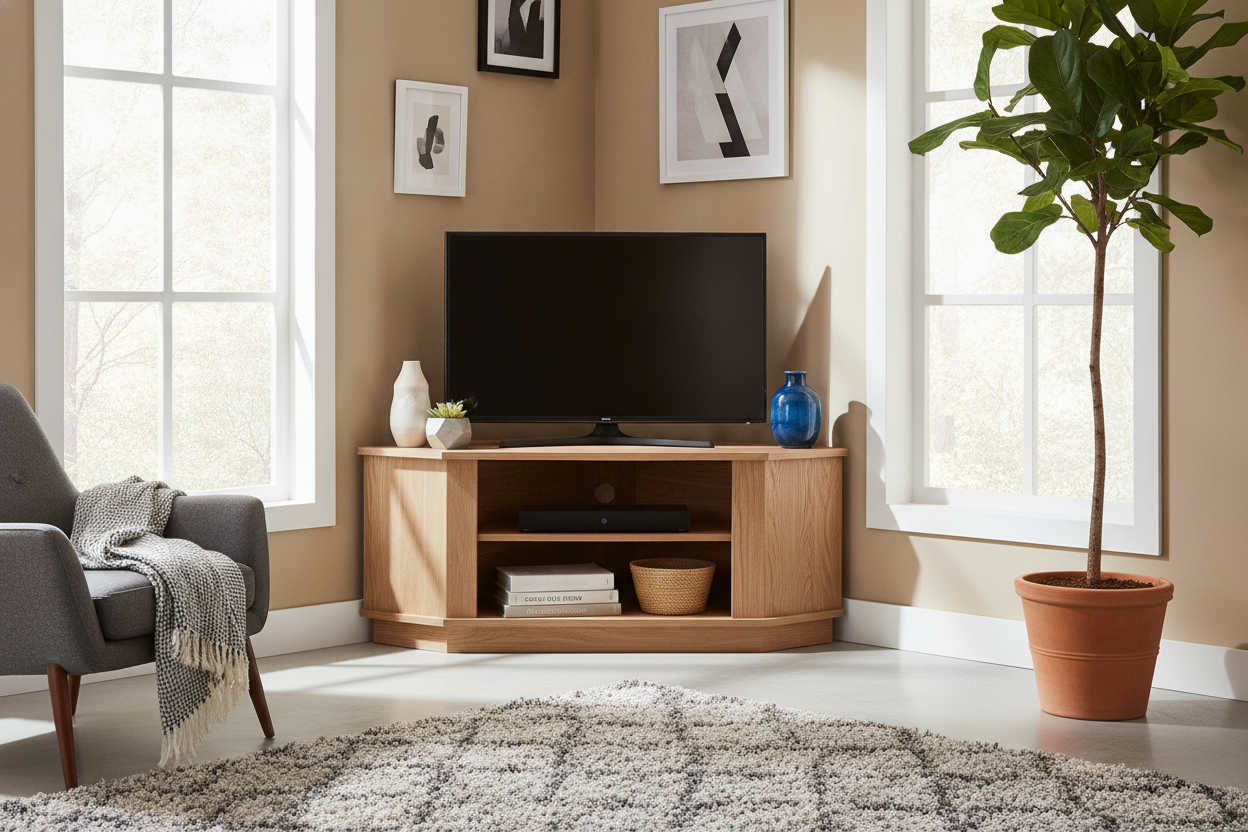
Every time you move it, you’re looking at four to eight holes that need patching and painting. If you’re a renter or just not handy with a power drill, there is no shame in sticking with traditional TV stands. They offer way more storage for heavy equipment, they don't require structural engineering to install, and they hide the messy cables just as well if you choose a model with a solid back. Sometimes the best 'floating' look is just a very clean, leggy floor unit.
Personal Experience: The 2 AM Crash
I once installed a beautiful oak floating tv stand in my first 'grown-up' apartment. I was so proud of it. I used the anchors that came in the box (mistake number one) and didn't bother checking for studs because the instructions said it was 'optional' for light loads. I put my vintage record player on it. At 2 AM, I heard a sound like a gunshot. The drywall had given way, and my floating tv unit was hanging by a single screw, tilted at a 45-degree angle. I spent the next day learning how to patch drywall and swear. Now, I never mount anything without a magnetic stud finder and a level.
Frequently Asked Questions
Can I put a floating tv stand on a plaster wall?
It’s risky. Plaster is brittle and doesn't hold anchors well. You absolutely must find the wood lath or the studs behind the plaster, or use specialized toggle bolts designed for high-stress loads.
How much weight can a floating media console hold?
Most are rated for 50-75 lbs if installed correctly into studs. Always check the manufacturer's specs, especially if you have a heavy receiver or a collection of vinyl records.
How do I hide the wires if I can't go behind the wall?
Use a D-line cable trunking or a paintable cord cover. It’s not as 'invisible' as going through the wall, but if you paint it the exact same color as your wall, it blends in surprisingly well.

Leave a comment
This site is protected by hCaptcha and the hCaptcha Privacy Policy and Terms of Service apply.