











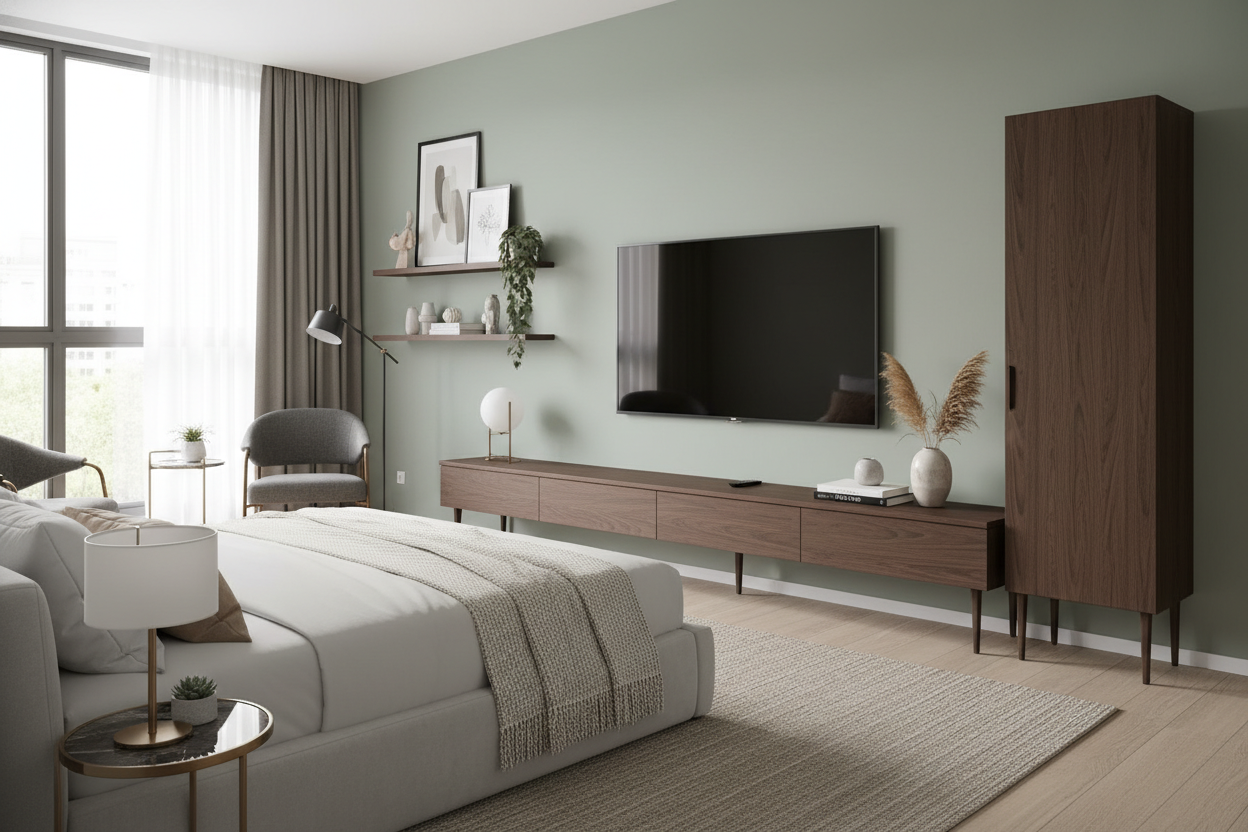
I spent three years performing a nightly 'sideways shuffle' just to get to my closet. My bedroom wasn't tiny, but the layout was a total disaster. I had a standard 19-inch deep dresser at the foot of my bed, leaving me with a walkway so narrow I had to turn my body 90 degrees every time I wanted to grab a pair of socks. I finally realized that my furniture was the enemy, not the architecture. Swapping that bulky beast for an extra thin tv stand was the best design decision I have ever made.
Quick Takeaways
- Standard media consoles are 16-20 inches deep, which kills traffic flow in bedrooms.
- A depth of 10-12 inches is the 'sweet spot' for maintaining a walkable path.
- Integrated mounts offer stability for large screens without the bulk of a wide base.
- Modern flat screens look visually balanced on slim profiles, not top-heavy.
The 'Foot of the Bed' Walkway Trap
The space between the foot of your bed and the wall is sacred. In most apartments, you are lucky to get 30 inches of clearance. When you shove a standard-depth dresser or a thick media console in that gap, you are left with a 10-inch tightrope. It makes the room feel cramped and stressful. I tried living like that for way too long, constantly hitting my hip on the corner of the wood.
The solution isn't to go without a screen—it is to find a small width tv stand or a specialized thin tv unit. These pieces are designed to hug the wall, shaving off 6 to 10 inches of depth compared to traditional furniture. That difference might sound small on paper, but in a bedroom, it is the difference between a functional room and a storage unit you happen to sleep in.
Why Traditional Consoles Just Do Not Work Here
Traditional media units are built for living rooms where you have 15 feet of open space. They are deep because they were originally designed to hold heavy CRT televisions or massive stereo receivers. Modern tech is paper-thin, yet furniture manufacturers are often stuck in the past. Putting a 1-inch thick OLED on a 20-inch deep cabinet is a waste of your precious square footage.
A slim line tv stand or a narrow long tv stand fixes the math. By cutting the depth down to 10 or 12 inches, you open up the room's circulation. This is the secret to maximizing flow in small spaces. You get the functionality of a media center without the footprint of a dining table.
The Hunt for the Right Extra Thin TV Stand
When I started shopping, I realized not all 'slim' furniture is created equal. You have to look at the legs. A lot of units claim to be thin but have a tv stand narrow base that actually flares out at the bottom, creating a trip hazard. You want something with a vertical profile that stays flush to the wall.
If you are a renter like me, you probably can't drill holes for a wall mount. That is where a narrow tv stand with mount comes in. These units use a spine-like structure to hold the TV up, giving you that 'floating' look without the security deposit deduction. I highly recommend looking for a stand with a built-in mount if you want the cleanest possible look in a tight space.
The Unexpected Bonus: It Makes the Tech Look Better
There is a weird visual disconnect when you put a ultra-modern, razor-thin screen on top of a bulky, chunky box. It looks unbalanced and accidental. Using slim tv stands flat screens actually makes the technology look more intentional. It creates a cohesive, linear aesthetic that feels much more high-end.
I eventually settled on a slim wood tv stand with a dark walnut finish. It looks like a piece of custom cabinetry rather than a cheap piece of flat-pack furniture. If you are tired of your room looking like a dorm, it is time to browse modern TV stands that actually match the scale of your electronics.
Where Does the Clutter Go?
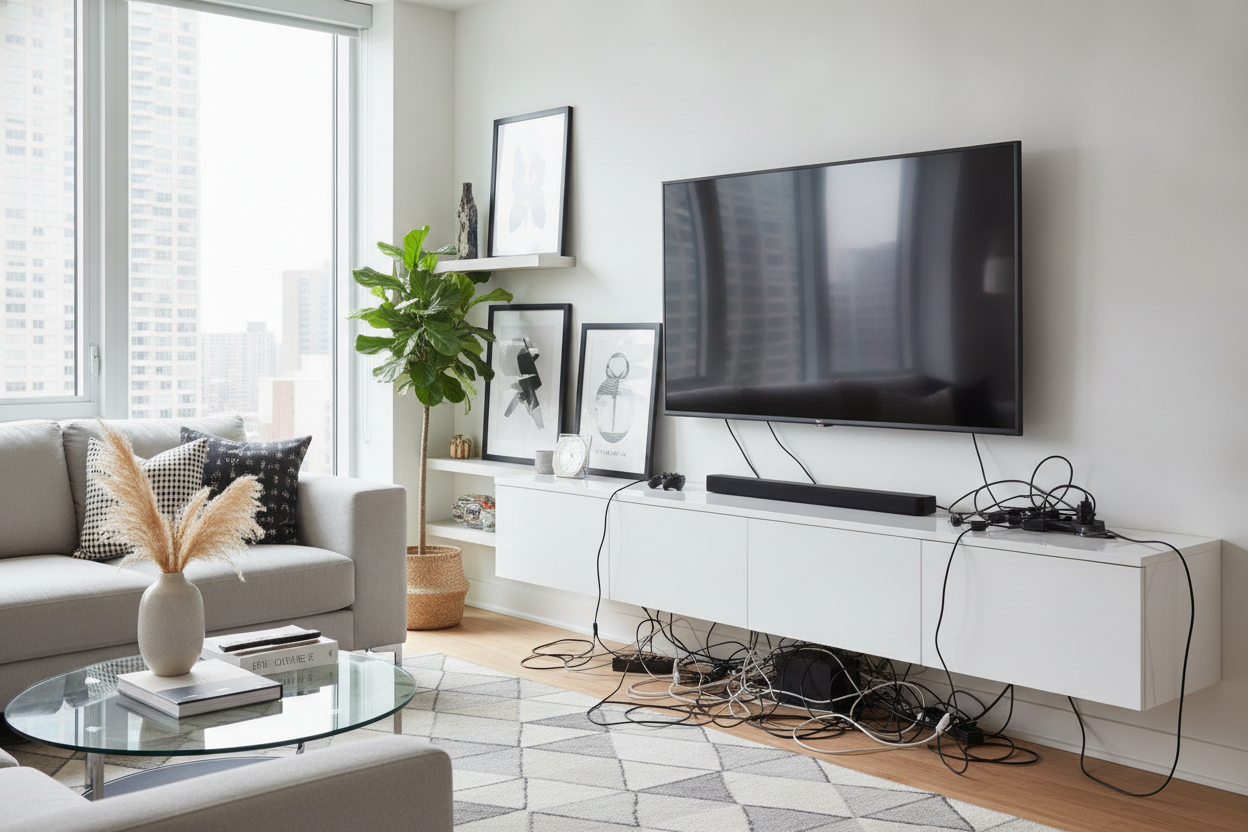
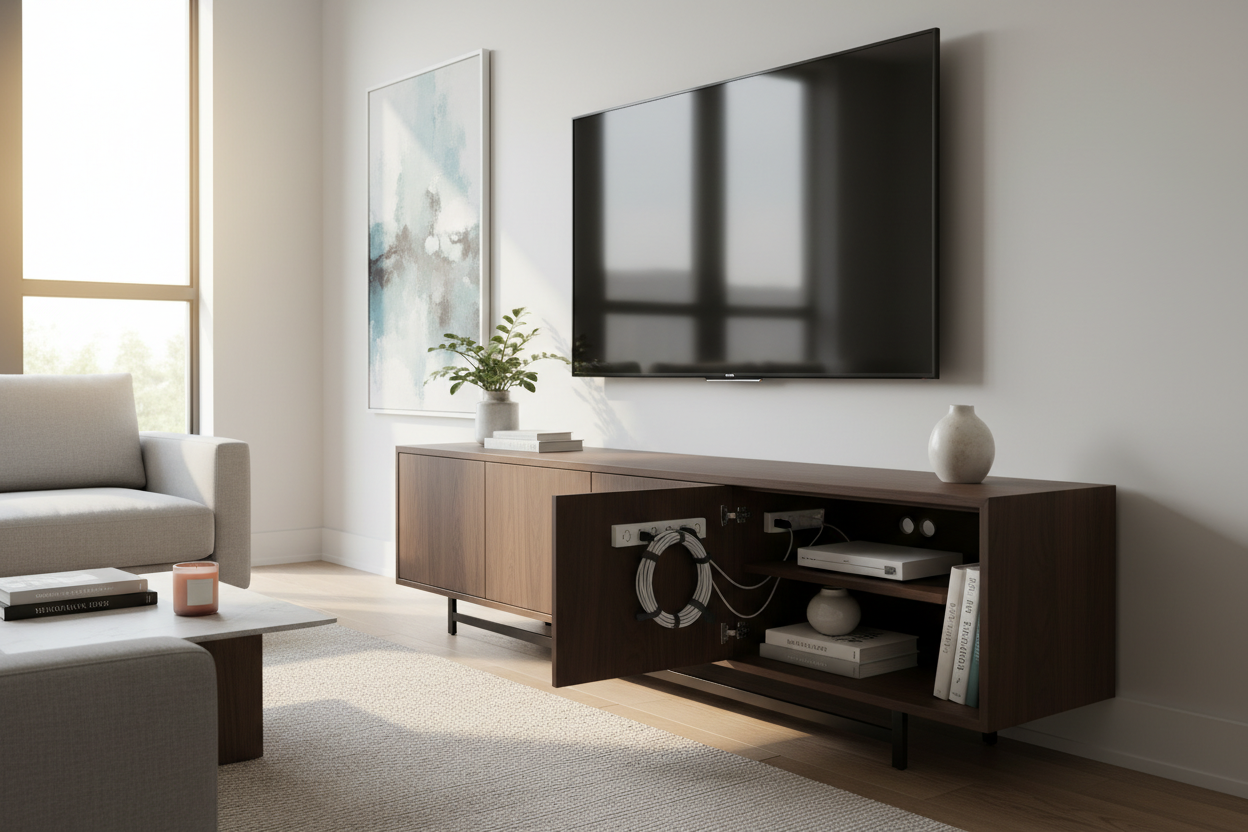
The biggest concern people have with a small narrow stand is storage. Where do you put the PlayStation, the router, and the mess of cables? The trick is verticality. Use the wall space above or below the screen. I use adhesive mounts to hide my Apple TV behind the screen itself, and I chose a stand with a small lower shelf for the router.
If you absolutely must have hidden storage, you can look for a narrow tv armoire, though those can still feel a bit heavy in a small room. For those who want the ultimate 'now you see it, now you don't' setup, you could even go with an electric vertical lift TV cabinet. It keeps the room looking like a sitting room until you're ready to binge-watch.
My Personal Experience
I once bought a gorgeous mid-century console that I found on Craigslist. It was 18 inches deep and made of solid oak. I loved it until I got it home. It blocked my bottom dresser drawer from opening fully, and I had to squeeze past it every morning. I lived with it for six months before I finally admitted it was a mistake. I replaced it with a 10-inch deep metal-and-wood hybrid stand, and the room felt twice as big instantly. Don't let 'pretty' furniture ruin your daily life.
Frequently Asked Questions
How deep should a thin TV stand be?
For a narrow walkway, look for a depth between 10 and 12 inches. Anything deeper than 14 inches starts to feel bulky in a bedroom or hallway.
Are narrow TV stands stable?
Yes, but you have to check the weight rating. Many come with wall-anchoring kits (which you should definitely use) or weighted bases to prevent tipping.
Can a thin stand hold a 65-inch TV?
Absolutely. You just need a narrow long tv stand that is wide enough to support the TV's feet, or a model with an integrated center mount that holds the screen from the VESA holes.

Leave a comment
This site is protected by hCaptcha and the hCaptcha Privacy Policy and Terms of Service apply.