










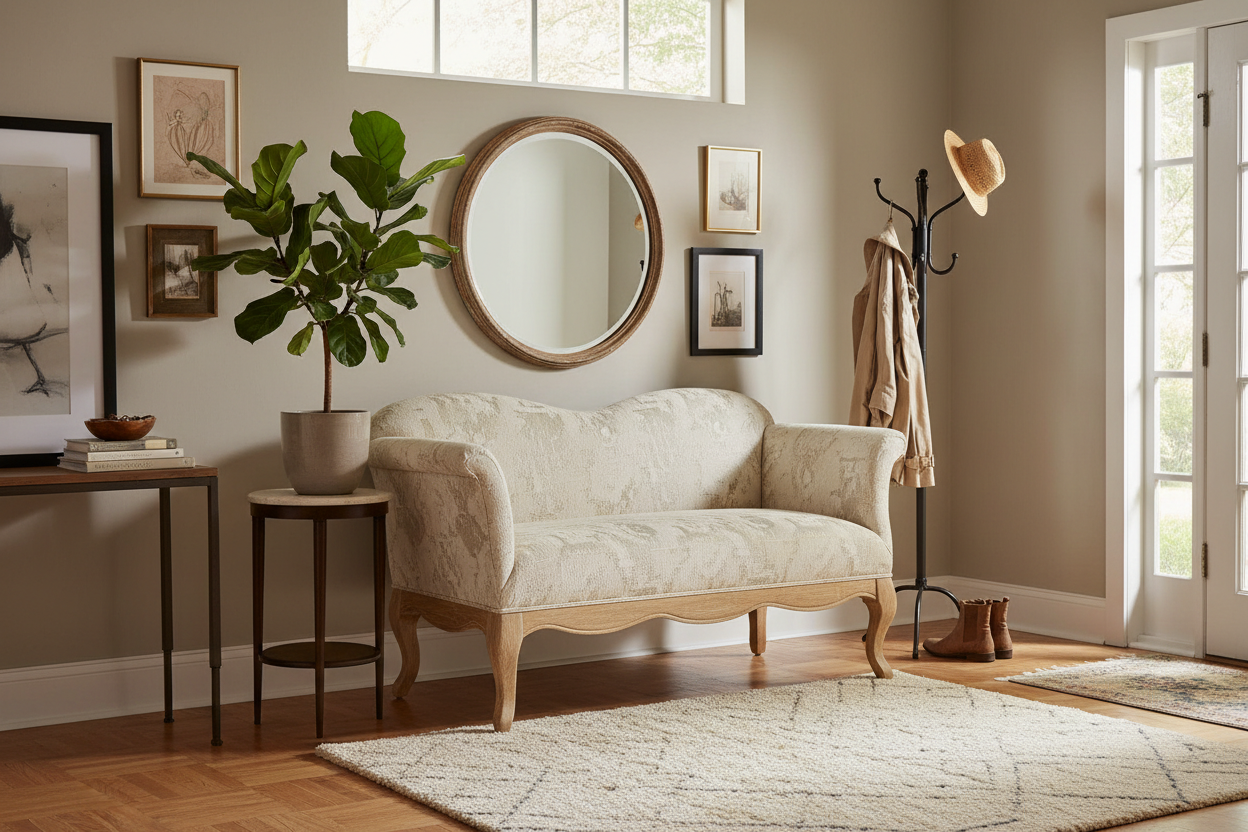
Your front door opens, and the first thing you or your guests see sets the tone for the entire home. Often, this space becomes a chaotic drop zone for mail, keys, and kicked-off shoes. An entryway settee solves this identity crisis immediately. It bridges the gap between a utilitarian mudroom and a curated living space, offering a designated spot to pause, sit, and transition from the outside world into your sanctuary. Unlike a hard wooden bench or a console table, a settee brings softness and upholstery into an area that usually feels cold and transitional.
Integrating upholstered furniture into a hall might seem counterintuitive if you are worried about dirt, but the payoff in design and comfort is substantial. It transforms a hallway from a mere passageway into a room of its own. Whether you are working with a grand entrance or a narrow corridor, the right seating anchors the space and invites people to linger just a moment longer.
My Experience: The Difference a Seat Makes
I spent years treating my foyer as a runway. It was a place to rush through, not to inhabit. I had a narrow console table that collected clutter, and I would inevitably find myself hopping on one foot, trying to balance against the wall while pulling off rain boots. It was frantic and uninviting. When I finally swapped that table for a vintage velvet settee, the energy of the house shifted. Suddenly, there was a place to drop a heavy grocery bag without bending over, a spot for guests to sit while waiting for their ride, and a visual softness that absorbed the echo of the tiled floor. That small piece of furniture didn't just fill space; it changed how I entered and exited my home every day.
Choosing the Right Scale for Your Space
Proportion is the primary challenge when placing furniture in a hall. You never want to impede the flow of traffic. A settee in the entryway must be shallow enough to allow for easy walking clearance—ideally leaving at least 36 inches of walkway space. If your hall is narrow, look for armless designs or pieces with a tight back. These provide the visual weight of a sofa without the physical bulk.
For larger, more open areas, a foyer settee can be more substantial. Here, you can experiment with high backs, rolled arms, or even a curved design that mimics the architecture of a staircase. The goal is to fill the void so the space doesn't feel cavernous, but not to clutter it so much that it feels like an obstacle course. Measure your available wall space and subtract a few inches on either side; furniture looks best when it has room to "breathe" rather than being wedged tight between door frames.
Style Meets Function: The Entryway Sofa Bench
There is a distinct category of furniture often labeled as an entryway sofa bench. These hybrids offer the best of both worlds: the structured durability of a bench with the back support and upholstery of a sofa. They are particularly effective in homes that lean towards a modern farmhouse or transitional aesthetic. Because they often sit higher off the ground on exposed legs, they maintain an airy feel, preventing the hallway from looking heavy or closed in.
When selecting this type of piece, consider the leg style. Tapered wooden legs suggest a mid-century modern vibe, while turned legs with casters can lean traditional or Victorian. The space beneath an entryway sofa bench is also prime real estate. You can slide woven baskets underneath to hide shoes, dog leashes, or winter accessories, keeping the visual clutter at bay while maintaining the elegance of the upholstery above.
Fabric Durability in High-Traffic Zones
Placing a settee in the foyer means exposing fabric to the elements. This is the front line for wet coats, muddy paws, and denim jeans. Delicate silks or loose-weave linens will not survive here. Instead, prioritize performance fabrics. Crypton, treated velvet, or high-quality faux leathers are excellent choices because they resist staining and are easy to wipe down.
Patterns can be your friend in an entryway. A subtle herringbone, a bold stripe, or a floral print can hide minor scuffs and dust much better than a solid, light-colored fabric. If you fall in love with a solid light linen, ensure it has a slipcover that can be bleached, or be prepared to have it professionally cleaned regularly. The settee should look inviting, not like a museum piece you are afraid to touch.
Styling Your Entryway Settee Bench
Once you have the furniture in place, styling it integrates the piece into the rest of your home's decor. An entryway settee bench looks lonely if left completely bare. Start with lighting. A floor lamp placed beside the settee or a sconce installed on the wall above it creates a warm pool of light that welcomes you home in the evening.
Textiles play a massive role here. A throw blanket draped over the arm adds color and texture, but it also serves a purpose on chilly mornings. Accent pillows are an easy way to swap out seasonal decor without changing the furniture itself. Above the settee, consider a large mirror. Mirrors are a classic foyer trick; they reflect light to make the space feel larger and offer a final check of your appearance before you head out the door. Alternatively, a large piece of art can serve as a conversation starter the moment guests arrive.
The Versatility of a Settee in the Foyer
The beauty of a settee in the foyer lies in its versatility. In many modern homes, the "foyer" bleeds into the living room or dining area. A settee acts as a room divider, subtly marking the boundary where the entrance ends and the living space begins. It can be pulled into the living room for extra seating during large parties, making it a hardworking investment for those who entertain frequently.
Unlike built-in cabinetry or heavy storage lockers, a settee is movable. If you decide to redecorate or move to a new house, this piece travels with you. It can eventually live at the foot of a bed, in a dining nook, or in a home office. This adaptability makes it a smarter long-term purchase than fixed entryway solutions.
Final Thoughts on Entryway Seating
Creating a welcoming entrance is about balancing aesthetics with the reality of daily life. An entryway settee offers a sophisticated solution that softens the hard lines of a hallway while providing necessary function. Whether you choose a sleek entryway sofa bench for a modern look or a plush, tufted foyer settee for traditional elegance, the result is a home that greets you with comfort the moment you walk through the door.
Frequently Asked Questions
What is the difference between a settee and a loveseat for an entryway?
A settee is generally narrower and has a more upright posture and higher seat than a standard loveseat. This makes it better suited for entryways where space is tight and the primary use is sitting briefly to put on shoes, rather than lounging for long periods.
How much space do I need to leave in front of an entryway settee?
You should aim for at least 36 to 48 inches of clearance in front of the settee to allow for comfortable walking traffic. If your entryway is a high-traffic corridor, ensure the furniture doesn't create a bottleneck that forces people to squeeze by.
Can I use a dining banquette as a foyer settee?
Yes, a dining banquette often works beautifully as a foyer settee because it is designed with an upright back and a compact footprint. Just ensure the fabric is durable enough for an entryway setting, as dining fabrics are sometimes designed for food spills rather than the abrasion of outdoor coats.


Leave a comment
This site is protected by hCaptcha and the hCaptcha Privacy Policy and Terms of Service apply.