










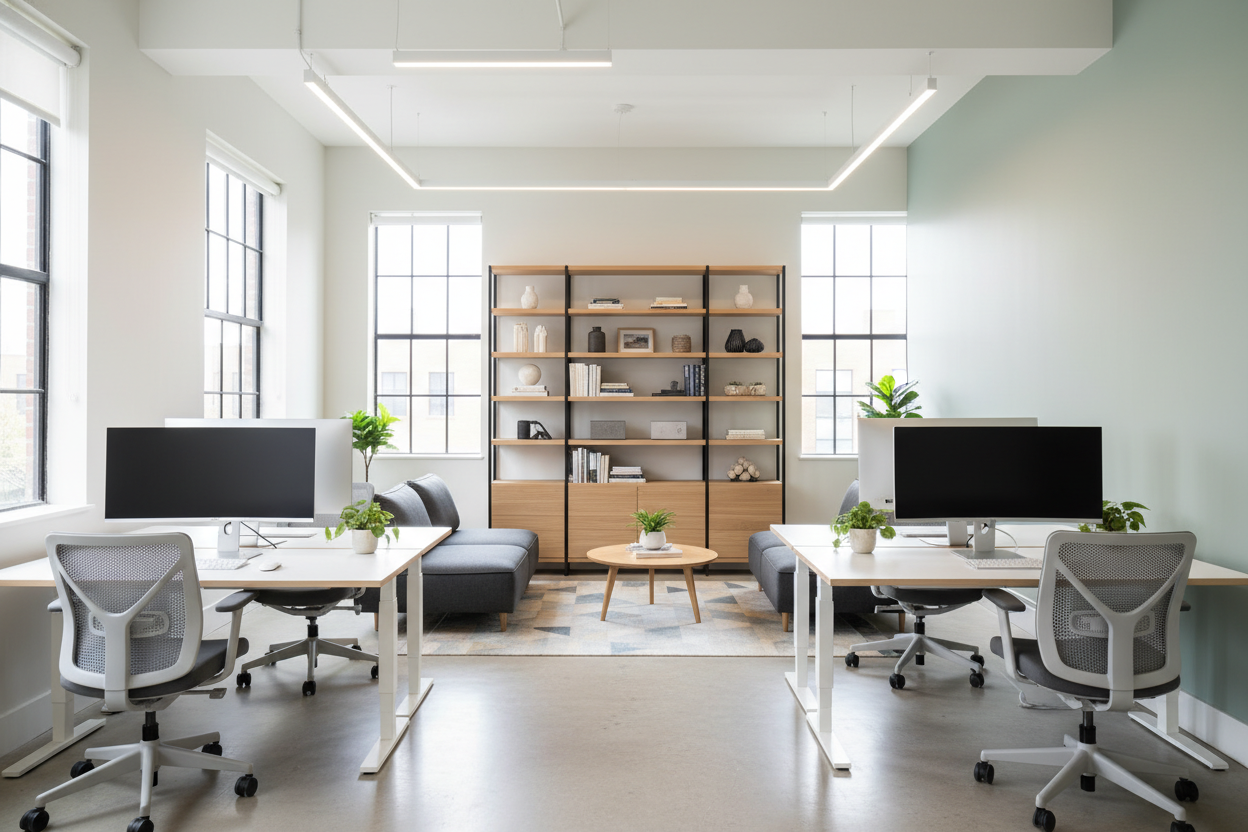
There is a specific tension inherent in designing for smaller enterprises: you need the functionality of a corporate headquarters but often lack the square footage to separate departments physically. The challenge isn't just fitting desks into a room; it is about cultivating a culture and workflow within a constrained footprint. When executing office space ideas for small businesses, the goal is to create an environment that feels established and professional, rather than a temporary stopgap.
Key Features of a High-Performance Small Office
- Multi-Functional Zoning: In limited square footage, spaces must adapt. Look for breakout areas that double as informal meeting spots.
- Acoustic Management: Small spaces amplify noise. Prioritize soft furnishings, acoustic baffles, or carpet tiles to dampen sound travel.
- Vertical Utilization: Floor space is premium. Use wall-mounted storage and tall shelving units to draw the eye upward and clear pathways.
- Lighting Layers: Avoid relying solely on overhead fluorescents. Combine ambient, task, and accent lighting to define different work zones.
- Ergonomic scalability: Invest in chairs and desks that offer adjustability to accommodate different body types as your team grows or changes.
Defining the Layout: Flow Over Density
A common pitfall in office design for small business layouts is prioritizing maximum headcount over workflow. Cramming desks together creates a "call center" vibe that kills creativity. Instead, focus on the circulation paths. A minimum of 36 to 48 inches is required for main walkways, but in a small company office design, widening this slightly can make the entire suite feel more luxurious and less claustrophobic.
The "Resimercial" Balance
We are seeing a massive shift toward "resimercial" design—blending residential comfort with commercial durability. However, this requires a keen eye for materials. While a velvet sofa looks stunning in a reception area, ensure it is performance velvet with a high double-rub count (Wyzenbeek rating). Small business office design ideas often fail when residential-grade furniture is used in high-traffic zones; it simply won't hold up to the daily grind of 8-10 hours of use.
Materiality and Visual Weight
In smaller layouts, the visual weight of your furniture matters as much as the physical dimensions. Heavy, solid wood desks with modesty panels can make a room feel smaller.
Consider cantilevered desks or pieces with exposed metal legs to maintain sightlines across the floor. regarding surfaces, high-pressure laminate (HPL) is often a smarter choice than wood veneer for small corporate office design ideas. HPL resists the heat from laptops and the inevitable coffee rings far better than natural wood, maintaining that pristine look for client visits without constant maintenance.
Strategic Color and Branding
Small business office design doesn't mean plastering your logo on every wall. Subtle branding is more sophisticated. If your brand color is a vibrant orange, use it for chair upholstery or acoustic panels, but keep the shell (walls and floors) neutral. This technique, known as "visual quiet," allows the eye to rest and prevents the space from feeling chaotic.
My Personal Take on Office Space Ideas for Small Businesses
I learned a hard lesson early in my career while designing a boutique agency in a converted loft. I fell in love with a stunning, reclaimed rough-sawn wood conference table. It was the centerpiece—visually incredible and perfectly on-brand for the client.
Three weeks after installation, I got a call. The texture that looked so good was a nightmare for writing. Every time someone tried to sign a contract or sketch on a single sheet of paper, the pen poked through or the lines went jagged. We had to retrofit a custom glass top, which killed the matte aesthetic we wanted. Since then, I always tell clients: touch the surface. If you can't run a mouse over it smoothly without a pad, or write a check on it, it doesn't belong in a workspace, no matter how beautiful it looks on Pinterest.
Conclusion
Your office is a physical manifestation of your business strategy. By prioritizing durable materials, managing acoustics, and respecting the flow of movement, you can build a space that punches above its weight class. A well-designed office isn't just an expense; it's a daily asset that retains talent and impresses clients.
Frequently Asked Questions
How much space should I allocate per employee in a small office?
While the traditional metric was often 150-200 square feet per person, modern efficient layouts often work with 100-125 square feet. This includes the desk area plus a share of the common spaces like hallways and break rooms.
Is open plan better for small businesses?
Not always. While it saves space, it can destroy focus. A hybrid approach is best: open benching for collaboration, flanked by one or two "phone booths" or small quiet rooms for focused work and private calls.
What is the most durable flooring for a high-traffic small office?
Luxury Vinyl Tile (LVT) is the current gold standard. It mimics the look of wood or stone, is incredibly durable against rolling chair casters, and offers better acoustic dampening than polished concrete or ceramic tile.


Leave a comment
This site is protected by hCaptcha and the hCaptcha Privacy Policy and Terms of Service apply.