










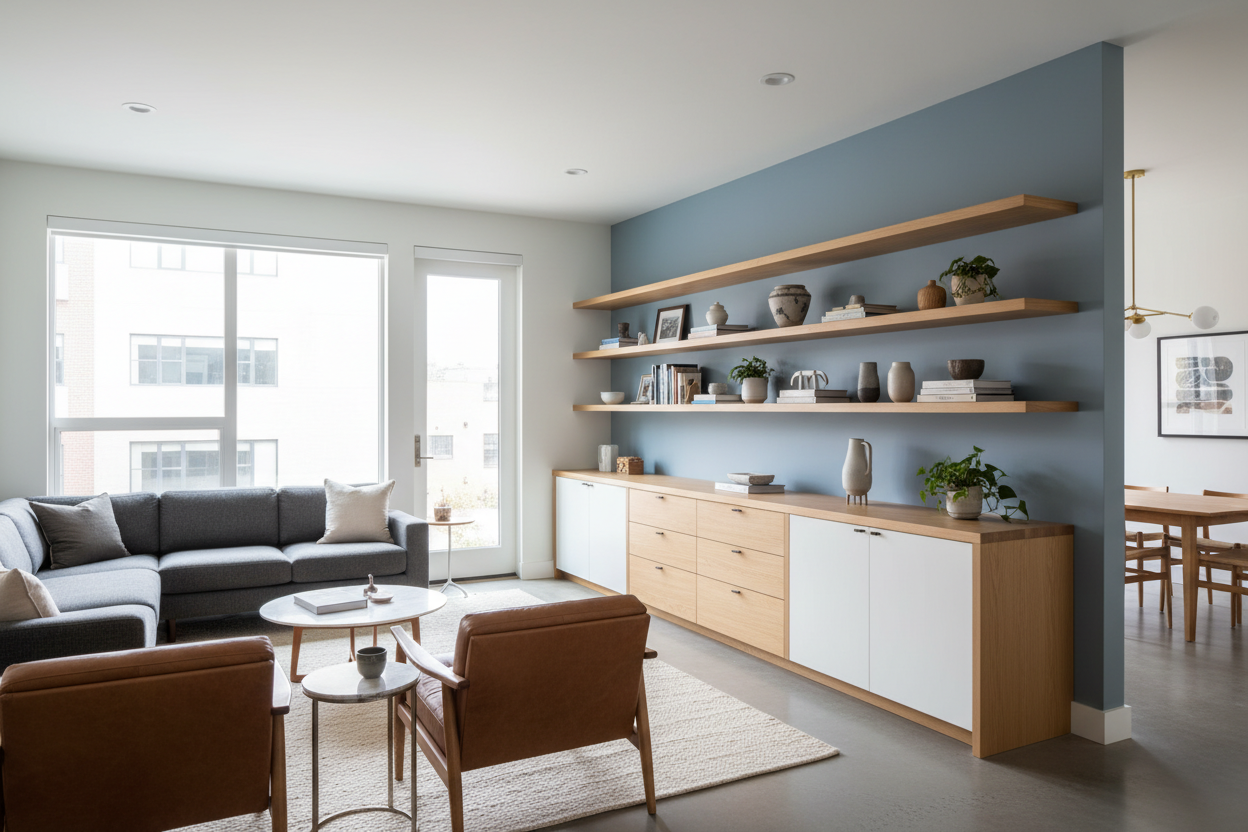
I spent three months staring at my living room floor plan, feeling like I lived in a high-end airport hangar. It was 30 feet of unbroken hardwood with no clear place for the sofa to end and the dining area to begin. I tried oversized area rugs and even a massive sectional, but they just looked like little islands floating in a sea of beige. I finally realized that what I needed wasn't more furniture—it was architecture.
Installing built in cabinets at a half-wall height was the only thing that actually fixed the flow. It gave the room a spine. If you are tired of your house feeling like one giant, messy room where the kitchen smells collide with the laundry piles, this is the project that changes the math of your floor plan.
Quick Takeaways
- Half-walls define 'zones' without blocking the natural light that makes open-concept homes appealing.
- Standard kitchen cabinet depth (24 inches) is usually too bulky for a divider; aim for 12 to 15 inches.
- Solid doors are mandatory—don't let your 'hidden' storage become a public display of your junk.
- Always match your existing baseboards to the bottom of the cabinetry to make it look original to the house.
The Problem with Giant Open Floor Plans
The 'bowling alley' floor plan is the curse of modern construction. You get these massive, rectangular footprints where the entryway bleeds directly into the living room, which bleeds into the kitchen. Without a physical break, your eyes never get a rest. You see the pile of mail on the counter while you're trying to watch a movie, and you see the dog's leash on the floor while you're eating dinner.
Entryway zones are usually the first casualty of these layouts. Unless you anchor the space with something substantial like a built in shoe bench or a low dividing wall, the 'drop zone' just expands until it hits the sofa. A half-wall provides a literal backstop for your furniture and a mental boundary for your daily clutter.
Why I Chose a Half-Wall Built In With Cabinets Over Full Height
Everyone thinks they want floor-to-ceiling bookshelves until they actually build them. Unless you have 10-foot ceilings and a rolling library ladder, a full-height unit can make a standard room feel like a claustrophobic box. It eats the light. I’ve seen beautiful rooms turned into dark caves because someone wanted 'maximum storage' and ended up blocking the only window in the room.
A half-wall built in with cabinets usually sits around 36 to 42 inches high. This is the magic number. It’s high enough to hide the messy back of a sofa or a desk, but low enough that your sightline remains clear. You can be standing in the kitchen and still talk to someone in the living room, but when you sit down, you feel tucked into a cozy, defined space. It’s the best of both worlds: the airiness of an open plan with the privacy of a traditional room.
The Anatomy of a Perfect Room Divider
If you’re building a built in with cabinets that isn't up against a wall, you have to think about the 'finished back.' Most stock cabinets have ugly, raw plywood on the back because they’re designed to be hidden against drywall. For a room divider, you need to skin the back with matching panels or even decorative wainscoting.
I recommend using 3/4-inch MDF for the frame if you're painting it, or a high-grade maple plywood if you want a wood finish. Don't forget the 'cap.' A thick wood top—maybe 1.5 inches of white oak or walnut—gives the whole structure a furniture-grade feel. When you compare the cost and daily utility of this kind of room-dividing storage to something like a custom built in desk and cabinets, the divider often wins because it serves two rooms at once. It’s a sideboard for the dining area and a console for the living room.
How Built Ins With Cabinets Save You From Visual Clutter
I have a strong opinion on glass doors: they are a trap. Unless you are a professional stager who only owns white ceramic bowls and perfectly bound books, you want solid doors. When you use built-ins with cabinets to divide a room, those cabinets become the graveyard for everything you don't want to look at: board games, messy stacks of coasters, and extra throw blankets.
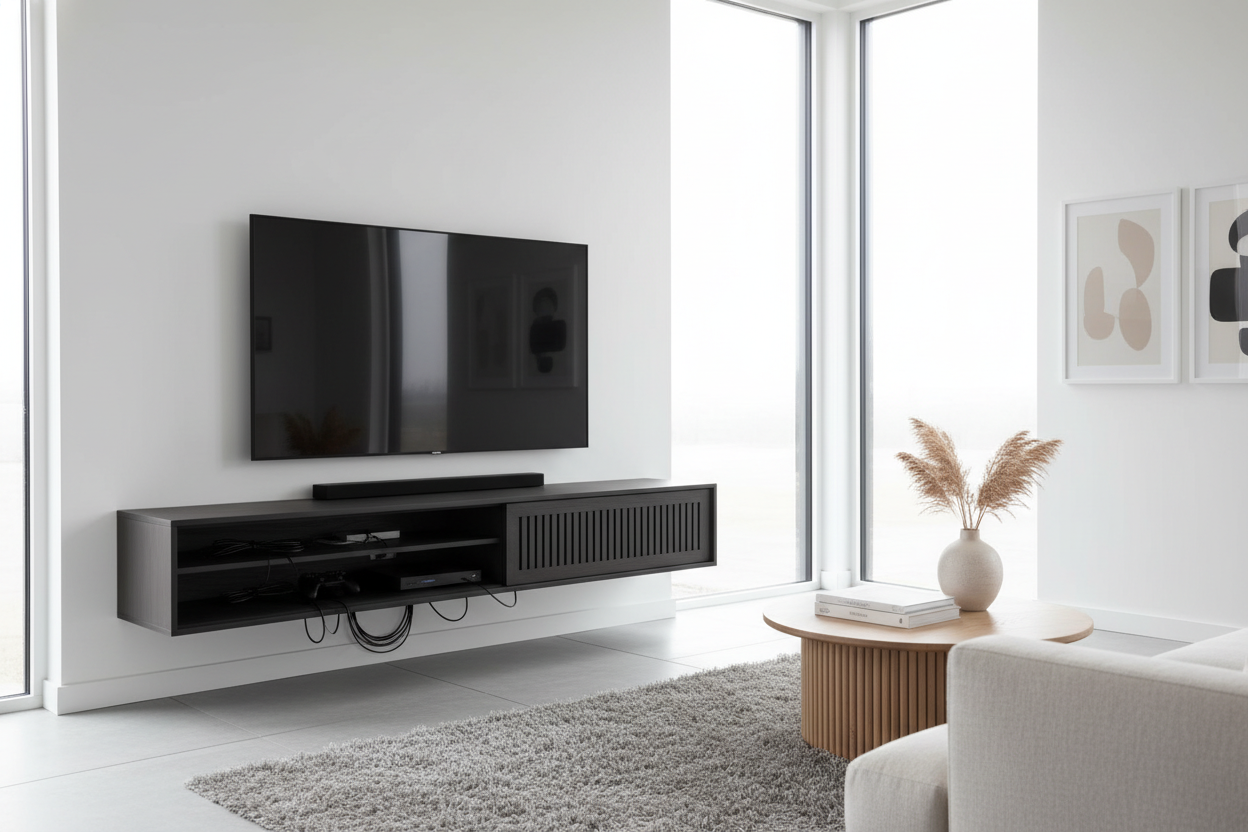
Using built-in storage cabinets with doors allows you to maintain a clean aesthetic on the outside while the inside is pure chaos. I personally use mine to hide the router, the gaming consoles, and about four miles of tangled charging cables. If those were on open shelves, I’d be stressed out every time I walked past them. Solid doors keep the peace.
Is the Drywall Mess Actually Worth It?
I won't lie to you: the installation is a nightmare for about 48 hours. There is sawdust in places you didn't know existed, and the smell of wood glue is a lot to handle. But once that unit is leveled, shimmed, and bolted to the subfloor, it feels permanent. It feels like it was always supposed to be there.
A floating sideboard or a 'room divider' screen from a big-box store will always look like a temporary fix. It will wobble when the kids run past it. A permanent built-in doesn't move. It adds actual value to the appraisal of your home, and more importantly, it makes your daily life feel more organized. If you're choosing between a new sofa and a layout-fixing built-in, buy the built-in. You can always get a new sofa later, but you can't fix a bad floor plan with a cushion.
FAQ
How deep should a half-wall cabinet be?
Keep it between 12 and 15 inches. Standard 24-inch kitchen cabinets are too deep and will swallow your floor space. 12 inches is plenty for books, media, and most storage bins.
Do I need to bolt it to the floor?
Yes. Because it isn't anchored to a wall at the top, a half-wall cabinet is top-heavy once you add a countertop. Secure it to the floor joists or the concrete slab to prevent it from tipping if someone leans on it.
Can I use stock cabinets for this?
Absolutely. You can buy upper kitchen cabinets (which are usually 12 inches deep) and build a 'toe kick' platform for them to sit on. Just make sure to buy matching end panels to cover the unfinished sides.


Leave a comment
This site is protected by hCaptcha and the hCaptcha Privacy Policy and Terms of Service apply.