










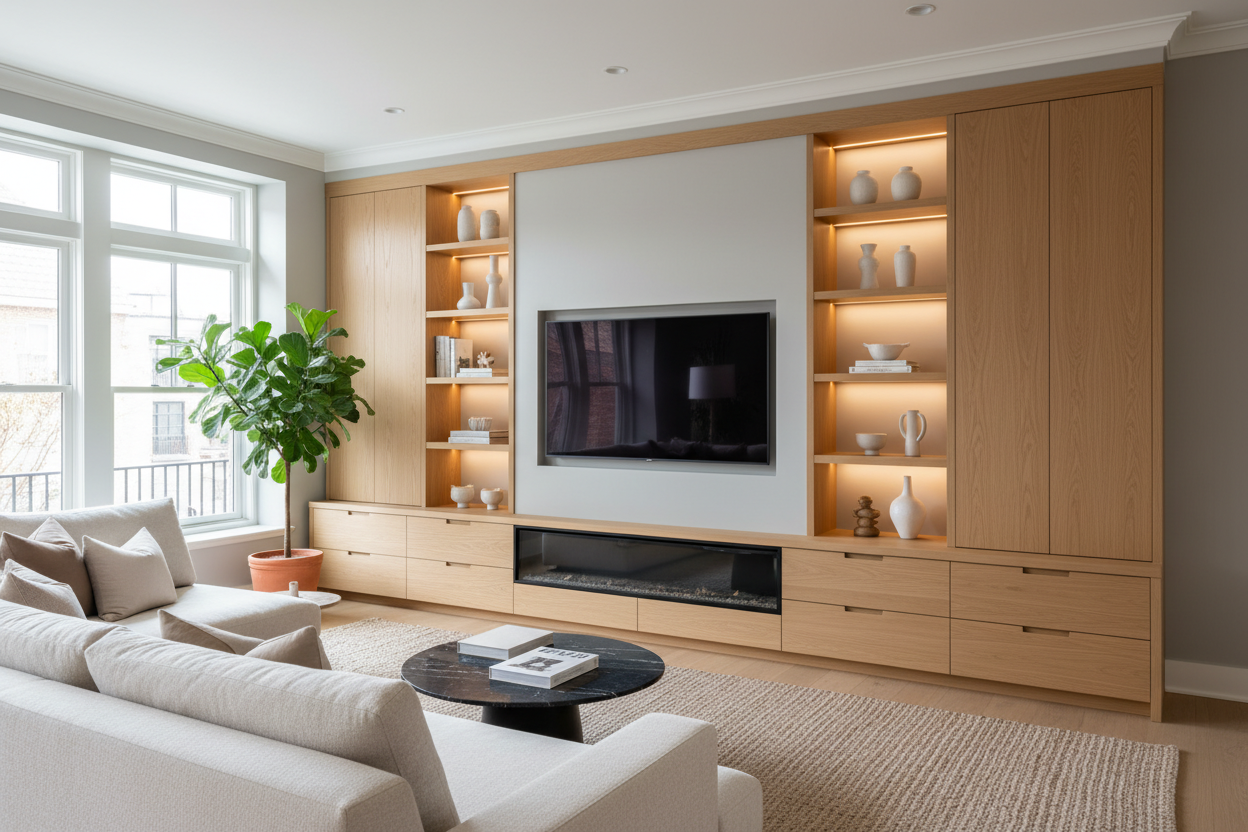
I stood in my living room for six months staring at a 14-foot expanse of nothing. It wasn't just a blank wall; it was a void that sucked the soul out of every expensive candle and velvet pillow I threw at it. I realized that no matter how many 'statement' chairs I bought, the room still felt like a generic box in a suburban office park. That is when I finally committed to **modern built in living room cabinets**.
The Quick Takeaways
- Built-ins solve architectural boredom by adding permanent 'bones' to a room.
- Going floor-to-ceiling is the only way to avoid the dust-collecting gap at the top.
- Custom storage cabinets living room layouts should prioritize concealed storage over open shelving.
- The installation is a mess, but the 15% bump in perceived home value is worth the sawdust.
The 'Builder-Grade Box' Problem (And My Breaking Point)
My living room was the definition of 'fine.' It had four white walls, 9-foot ceilings, and zero personality. I tried the usual fixes: a 72-inch media console, a gallery wall that took three Saturdays to level, and a massive floor plant that died in two weeks. Nothing worked. The furniture felt like it was just hovering in space, untethered to the house itself.
The breaking point came when I realized my 'high-end' TV stand was actually bowing under the weight of my books. I was tired of the clutter and the lack of intentionality. I didn't just need a place to put my stuff; I needed the room to feel like it was designed by an architect, not a developer looking to save on crown molding. Floating furniture rarely gives you that grounded, custom feel that defines a truly curated home.
How Modern Built In Living Room Cabinets Change the Architecture
The magic happens when you stop thinking about storage as 'furniture' and start thinking about it as 'walls.' When you install modern built-in living room cabinets that span from floor to ceiling, you aren't just adding cupboards; you are literally changing the footprint of the room. It creates a sense of scale that a standalone piece simply cannot match.
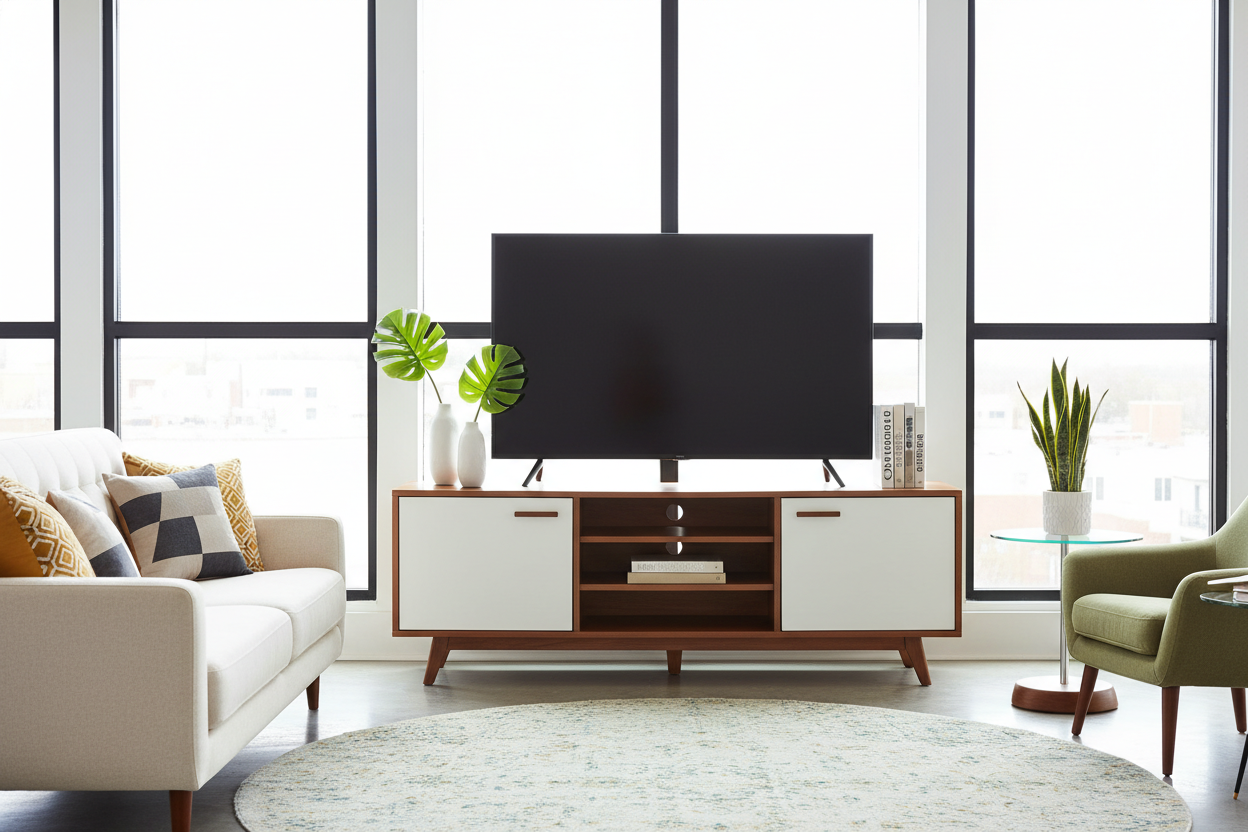
Before I went all-in, I actually swapped my TV stand for a modern wall cabinet as a trial run. It was a solid middle ground, but it didn't fix the architectural void. Modern designs today are a far cry from the chunky, honey-oak entertainment centers of the 90s. We’re talking about slim profiles, integrated LED lighting, and finishes that match your wall color for a seamless, 'hidden' look. It makes a 15-foot room feel like a 20-foot suite because the vertical lines draw your eye upward, highlighting the ceiling height you probably forgot you had.
Faking It vs. Making It: A Custom Storage Cabinets Living Room Reality Check
Let’s talk money. True custom millwork—the kind where a carpenter spends three days in your garage—will run you anywhere from $800 to $1,200 per linear foot. It’s an investment. If that makes your eyes water, you can 'fake it' with high-end modular systems. The key to making a **custom storage cabinets living room** look expensive is the trim. If you buy freestanding units, you have to use base-shoe and crown molding to bridge the gap to the ceiling.
I’ve seen people spend $4,000 on living room storage cabinets with doors that look like they cost $10,000 just by adding a unified toe kick. However, if your walls are even slightly crooked (and trust me, they are), the 'faking it' route involves a lot of shims and frustration. Custom work handles those wonky 1970s corners with ease.
The Exact Layouts That Actually Look Contemporary
If you want it to look modern, you have to be ruthless with the design. Skip the raised panel doors and the ornate hardware. I went with flat-panel (slab) doors with a push-to-open mechanism. No handles means no visual clutter. I also opted for a 70/30 split: 70% closed storage to hide the ugly board games and routers, and 30% asymmetrical floating shelves for the 'pretty' stuff.
For the finish, stay away from high-gloss unless you want to see every fingerprint your kids or guests leave behind. A matte or eggshell finish in a moody charcoal or a soft off-white is the move. If custom millwork is currently out of your budget or timeline, you can find some incredible living room storage alternatives that offer that sleek, modular look without the permanent commitment.
What I Wish I Knew About the Messy Installation Process
Nobody tells you about the dust. Even with 'dustless' sanding, your living room will be covered in a fine grey powder for a week. To get that seamless look, we had to rip out the existing baseboards, which inevitably damaged the drywall. Then there was the floor issue—my 'level' floor actually dropped half an inch from left to right, meaning the carpenter had to spend four hours just building a level base before a single cabinet could be hung.
It is a loud, intrusive process. But the moment the crown molding hit the ceiling and the gaps disappeared, the 'builder-grade' feel of my home vanished. It didn't feel like a box anymore; it felt like a custom-designed residence. The headache of the installation was a small price to pay for finally having a room that felt finished.
FAQ
How deep should built-in cabinets be?
Standard depth is usually 16 to 18 inches. Anything deeper than 24 inches starts to swallow the room and makes it hard to reach things in the back. If you’re just doing bookshelves, 12 inches is plenty.
Do built-ins add value to a home?
Generally, yes. Appraisers love permanent storage. Unlike a wardrobe you take with you, built-ins are considered part of the 'real property' and contribute to the architectural value of the house.
Can I do built-ins if I have a small living room?
Actually, they are better for small rooms. Because they go wall-to-wall, they eliminate the 'visual noise' of multiple small pieces of furniture, which actually makes a small space feel larger and more organized.


Leave a comment
This site is protected by hCaptcha and the hCaptcha Privacy Policy and Terms of Service apply.