










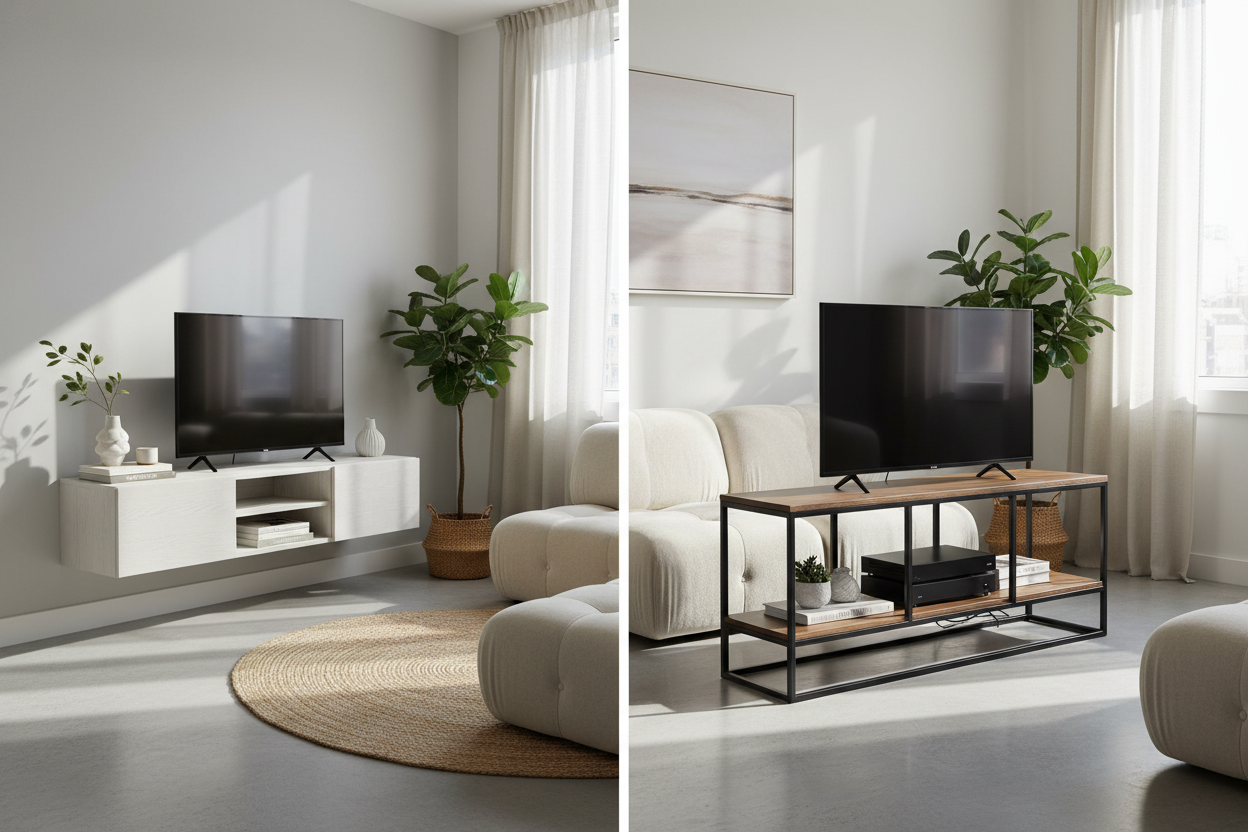
I spent three weekends trying to fish an HDMI cable through a hole in my drywall while my partner held a flashlight and sighed. We wanted that 'floating' look—the one where the TV just hovers over a thin slab of white lacquer. It looked great for exactly twenty minutes until the drywall anchors started to groan and the 'minimalist' shelf began to tilt at a depressing four-degree angle.
That was the moment I realized I was done with hyper-modernism. I didn't want a futuristic waiting area; I wanted a home. I traded the sagging shelf for a tv stand classic and haven't looked back since. My living room finally feels grounded, and my cable management is no longer a source of marital friction.
Quick Takeaways
- Floating units are a nightmare for renters and anyone who hates patching drywall.
- Visual weight is necessary to balance out huge, black TV screens.
- Closed storage is the only way to hide the inevitable nest of gaming controllers and remotes.
- A classic tv console provides a stable surface for soundbars and speakers that floating shelves can't handle.
The Ultra-Modern Floating Trend Finally Broke Me
The 'tech-bro' aesthetic promised me a clutter-free life. They said a floating console would make my small living room feel larger because you could see more of the floor. In reality, it just made me hyper-aware of every speck of dust and every stray wire that escaped the plastic cable raceway. It felt cold, clinical, and honestly, a bit cheap.
When you have a 65-inch television, it's essentially a giant black mirror that sucks the life out of a room. Mounting it over a tiny, floating shelf makes it look like it's about to fall off the wall. I missed having a piece of furniture that felt like it had some actual gravity. I wanted something that wouldn't shake every time the cat jumped on it.
What Actually Makes a TV Stand Classic? (And Not Just Old)
When I talk about a classic tv stand, I’m not talking about those massive, honey-oak entertainment centers from 1994 that took up an entire wall. A true classic tv stand is about proportions and materials. We’re looking for solid wood or high-quality veneers, tapered legs or a clean plinth base, and hardware that doesn't feel like it’s made of painted plastic.
The difference lies in the 'bones.' A classic piece has a silhouette that works whether you’re into Mid-Century Modern or French Provincial. It’s usually about 20 to 30 inches high—perfect for keeping the center of the screen at eye level from your sofa. Before you pull the trigger, read up on buying a tv stand classic to make sure you aren't just buying overpriced particle board.
The Magic of Real Doors and Drawers
Open shelving is a lie sold to us by people who don't actually own electronics. Within a week, those open cubbies are filled with dust, tangled charging cables, and that one Wii remote you haven't used since 2012. A classic tv console with solid doors hides all that shame.
I’ve found that a classic 3 drawer tv stand is the sweet spot for functionality. You get deep drawers for controllers and manuals, plus enough cabinet space to hide a messy power strip. It keeps the visual noise to a minimum so you can actually focus on the movie.
Weight, Warmth, and Wood Tones
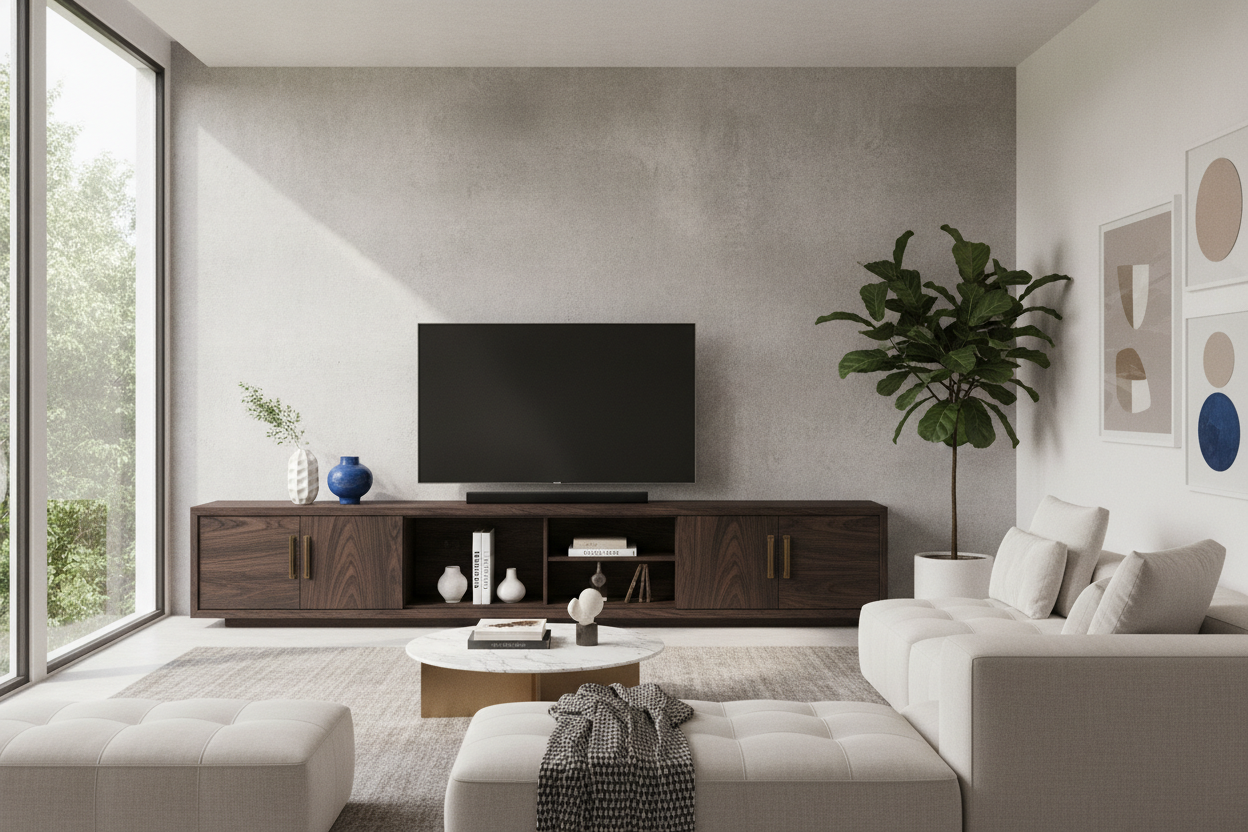
Most modern tech is cold. It's glass, plastic, and metal. Bringing in a classic tv stand in a rich walnut or a deep oak adds much-needed organic warmth. The physical weight of the piece grounds the room. It makes the TV feel like a part of the decor rather than an appliance we're trying to ignore.
How I Styled My Classic TV Console Without Looking Dated
The fear with 'classic' is that your house will start to look like a showroom for a retirement community. The trick is the 'high-low' mix. I paired my traditional wood console with a sleek, matte black lamp and a few oversized art books. I also stopped centering everything. I put the TV slightly to one side and balanced it with a tall vase on the other. It breaks up the symmetry and feels much more intentional.
If you have a massive wall to fill, don't go small. A substantial 4 drawer tv stand media console can act as an anchor for the entire room. It gives you enough surface area to layer in some personality—think a small succulent or a vintage brass bowl—without it looking cluttered.
The Hidden Perks of Going Traditional
Beyond the looks, there's the sheer practical side. If you're a renter, you aren't going to lose your security deposit over giant toggle bolts in the drywall. If you decide to move your furniture, you just pick it up and move it—no patching or painting required. Plus, a sturdy top actually has enough depth for a high-end soundbar and a record player.
If you're tired of the flimsy, trendy stuff that ends up in a landfill after two years, it's time to look at a better collection of tv stands. You want something that can survive a move, a spill, and a change in your personal style. For me, that meant going back to the basics.
FAQ
How wide should my TV stand be?
Your stand should be at least 6 to 10 inches wider than the TV itself. If the TV overhangs the edges, it looks top-heavy and unstable. Give it some breathing room.
Is solid wood always better?
Not necessarily. High-quality MDF with a thick wood veneer is often more stable for electronics because it doesn't warp with heat. Just avoid the stuff where the 'wood' is actually just a sticker.
What is the best height for a TV stand?
Aim for the center of the TV to be at eye level when you're sitting. For most sofas, that means your stand should be between 22 and 28 inches tall.

Leave a comment
This site is protected by hCaptcha and the hCaptcha Privacy Policy and Terms of Service apply.