










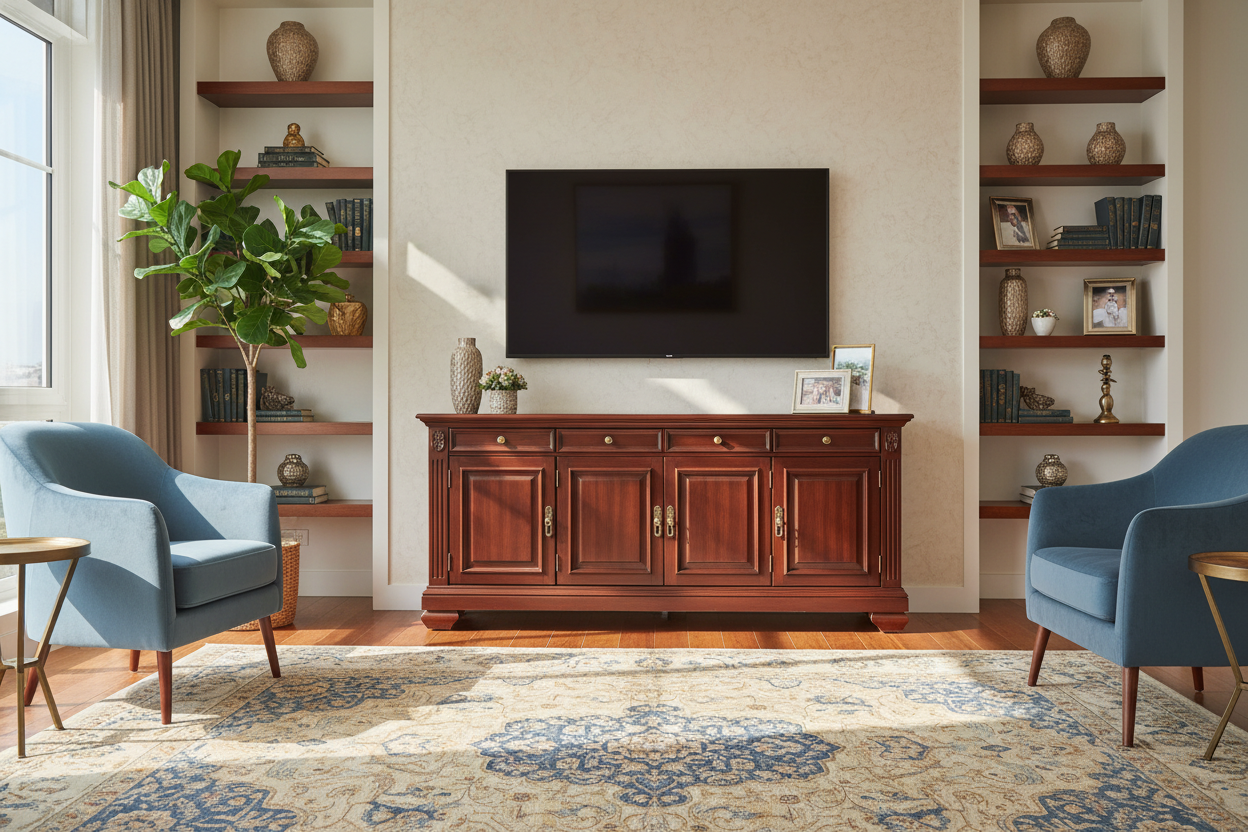
It usually starts with a massive black screen dominating your living room. You want to anchor it with something substantial, but the ultra-modern floating metal shelves feel cold, and the giant 90s entertainment centers are suffocating. When you are hunting for a tv stand classic enough to outlast rapid trend cycles, the options can be overwhelming.
Today, we are going to break down exactly how to source, size, and style a traditional piece that brings warmth to your space without feeling like a dusty antique. You will walk away knowing how to balance visual weight, choose the right materials, and avoid the common pitfalls of mixing modern technology with traditional silhouettes.
Quick Decision Guide
- The Width Rule: Your console should be at least 6 to 8 inches wider than your television on both sides to maintain visual balance and prevent the room from looking top-heavy.
- Material Priority: Solid wood or high-quality wood veneer offers the best longevity for a classic tv stand, resisting the sagging common in cheap particleboard.
- Cable Management: Traditional silhouettes often lack modern cord cutouts; factor in drilling your own holes if you are repurposing a vintage piece.
- Height Matters: For optimal ergonomics, the center of your screen should sit at eye level when seated (usually requiring a stand height of 24 to 28 inches).
Material Matters: Avoiding the Veneer Trap
The defining feature of a classic tv console is its material. Authentic traditional design relies heavily on the warmth and grain of wood. However, big-box stores often sell engineered wood wrapped in paper-thin laminates that peel at the first sign of humidity.
Solid Wood vs. Quality Veneers
Solid oak, walnut, and mahogany are the gold standards, offering incredible durability and the ability to be refinished decades down the line. But do not write off veneers completely. A thick, high-quality wood veneer over a solid MDF core is actually highly resistant to warping—a crucial factor in North American homes where winter heating heavily dries out the indoor air.
Scale and Proportion in Your Living Room
A common mistake I see in suburban family rooms is pairing a massive 75-inch screen with a delicate, spindly media unit. The visual weight becomes entirely disproportionate, making the furniture look like it might collapse under the screen.
The Golden Ratio for Screens
Your classic tv stand needs substantial visual weight to anchor the technology above it. Look for pieces with plinth bases, bracket feet, or thick turned legs. Ensure the unit spans comfortably across the wall, leaving breathing room (at least 12 to 18 inches) between the edge of the furniture and the corners of the room to avoid a cramped layout.
Styling Your Classic Piece
Traditional furniture can quickly feel heavy or dated if not styled with intention. The goal is transitional balance, bridging the gap between old-world charm and contemporary living.
Layering Texture and Negative Space
If your console features ornate molding or heavy brass hardware, keep the surface styling minimal. A stack of linen-bound books, a textured ceramic vase, or a structural brass lamp can soften the heavy wood tones. Leave negative space around your decorative objects to let the craftsmanship of the wood take center stage.
Designer's Honest Take
A few years ago, I sourced a stunning, vintage cherry wood credenza for a client's Craftsman home in Portland. Visually, it was the perfect classic tv stand. The rich patina warmed up the entire room, and the brass drop-pulls were exquisite.
But here is the unpolished reality: living with authentic vintage pieces as media consoles is a logistical nightmare. Because it wasn't built for modern electronics, the back was solid wood. We had to carefully hole-saw through half-inch cherry just to run HDMI cables. Furthermore, the interior shelves were fixed, meaning the client's modern AV receiver simply didn't fit, and the doors had to remain permanently open to prevent the gaming console from overheating. If you want the traditional look without the headache, I highly recommend buying a newly manufactured piece that mimics historic design but includes built-in ventilation and adjustable shelving.
Frequently Asked Questions
What makes a TV stand 'classic'?
Classic designs typically feature traditional woodworking details like crown molding, paneled doors, turned or bracket feet, and warm wood finishes or soft painted neutrals. They prioritize timeless silhouettes over stark, ultra-modern lines.
How do I hide cords on a traditional console?
If your piece doesn't have pre-drilled holes, you can use a standard hole saw attachment on a drill to create discreet openings in the back panel. Cable management boxes and zip ties can bundle wires neatly behind the solid legs of the unit.
Can I put a modern TV on an antique piece?
Absolutely. The contrast between a sleek, modern screen and a classic tv console creates a beautiful, layered aesthetic. Just ensure the antique is structurally sound enough to hold the weight, and that it provides adequate height for comfortable viewing.

Leave a comment
This site is protected by hCaptcha and the hCaptcha Privacy Policy and Terms of Service apply.