










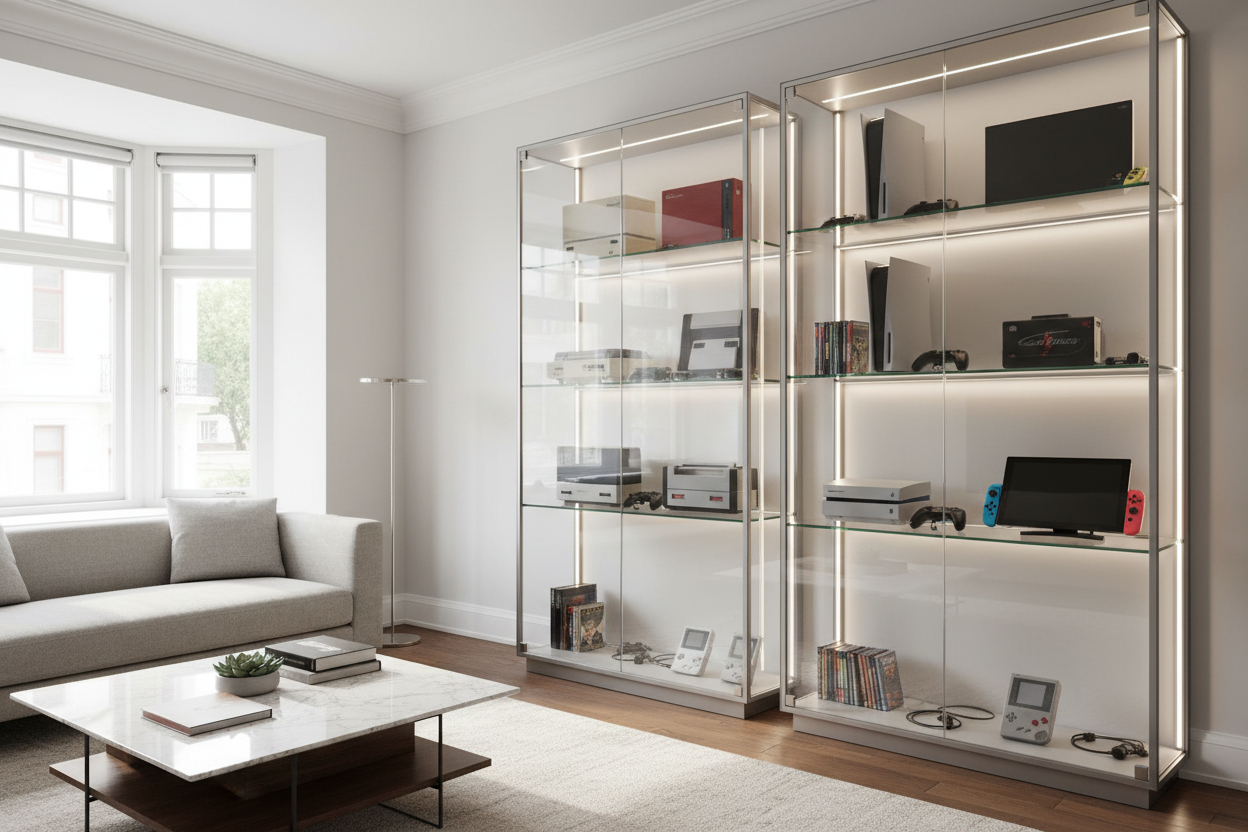
I spent three hours last Sunday with a microfiber cloth and a can of compressed air, digging grey fuzz out of the cooling vents of my PS5. My living room looked like a Best Buy exploded, and honestly, I was tired of apologizing for the clutter when friends came over for drinks. That was the moment I realized I needed a proper video game display case.
Moving my consoles from a basic TV stand to a dedicated enclosure wasn't just about cleaning; it was about finally admitting that I’m an adult who likes games. You don’t have to hide your hobbies in a closet or a shoebox. You just need to frame them correctly so they look like part of the room rather than an afterthought.
Quick Takeaways
- Dust is the silent killer of disc drives and cooling fans; glass doors act as a physical shield.
- A curated display forces you to pick your favorite pieces rather than hoarding every plastic peripheral.
- Integrated lighting makes matte plastic hardware look like a high-end gallery piece.
- Proper cord routing is what separates a genuine setup from a tangled mess of wires.
The Open Media Console Was a Dust Trap
We’ve all been there. You buy a standard open-shelf TV stand because it’s cheap and easy to build. Within two weeks, your controllers have a visible layer of grit on the analog sticks, and the vents on your Xbox are choked with pet hair. It’s a constant battle that you’ll never win with a duster alone. I once found a literal spider nest inside an old Wii I had left on an open shelf for six months.
Standard TV stands are designed for cable boxes that people rarely touch. They aren't built for the intricate grooves of a modern controller or the heat-sink fins of high-performance hardware. Switching to a dedicated display case for video games solves the maintenance problem instantly. By sealing your tech behind glass, you’re cutting your cleaning time by about 90%.
It’s also a psychological shift. When your consoles are sitting in the open, they’re just 'stuff' taking up space. When they’re in a case, they’re a collection. This approach helps you move away from the cluttered dorm room aesthetic and toward a living room that actually looks like a grown-up lives there. It turns the hardware into a focal point rather than a mess to be ignored.
Glass Doors Fix the 'Dorm Room' Vibe
There is a specific kind of chaos that comes with owning three or four generations of consoles. The different colors, shapes, and tangled controller cords create a visual noise that ruins the flow of a room. Putting everything behind glass creates a visual boundary. It signals that these items are intentional, not just left out because you forgot to put them away.
I used to feel like I had to hide my hobby when hosting dinner parties. But there is a strong case for living room display furniture that celebrates what you love. When you frame your consoles, you're treating them like the engineering marvels they are. It turns a pile of plastic into a curated exhibit that guests actually want to ask about.
Using game display cases also forces a much-needed edit. You probably don't need every single third-party plastic guitar and dusty peripheral on display. A glass case has limited real estate, which encourages you to show off the special editions and the hardware that actually means something to you. The rest can go in a storage bin where it belongs.
Let's Talk About Lighting and Cord Routing
A display case is only as good as its lighting. If you put your consoles in a dark cabinet, they just disappear into a black hole of shadows. You want subtle, cool-toned LEDs that highlight the silhouettes of the machines. I prefer strips tucked into the front inner lip of the shelf so you get the glow without seeing the individual light beads. It makes a launch-day PS3 look like a piece of obsidian art.
If you aren't handy with a soldering iron or don't want to spend your Saturday night sticking LED tape to glass, look for a glass door display case with LED light already built in. It saves you the headache of trying to hide the power cables for the lights themselves. These units usually have tempered glass shelves that can handle the 10-15 pound weight of older, 'chunky' consoles without bowing over time.
Cord routing is the other half of the equation. Most retail cabinets don't have enough holes in the back panel for six different HDMI and power cables. I’ve found that using a 2-inch hole saw bit on a standard drill is the best way to customize a cabinet. Just make sure you’re drilling through the thin backboard and not a structural support. Use rubber grommets to line the holes so your cables don't get frayed on the raw edges. It takes twenty minutes but makes the finished product look professional.
Where to Put It So It Doesn't Dominate the Room
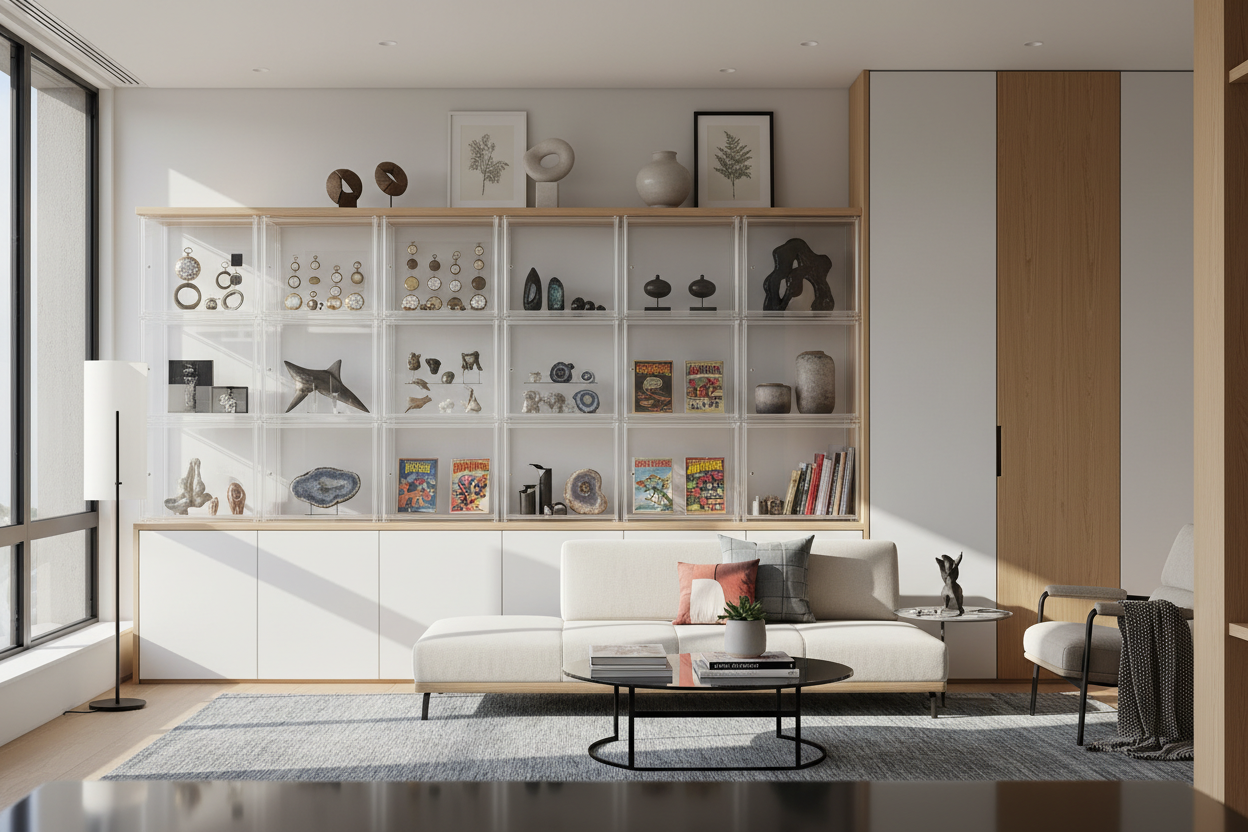
The biggest mistake people make is plopping a massive cabinet right next to the TV. It creates a 'wall of tech' that feels heavy and oppressive. Instead, try to balance the room. If your TV is on one wall, place your game display case on an adjacent wall or next to a bookshelf to blend it with other decor. This makes the gaming gear feel like part of the library, not a retail store endcap.
If you're working with a tight apartment layout where every inch of wall space is a premium, a corner display case is a lifesaver. It utilizes that dead space that usually just collects dust bunnies and lets you show off your collection without sacrificing your walking paths. It makes the room feel larger because it draws the eye into the corners rather than stopping at the TV stand.
Think about height, too. You don't want your most prized consoles at floor level where they'll get kicked or bumped by the vacuum. Eye level is for the 'hero' pieces—the limited edition consoles or the rare boxed games. The bottom shelves are for the heavy power bricks and the controllers you use every day. I once put a heavy OG Xbox on a middle glass shelf and watched it bow over a week; keep the heavy hitters on the bottom wood base for safety.
FAQ
Will my consoles overheat inside a glass case?
They can if you play with the doors shut. I always keep the glass door open a few inches during a long session to ensure airflow. For older consoles that run cooler, it’s usually not an issue, but a PS5 or Series X needs to breathe while it's working hard.
How do I stop the glass from rattling?
Small clear silicone bumpers are your best friend. Stick them in the corners where the door meets the frame. It stops that annoying vibration when the subwoofer kicks in during an action scene or a boss fight.
Can glass shelves hold heavy retro consoles?
Check the weight rating before you load it up. Most tempered glass shelves are rated for 15-20 pounds. An original Xbox or a heavy home theater receiver might be pushing it, so I usually put the heaviest items on the bottom solid base of the case.

Leave a comment
This site is protected by hCaptcha and the hCaptcha Privacy Policy and Terms of Service apply.