










I remember the exact moment I almost folded. I was staring at a 77-inch OLED in my digital cart, feeling that specific brand of decision fatigue that only comes from comparing refresh rates for three hours. Then, the 'frequently bought together' prompt popped up: a floating tv stand best buy had listed for a couple hundred bucks. It looked fine in the render—clean, white, and modern.
I almost clicked it. The convenience of one delivery and one assembly session is a powerful drug. But I’ve spent too many years testing furniture to fall for the electronics-store furniture trap. If you want your living room to feel like a home rather than a retail showroom, you have to resist the bundle.
- Tech retailers prioritize light shipping weight over material durability.
- Generic flat-pack units often use low-density particle board that sags under weight.
- Design-first consoles offer better wire management and ventilation.
- High-gloss finishes from big-box stores often look like plastic in natural light.
The Trap of the 'Add to Cart' Convenience
We’ve all been there. You’ve just committed to a major tech upgrade, and you want the 'look' to be finished immediately. The best buy floating tv stand options are designed to be the path of least resistance. They fit in the box, they ship fast, and they match the sterile aesthetic of the electronics they hold.
The problem is that these pieces are built by manufacturers who specialize in logistics, not woodworking. They are designed to survive a shipping container, not a decade of use. When you buy your media unit at the same place you buy your refrigerator, you’re usually getting the 'fast food' version of furniture: it satisfies the immediate hunger, but you'll feel the regret once you try to move it or see it in the afternoon sun.
Electronics Stores Sell Tech, Not Furniture
There is a massive material difference between a unit designed by a furniture house and one sold at a tech warehouse. Most electronics store consoles are made of thin MDF with a paper laminate. It looks okay from six feet away, but the second you touch it, you realize it has no soul. It’s light, it’s hollow, and it echoes when you set a remote down.
When your living room looks like a Best Buy, it lacks the texture that makes a space feel inhabited. I’ve seen these generic stands bow in the center after just a year because they weren't engineered to handle the localized weight of a soundbar and a heavy base. Real furniture designers account for load-bearing spans and use high-density materials that don't warp under the heat of a gaming console.
What I Bought Instead (And Why It Looks Better)
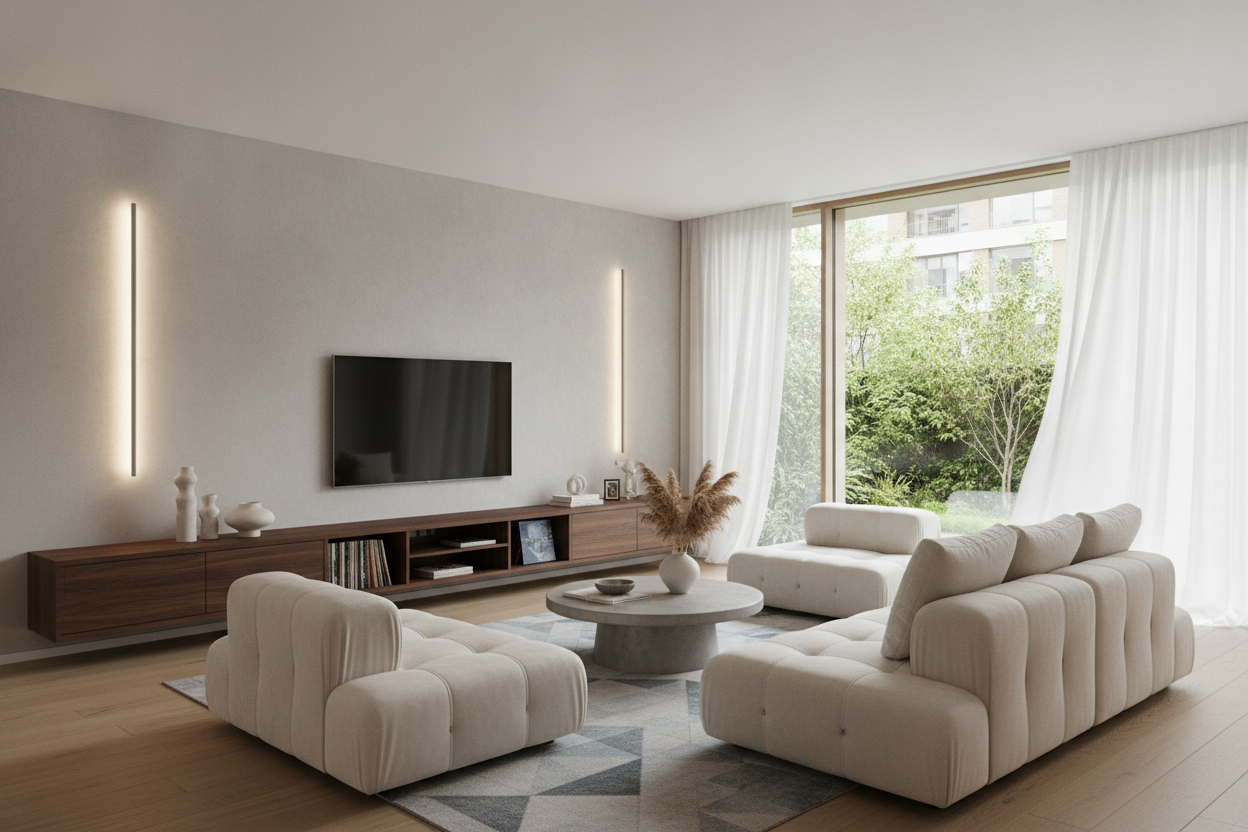
I decided to wait. I lived with my TV on the floor for two weeks while I hunted for something with actual character. I eventually landed on a wall mounted media console that featured actual wood grain and thoughtful proportions. The difference was night and day.
Instead of a sterile white box that screamed 'I bought this in a bundle,' the new unit added warmth to the room. It grounded the 77-inch black mirror on my wall. It felt intentional. Plus, the mounting hardware was actually rated for the weight, unlike the flimsy brackets you often find in the clearance aisle of an electronics store. It’s 72 inches of solid construction that doesn't creak when the house settles.
Does High Gloss Actually Work Outside of a Showroom?
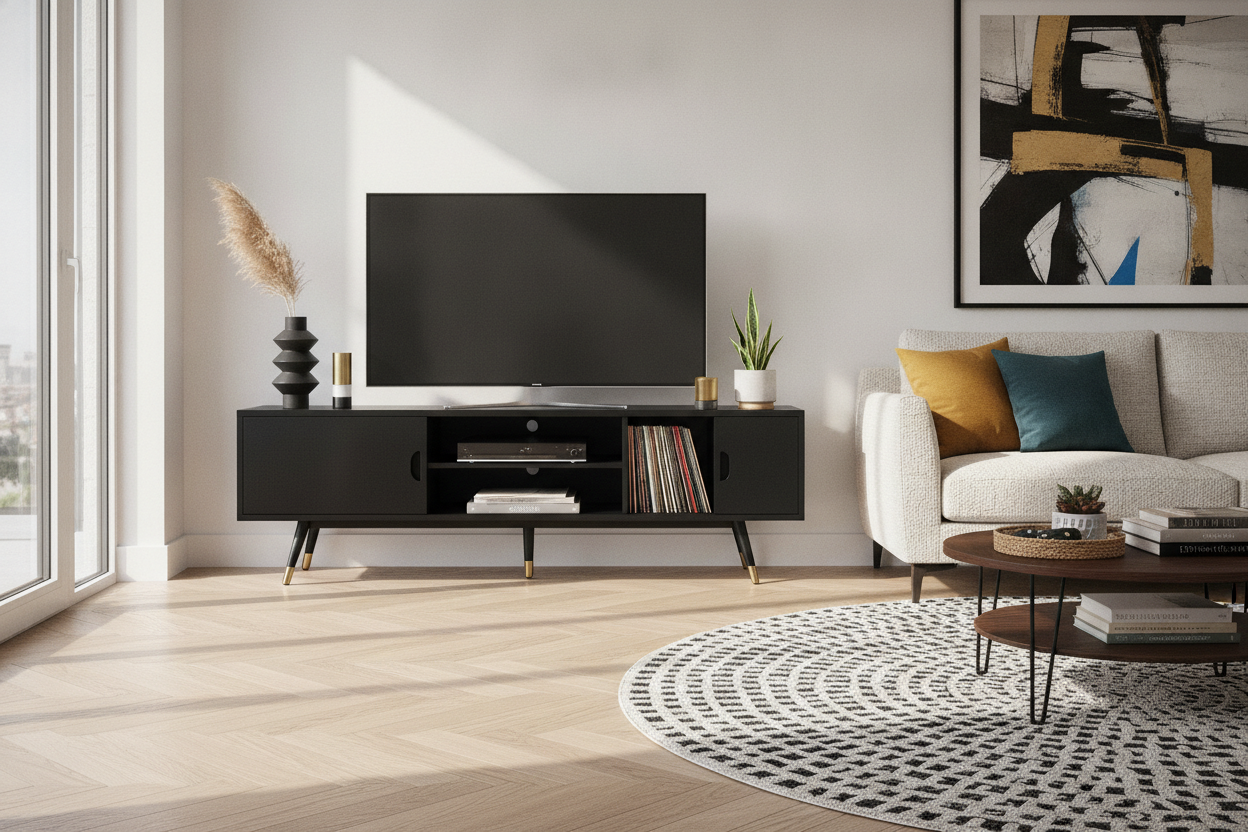
Electronics retailers love high gloss because it mimics the finish of the tech they sell. In a dark showroom with neon accents, it looks like the future. In a sunny living room, it looks like a fingerprint crime scene. I’ve owned a cheap glossy stand before, and I spent more time with a microfiber cloth than I did watching movies.
If you love that modern sheen, you have to do it right. You want a high gloss TV stand that incorporates integrated lighting to break up the flat surfaces. The light adds depth and prevents the unit from looking like a giant block of plastic. It’s about balance—using the gloss as a texture rather than the entire personality of the piece.
Where You Should Actually Shop for Media Units
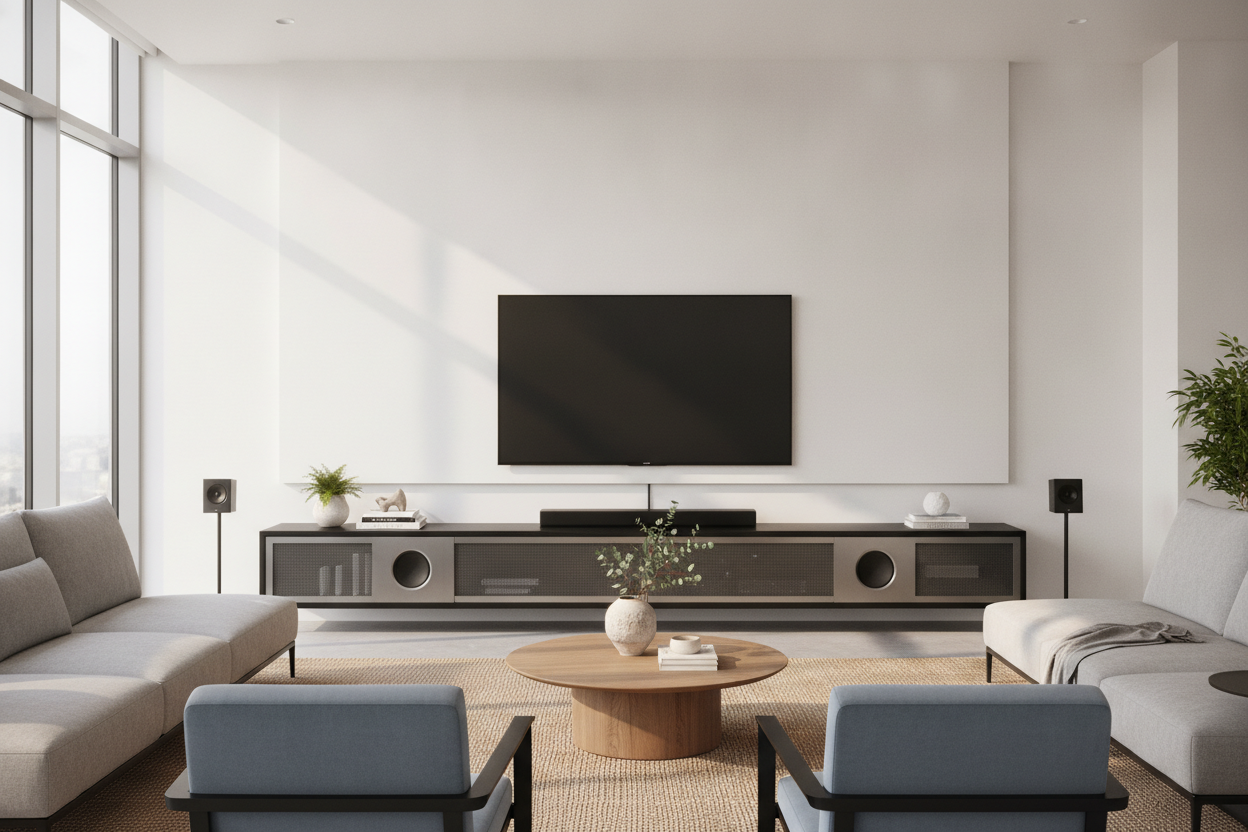
My advice? Separate your tech budget from your decor budget. Buy your OLED, your Sonos, and your PS5 from the tech giants. But when it comes to the thing that actually holds those items, look for dedicated TV stands from people who understand joinery and aesthetics.
Your media console is the anchor of your living room. It’s the thing you’ll be staring at even when the TV is off. Don't settle for the 'frequently bought together' button. Take the extra week to find something that feels like furniture, not an accessory to a gadget. Your floorboards and your eyes will thank you.
Is a floating stand safe for drywall?
Yes, but only if you hit the studs. Do not rely on drywall anchors for a floating console, especially if you have kids or pets. If the studs don't line up with the mounting holes, use a heavy-duty French cleat system.
Why do cheap TV stands sag?
It's usually because they use low-density particle board across a long span without enough vertical support. Over time, gravity and the weight of your gear win. Look for units with a center support leg or those made from kiln-dried hardwood frames.
How do I hide the 'rat's nest' of wires?
Look for units with internal 'brush' grommets or a recessed back panel. If you’re mounting a floating unit, the cleanest way is to run a power bridge kit inside the wall so the wires never even see the light of day.

Leave a comment
This site is protected by hCaptcha and the hCaptcha Privacy Policy and Terms of Service apply.