










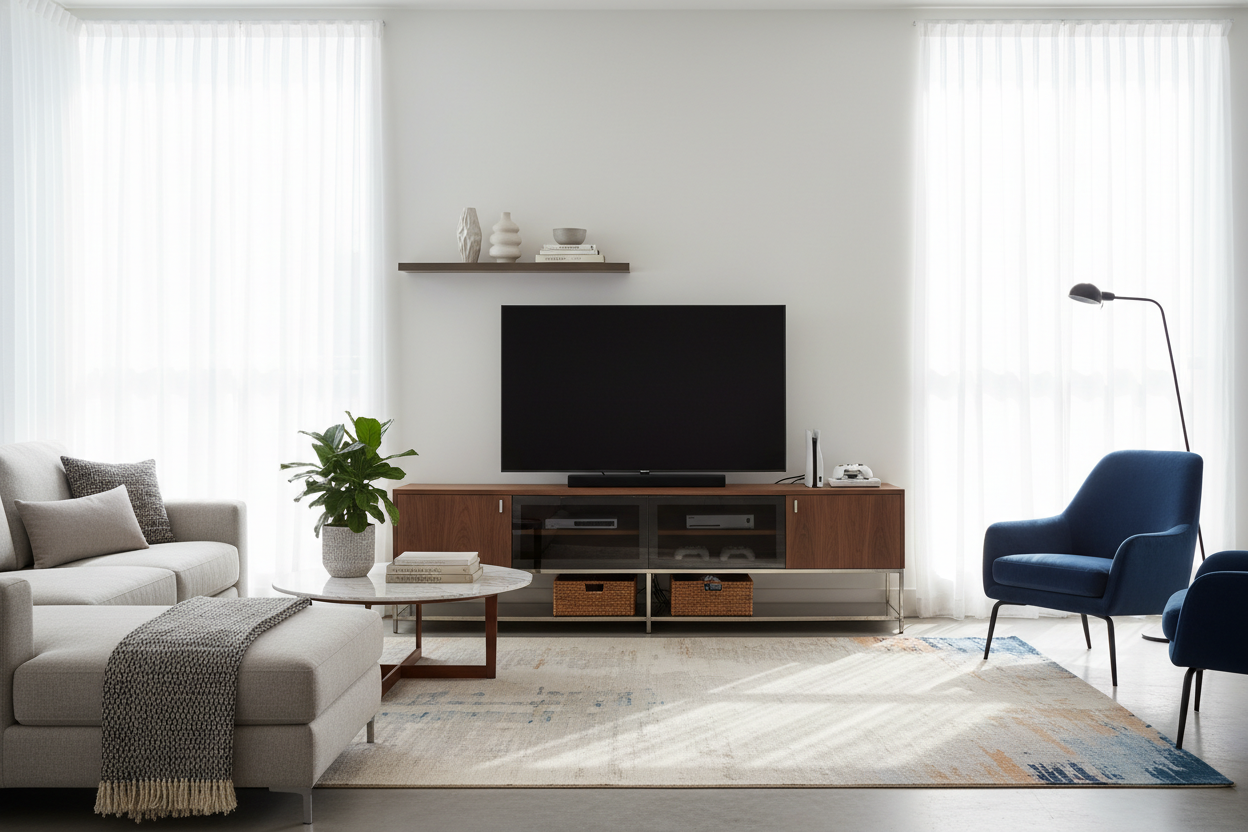
I spent three hours last Saturday zip-tying cables behind my media console, only to realize the back was open and you could still see the glowing orange light of my router from the kitchen. It’s a mess. We buy these beautiful 4K screens and then surround them with a bird's nest of HDMI cords and plastic boxes. It’s time to admit that a tv cabinet stand is the only way to actually reclaim your living room from the tech gods.
- Open shelving is a trap for dust and visual clutter.
- Look for a minimum depth of 16 inches for modern receivers.
- Solid doors hide the mess; glass doors let the remotes work.
- Wire management cutouts are non-negotiable for a clean look.
The Problem With Open Media Consoles (They Are Just Wire Display Cases)
Those minimalist 'ladder' style stands look great in a catalog with one fake plant and a wooden bowl. In reality? You have a PS5, a soundbar, a router, and a mess of black cords that look like a spider's nest. Open shelves are just display cases for your dust bunnies and the blinking blue light that keeps you up at night. I’ve seen high-end living rooms ruined by a tangled mess of HDMI cables that look like they belong in a server room, not a home.
The issue is that tech isn't pretty. Even the most expensive gaming console is just a hunk of plastic. When you put that on an open shelf, you aren't showing off your 'decor'—you’re showing off your hardware. And don't get me started on the dust. Open shelving requires a level of commitment to Swiffering that most of us just don't have. If you aren't wiping down those shelves every three days, the dust settles into the ports of your electronics, which is a great way to shorten their lifespan while making your room look neglected.
What Actually Makes a Good TV Cabinet Stand? (And My Current Favorite)
I’m looking for weight. If I can pick the box up with one hand at the store, it’s going to sag under a 65-inch screen in six months. I recently helped a friend set up a modern TV cabinet table that actually had some heft to it—real weight means it won't wobble when the dog runs past. You need those circular cutouts in the back panel, too. If you have to drill your own holes in a brand-new piece of furniture, you bought the wrong piece.
A good stand should also have adjustable shelving. Tech changes. That soundbar you have today might be replaced by a beefier receiver tomorrow. If your cabinet has fixed shelves, you’re stuck with whatever height the manufacturer decided was 'standard' five years ago. I always look for pieces with ventilated back panels or at least enough clearance for airflow; electronics generate heat, and trapping them in a sealed box is a recipe for a fried motherboard.
Sometimes You Need to Hide Your Whole Office Too
My living room is also my office. If I see my work laptop and a stack of tax forms while I’m trying to watch a movie, I can’t relax. Using a unit that functions like a file cabinet TV stand lets you shove the 5 PM stress behind a closed door. It’s about mental hygiene as much as physical organization. You want a piece that looks like a sideboard or a credenza, not a piece of office equipment. When the doors are shut, the room should feel like a place for people, not a place for spreadsheets.
Doors Are Your Best Friend (Yes, Even Glass Ones)
If you hate the 'black box' look of a solid wood cabinet, go for texture. A black cabinet with glass doors—specifically fluted or smoked glass—is the pro move. It hides the messy labels on your cable box but still lets the infrared signal from your remote through so you aren't waving your arm like a madman just to change the volume. It’s the perfect compromise for someone who wants the sleek look of a gallery but the functionality of a media room.
The Ultimate Flex: Just Hiding the Screen Entirely
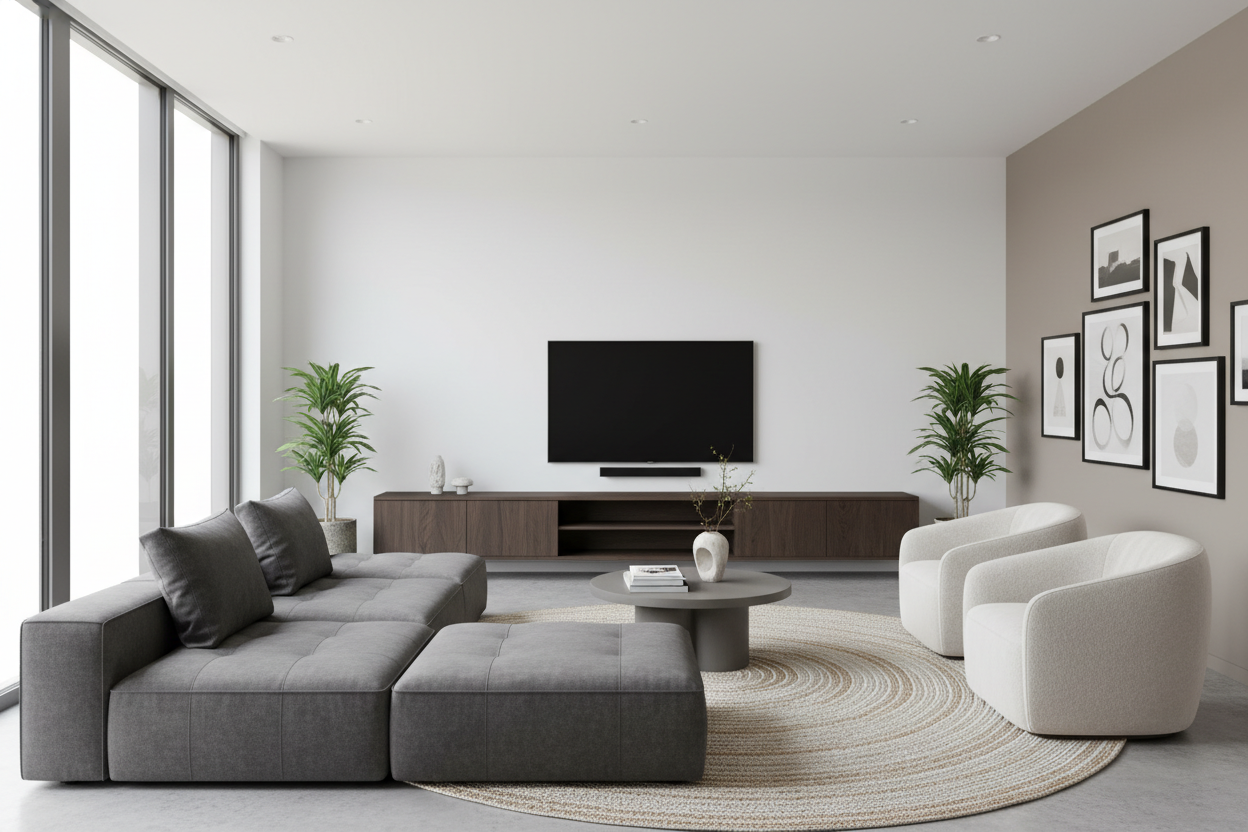
Look, some people hate TVs. I get it. If you’ve spent thousands on wallpaper or a custom gallery wall, you don't want a giant black rectangle killing the vibe. I’ve seen some high-end setups using a lifting TV stand with an electric mechanism. It’s pure James Bond. The TV stays inside the cabinet until you press a button, then it rises up like a monolith. It’s the ultimate way to keep your room looking like a sophisticated lounge while secretly being ready for a movie marathon at a moment's notice.
Please Don't Make These Rookie Layout Mistakes
Before you buy, measure the legs of your TV, not just the screen size. I once bought a gorgeous mid-century stand that was 50 inches wide for a 55-inch TV, forgetting that the TV legs were at the very edges. It didn't fit. Also, check the height. Your neck shouldn't be tilted up. If you're looking for more tips, check out common TV stand and cabinet mistakes to avoid the 'TV-too-high' hall of shame. Your eyes should be level with the center of the screen when you're seated.
I once tried to go 'minimalist' with a floating shelf I bought for forty dollars. Three weeks later, the drywall anchors gave up because I underestimated the weight of an old receiver and a center-channel speaker. I ended up with a cracked base and a very expensive lesson: tech is heavy. Now, I only buy solid-base cabinets with adjustable feet because no floor in an apartment is ever actually level. If your stand doesn't have levelers, you'll be shimmying it with folded-up pieces of cardboard for the next three years.
How deep should my TV cabinet be?
Aim for 16 to 20 inches. Modern receivers and gaming consoles need room for the plugs to stick out the back without being crushed against the wall.
Can I put a TV on a bedroom dresser?
You can, but dressers don't have holes for wires. You'll end up with cords draped over the top and sides, which looks messy and can actually be a tripping hazard.
Does the stand need to be wider than the TV?
Yes. A TV that overhangs the edges of the stand looks top-heavy and accidental. Aim for at least 3-6 inches of clearance on either side of the screen.


Leave a comment
This site is protected by hCaptcha and the hCaptcha Privacy Policy and Terms of Service apply.