










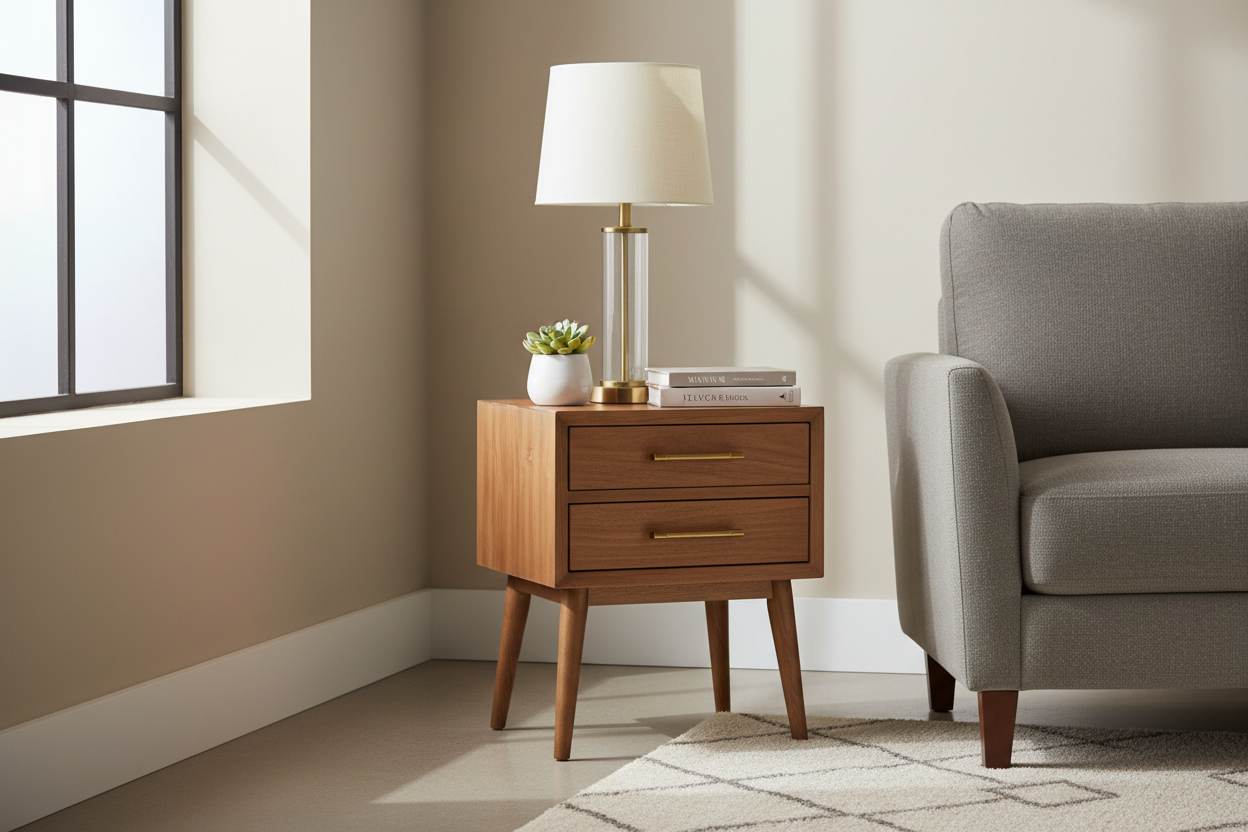
That awkward corner in your living room or the narrow gap beside your bed doesn't have to stay empty. A small accent table with drawers solves two problems at once: it fills dead space while giving you hidden storage for all those items that usually clutter your surfaces. Unlike regular side tables, these compact pieces work harder by keeping remotes, charging cables, reading glasses, and other everyday essentials tucked away but within arm's reach.
The beauty of these tables lies in their dual purpose. You get a surface for your coffee cup or table lamp, plus concealed compartments that maintain the clean aesthetic most of us crave. I learned this lesson the hard way after years of stacking books and magazines on basic tables without storage. Once I switched to a tiny end table with drawer, my bedroom instantly felt more organized without any major decluttering effort.
What Makes a Good Decorative Table with Drawers
Not all accent tables are created equal. The best ones balance form and function without compromising either. Look for drawers that glide smoothly rather than stick or wobble. Cheap hardware fails quickly, especially on pieces you'll use daily. The drawer depth matters too—shallow drawers work fine for flat items like notepads or coasters, but you'll want at least three inches of depth for bulkier objects like phone chargers or skincare products.
Construction quality shows itself in the details. Dovetail joints hold up better than simple butt joints. Drawer bottoms should be solid rather than flimsy particleboard that sags under weight. Even if you're working with a tight budget, inspect how the piece is assembled. A well-made table from sustainable materials will outlast three cheap alternatives.
Size and Placement Strategies
Measuring your space before shopping saves you from the frustration of returns. A tiny end table with drawer typically ranges from 12 to 18 inches wide, making it perfect for tight spots. Measure the height of your sofa or bed too—your accent table should sit level with or slightly below the armrest or mattress height for comfortable reach.
Think vertically when floor space is limited. Tall, narrow accent tables maximize storage without eating up precious square footage. These work particularly well in entryways or hallways where you need a spot for keys and mail but can't sacrifice walking room.
Material Choices That Actually Matter
A wood accent table with drawer brings warmth and longevity that manufactured materials struggle to match. Solid hardwoods like oak, walnut, or maple develop character over time rather than deteriorating. They handle the occasional bump or scratch better than veneer, which can chip and peel at the edges.
Reclaimed wood pieces add environmental responsibility to their appeal. Each table tells a story through its weathered grain patterns and natural imperfections. These variations mean no two pieces look identical, giving you something genuinely unique rather than mass-produced uniformity.
Metal and glass combinations create a lighter visual footprint for modern spaces. The transparency keeps rooms feeling open while still providing that essential storage. Just be realistic about maintenance—glass shows fingerprints and dust more readily than wood surfaces.
Style Matching Without Overthinking It
Your decorative table with drawers doesn't need to match your existing furniture exactly. In fact, mixing wood tones and styles often creates more visual interest than perfectly coordinated sets. A rustic accent table can ground an otherwise sleek modern room, while a painted piece adds a pop of personality to traditional spaces.
Consider the room's traffic flow and purpose. Bedside tables need easy-access drawers you can open while half-asleep. Living room accent tables might prioritize decorative fronts since you'll see them more than you'll use them. Entryway pieces should handle daily wear from keys, sunglasses, and whatever else gets dumped there during your evening routine.
Hidden Storage Hacks
Maximize your drawer space with simple organizers. Small trays or dividers prevent the junk drawer syndrome where everything becomes an unidentifiable tangle. I keep my bedside drawer organized with a bamboo utensil tray—it was $4 and works perfectly for separating lip balm from earplugs from hand cream.
Vertical stacking helps too. Store items in small boxes or pouches within the drawer so you can lift out what you need without disturbing everything else. This approach works especially well for seasonal items or things you use occasionally but want accessible.
Where Small Tables Make the Biggest Impact
Beyond the obvious bedside and sofa-side placements, small accent tables with drawers shine in unexpected spots. A narrow table behind your couch creates a display surface and storage without blocking the room's flow. Hallway corners become functional with a compact table holding a lamp and concealing pet supplies or cleaning cloths.
Bathroom corners often go unused despite being perfect for a small wood accent table with drawer. You gain counter space for plants or candles plus hidden storage for extra toiletries. Just ensure the wood is properly sealed to handle moisture.
Home offices benefit from accent tables positioned between seating areas. They provide spots for guests to set drinks during meetings while storing office supplies you don't need on your main desk. This keeps your workspace uncluttered without requiring a filing cabinet.
Investment vs. Budget Picks
Price ranges vary wildly, from under $50 for basic manufactured pieces to several hundred for handcrafted solid wood tables. The middle ground—around $100 to $200—often delivers the best value. You get decent construction and materials without paying for designer names or gallery-quality craftsmanship.
Watch for sales at the end of seasons when furniture stores clear inventory. Floor models sometimes have minor cosmetic flaws but function perfectly at significant discounts. Estate sales and antique markets occasionally yield solid vintage pieces that just need minor refinishing.
Assembly requirements affect value too. Fully assembled tables cost more upfront but save you time and potential frustration. If you're handy with tools, ready-to-assemble options stretch your budget further. Just read reviews about assembly difficulty before committing.
Maintenance That Keeps Tables Looking New
Wood tables need occasional conditioning to prevent drying and cracking. A simple paste wax or furniture oil applied twice yearly maintains the finish and protects against water rings. Use coasters religiously—even water glasses leave marks on unprotected wood over time.
Drawer maintenance involves more than cleaning. Tighten any loose screws every few months and check that drawer slides haven't collected dust or debris. A quick wipe with a dry cloth keeps metal slides operating smoothly. If wooden drawers stick, rubbing a candle or bar soap along the runners provides natural lubrication.
Painted or finished surfaces need gentler care. Avoid harsh chemicals that strip protective coatings. A damp microfiber cloth handles most cleaning tasks without risking damage. For stubborn spots, a tiny amount of mild dish soap diluted in water works without harming finishes.
Frequently Asked Questions
What's the ideal height for an accent table next to a sofa?
The table surface should align with or sit slightly below your sofa's armrest, typically 24 to 26 inches tall. This height lets you comfortably reach items without stretching or bending awkwardly. Measure your specific furniture since sofa heights vary considerably between styles.
Can accent tables with drawers work in small apartments?
Absolutely. They're actually more practical in compact spaces because the drawer storage reduces surface clutter. Choose tables with a footprint under 16 inches square, and consider nesting tables that tuck together when not in use. Vertical designs maximize storage while minimizing floor space consumption.
How much weight can a typical drawer in a small accent table hold?
Most quality accent table drawers safely hold 10 to 15 pounds when properly constructed. Solid wood drawers with metal glides handle more weight than particleboard with plastic tracks. Avoid overloading drawers with heavy items like books, which stress the joints and cause sagging over time.

Leave a comment
This site is protected by hCaptcha and the hCaptcha Privacy Policy and Terms of Service apply.