










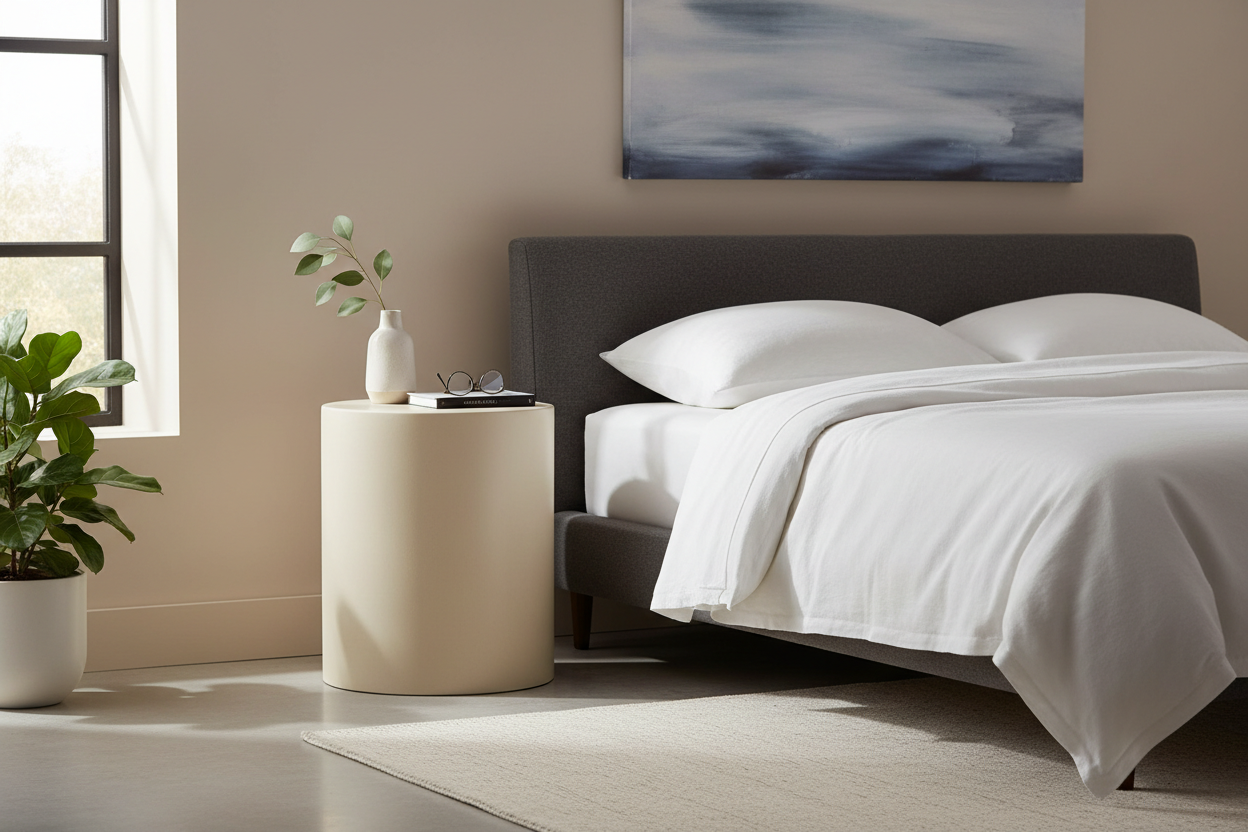
Rectangular furniture has dominated our living spaces for decades. We are used to sharp corners, boxy silhouettes, and the inevitable bruised shin when navigating a tight living room in the dark. But there has been a distinct shift in interior design psychology recently. We are moving away from rigid lines toward softer, more organic shapes that promote flow and visual comfort. This is exactly where the cylinder side table steps in, offering a solution that is as sculptural as it is functional.
Choosing the right accent furniture isn't just about filling a gap next to your sofa; it is about manipulating the energy of a room. A cylindrical side table disrupts the grid-like monotony of rugs, sofas, and media consoles. It acts as a visual pivot point, allowing the eye to rest rather than getting caught on an edge. Whether you are furnishing a compact apartment or a sprawling open-plan home, the round footprint is surprisingly more versatile than its square counterparts.
The Aesthetic and Practical Appeal of Curves
There is a reason high-traffic areas benefit from rounded furniture. In a tight layout, passing by a cylinder end table feels effortless. You don't subconsciously brace for impact the way you do with sharp corners. This makes cylindrical forms ideal for homes with active children or simply for smaller rooms where every inch of walkway matters.
Beyond safety and flow, the shape serves a heavy lifting role in design layering. If your sofa is blocky and your rug is rectangular, adding a square table reinforces a "boxy" look that can feel sterile. Introducing a cylinder accent table breaks that pattern immediately. It softens the room's architecture and adds a sense of completeness without adding visual weight. The lack of legs on solid drum-style tables also grounds the space, hiding cords or outlets that might otherwise clutter the visual field.
Why Material Choice Changes Everything
While metal and concrete options exist, the wooden cylinder side table remains the gold standard for bringing warmth into a space. Wood grain wrapped around a curve behaves differently than it does on a flat plane; it highlights the continuous nature of the material. A walnut or white oak drum table can act as an anchor, bringing an earthy, organic element that feels substantial.
I recall working on a living room refresh a few years ago where the client felt their space was "cold" despite having plenty of textiles. The furniture was all glass, chrome, and square edges. We swapped out a pair of nesting glass tables for a single, solid wooden cylinder table. The transformation was instant. The heavy timber look grounded the airy room, and the curved surface reflected light in a gradient rather than a harsh glare. It taught me that sometimes, the shape of the wood is just as important as the species.
Rethinking the Bedroom Layout
The bedroom is perhaps the most underutilized space for round furniture. We are conditioned to buy bedroom sets with boxy storage, but a cylinder nightstand can modernize a sleeping space instantly. Because beds are large, rectangular dominators of the room, flanking them with a cylindrical nightstand creates a pleasing geometric contrast.
Using a cylinder bedside table is particularly effective in smaller bedrooms. Without corners sticking out, the gap between the bed and the wall feels wider, making the approach to the bed easier. It also changes how you style the surface. A round top forces you to be more intentional with your lamp and book placement, usually resulting in a less cluttered, more serene environment.
Solving the Storage Dilemma
The biggest hesitation people have with drum-style tables is the perceived lack of storage. It is a valid concern—it is certainly easier to build a drawer into a square box than a round one. However, furniture makers have caught up. You can now easily find a cylinder side table with storage that doesn't compromise the silhouette.
Designs often feature a hollow interior accessed by a removable lid, perfect for storing throw blankets or seasonal items you don't need daily access to. For those who need a spot for reading glasses and charging cables, a cylinder nightstand with drawers is the holy grail. These pieces usually feature curved drawer fronts that sit flush with the frame, maintaining that seamless, sculptural look while providing the utility of a traditional cabinet. If you cannot find a drawer version you like, look for a cylindrical side table with an open shelf cut-out, which offers a place to stack magazines without breaking the table's external line.
Styling Your Cylindrical End Table
Once you have your cylindrical end table in place, styling it requires a slightly different approach than a square surface. The "rule of three" works exceptionally well on round tables. Try grouping a lamp, a small plant, and a coaster or book. Because there are no corners to anchor items, you want to create a central cluster or an asymmetrical balance.
Be mindful of the lamp base. A square lamp base on a round table can sometimes look jarring. A curved or organic lamp base usually complements the table better. If you are using a tall, thin cylinder table, ensure your lamp isn't top-heavy to maintain physical stability. For a wooden cylinder table, contrasting materials look fantastic—think marble coasters or a ceramic vase to break up the wood tones.
Durability and Maintenance
Solid drum tables are generally incredibly durable. Unlike tables with four spindly legs, a solid cylinder has a wide base of support, making it difficult to tip over. This is great for households with pets. However, if you choose a veneer cylinder, watch out for the seams. On lower-quality pieces, the veneer strip can sometimes peel at the join if the glue dries out or if it's placed too close to a heat source.
If you opt for a painted or lacquered finish, keep in mind that the curved edge is often where impacts happen. While you won't bruise your leg, you might chip the paint if you vacuum aggressively around the base. A natural wood finish is often more forgiving of minor bumps and scrapes, blending them into the grain over time.
Frequently Asked Questions
Can I mix a round side table with a square coffee table?
Absolutely. In fact, this is often preferred by designers. Mixing shapes creates a dynamic and balanced room. If all your tables are square, the room looks rigid; if all are round, it can look unanchored. A square coffee table paired with a round side table offers the perfect geometric balance.
Are cylinder tables stable enough for heavy lamps?
Generally, yes. Most drum-style tables are hollow but weighted at the bottom, or they are made of solid materials that provide a low center of gravity. However, always check the weight capacity if you plan to place a heavy stone or brass lamp on a very narrow pedestal-style cylinder.
How do I protect the top of a wooden cylinder table?
Because there are no corners, people tend to place drinks closer to the edge. Always use coasters to prevent water rings, especially on flat-top drum tables where liquid can roll off the edge easily. For high-traffic areas, consider a glass top custom-cut to the circle's diameter for invisible protection.


Leave a comment
This site is protected by hCaptcha and the hCaptcha Privacy Policy and Terms of Service apply.