










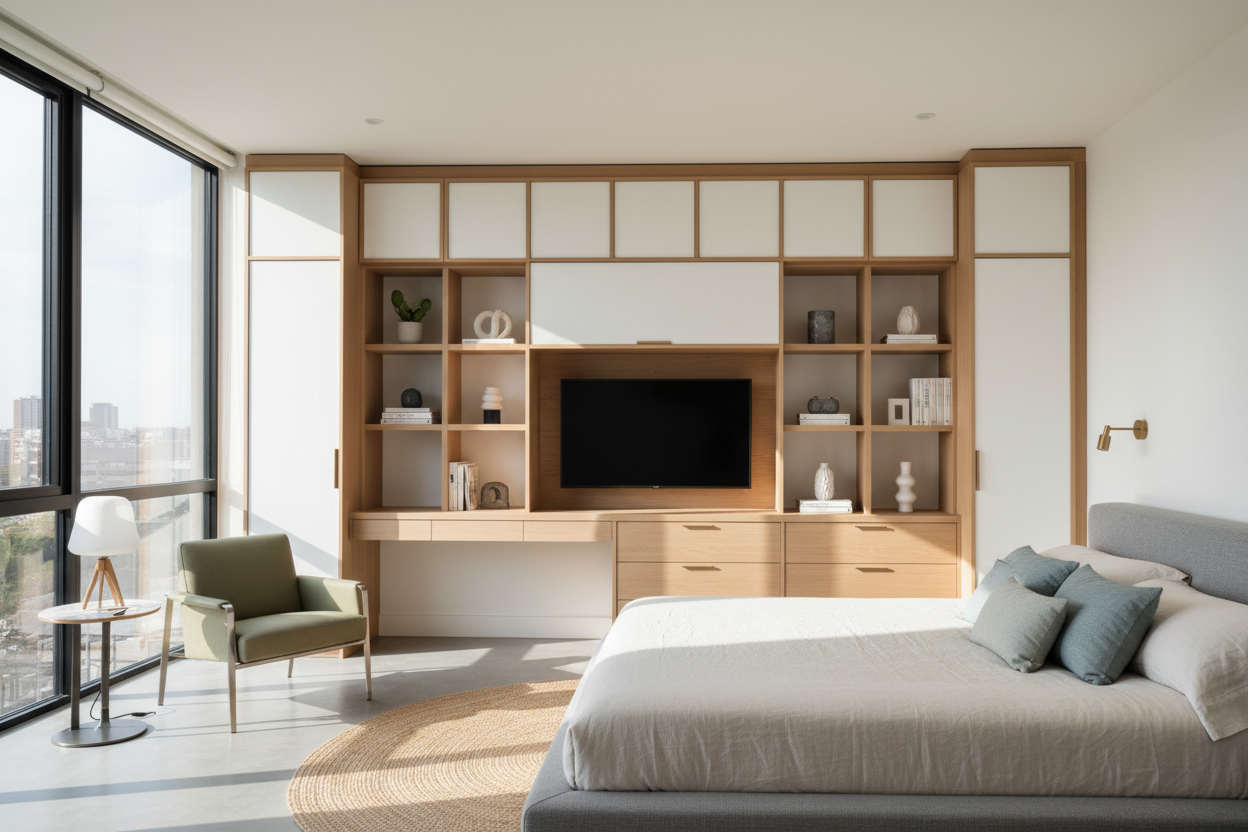
I spent three years in a cramped Brooklyn apartment where my dresser was my biggest daily enemy. Every morning was a tactical maneuver: shimmy past the bed, yank the drawer, and pray it did not hit the nightstand. It was a classic case of too much furniture and not enough floor. I eventually realized that scattered, waist-high pieces actually suffocate a room, making it feel like a cluttered warehouse rather than a place to sleep.
The fix was not getting rid of my clothes; it was getting rid of the floor-hogging dresser. Switching to a wall unit for bedroom storage changed the entire energy of the room. By going vertical, I reclaimed four square feet of floor space and finally stopped stubbing my toes at 6 AM. It is the smartest layout shift I have ever made.
- Floor-to-ceiling units use vertical space that usually goes to waste.
- Integrated drawers eliminate the need for bulky, standalone dressers.
- Uniform cabinetry creates a built-in look that makes small rooms feel larger.
- Closed storage hides the visual noise of clothes and daily clutter.
The 'Matching Bedroom Set' Mistake
We have been sold this idea that a bedroom needs a matching set: a bed, two nightstands, and a chunky dresser. In reality, these sets are a recipe for a choppy, disjointed room. When you have four or five different pieces of furniture sitting at different heights—a 32-inch dresser next to a 24-inch nightstand—your eye has nowhere to rest. It creates a jagged visual silhouette that makes the walls feel like they are closing in on you.
Wall units bedroom setups solve this by creating a single, continuous line. Instead of a dresser over here and a bookshelf over there, you have one cohesive system that follows the perimeter of the room. This visual simplicity is why high-end hotel rooms feel so peaceful even when they are small. They do not have stuff everywhere; they have integrated wall furniture for bedroom use that blends into the architecture. I found that once I replaced my three mismatched storage pieces with one wall unit, the room suddenly felt like it had been professionally designed rather than just furnished.
What Actually Makes a Good Wall Storage System?
Not all wall units are created equal. I have seen people buy cheap, flimsy shelving that bows the second you put a stack of heavy jeans on it. A solid wall unit for bedroom storage needs a specific mix of three things: deep lower drawers for heavy items, eye-level cabinets for daily clothes, and top-shelf space for seasonal gear like those bulky puffer coats or extra blankets. You want a depth of at least 15 inches for folded clothes, but if you are planning to hang suits or dresses, you will need the full 24-inch depth to avoid squishing your hangers.
If you are moving toward upgraded bedroom storage, look for systems that offer adjustable shelving. Your needs change over time. One year you might need more hanging space for work clothes; the next, you might need more cubbies for a growing shoe collection. Modern wall units for bedroom design should feel flexible. I personally look for units with a mix of matte finishes and maybe a few glass-fronted cabinets at the top to display some decor, which prevents the unit from looking like a giant, heavy monolith in the corner.
The Magic of Built-In Drawers
The biggest hurdle for most people is letting go of the traditional dresser. But a bedroom wall unit with drawers is actually a massive upgrade in terms of sheer volume. When drawers are part of a larger system, they do not require their own dedicated footprint on your rug. You can have nine deep drawers stacked vertically or tucked neatly under a hanging rod, saving you massive amounts of floor area. I prefer drawers with soft-close undermount slides—they feel much more expensive than they are and prevent that annoying wood-on-wood grinding you get with cheap vintage dressers.
If a full-wall system feels too intimidating for your current lease or budget, you might start with a high-capacity piece like a modern oak 9-drawer dresser. It provides the heavy-duty storage of a wall unit component without requiring a full installation into your studs. It is a great middle-ground for anyone who needs to organize a massive wardrobe but is not ready to commit to a floor-to-ceiling overhaul quite yet.
Hiding the Mess: Freestanding Wardrobes vs. Wall Units
There is a big difference between a heavy armoire and wall unit furniture bedroom systems. A freestanding wardrobe often looks like a giant box dropped in the corner of the room. It creates weird gaps on the sides and a dust-trap on top where old suitcases go to get gross. A wall unit, however, is designed to sit flush against the wall, ideally stretching from corner to corner. This eliminates those awkward 'dead zones' and makes the storage feel like it is part of the house itself.
For those who are not ready to commit to permanent carpentry, a white 4-door armoire with drawers can act as a pseudo wall unit. If you buy two and flank them on either side of a window or your bed, you get that built-in look without the contractor bill. It is all about achieving that bespoke aesthetic bedroom storage look by being intentional with your layout. I have used this trick in three different rentals; you just bridge the gap between two wardrobes with a simple shelf or a tension rod, and suddenly you have a custom-looking wall system that can be disassembled in twenty minutes when your lease is up.
Will Massive Wall Furniture Make the Room Feel Smaller?
This is the most common myth I hear in interior design. People think big furniture equals a small room. It is actually the opposite. Small, scattered bedroom furniture wall units make a room feel bitty and cramped because they break up the floor plan. One large, well-organized wall storage systems bedroom unit draws the eye upward toward the ceiling, emphasizing the height of the room rather than the narrowness of the floor.
When you eliminate the visual gaps between pieces of furniture, the room feels more expansive. I once installed an 8-foot tall unit in a tiny 10x10 bedroom. Everyone told me it would be overwhelming. But because the unit was the same color as the walls, it basically disappeared into the background. The room felt twice as big because the floor was finally clear of the dresser, the hamper, and the random shoe rack. You gain a sense of architectural permanence that a flimsy dresser just cannot provide.
How to Integrate a Workspace Without Ruining the Vibe
If you are working from home, the bedroom is often the only quiet spot left. But nobody wants to wake up and immediately see their monitor and a pile of sticky notes. The beauty of a comprehensive wall unit is that you can tuck a desk right into the shelving. I recommend a cloffice style where the desk can be hidden behind a sliding door or blended with bedroom office furniture that matches the rest of the unit.
By using the same materials for your storage and your desk, the workspace feels like a deliberate part of the room’s design rather than a corporate intrusion. I usually suggest using a 30-inch wide section of the wall unit for the desk. You get your work done, then you close the cabinet or slide the chair under the shelf, and you are back in sleep mode. It is the only way to work in a bedroom without feeling like you are living in a cubicle. Plus, you can use the upper shelves of the unit to hide your printer and all those ugly cables.
FAQ
Do I need to anchor wall units to the wall?
Yes, absolutely. Do not skip this. Especially if you have drawers, the weight of an open drawer can tip even a heavy unit forward. Always find the studs and use heavy-duty L-brackets or the manufacturer-provided anti-tip kits.
Can I take a wall unit with me when I move?
If it is a modular system, yes. That is why I prefer them over true custom built-ins. You can disassemble the sections and reconfigure them in your next place. Just keep the assembly instructions in a gallon-sized bag taped to the back of one of the units.
What material is best for a bedroom wall unit?
Look for high-density fiberboard (HDF) or solid wood. Avoid the super-cheap, airy particle board—it will sag under the weight of books or heavy folded sweaters within a single season. If you are on a budget, reinforced MDF with a real wood veneer is a great middle-ground.

Leave a comment
This site is protected by hCaptcha and the hCaptcha Privacy Policy and Terms of Service apply.