










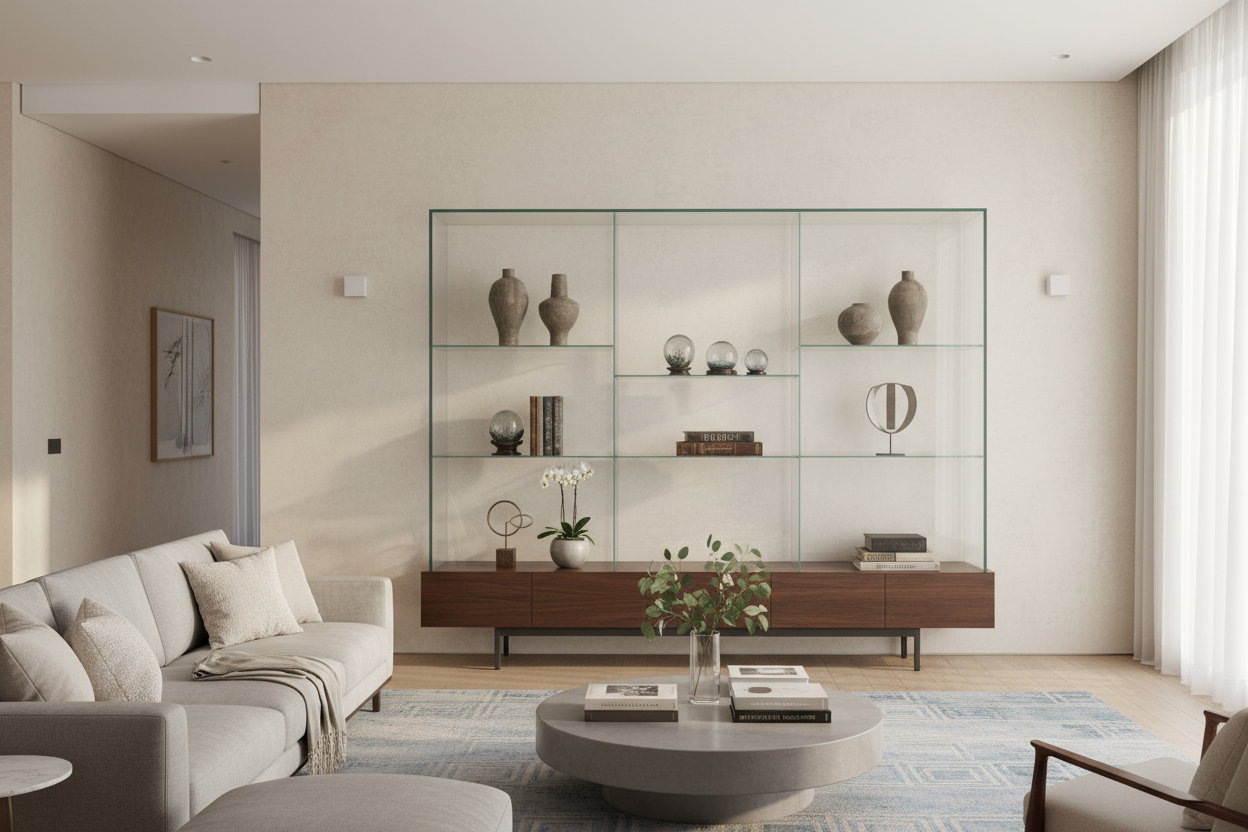
I remember the first time I brought home a sleek, floor-to-ceiling glass display. I had this vision of my favorite ceramics floating in a museum-like void, bathed in soft light. Instead, the moment I finished assembly and flipped the switch, my living room felt like a mid-tier cell phone repair shop or a place where you’d buy a discounted engagement ring. It was cold, clinical, and frankly, a bit depressing.
- Texture is Mandatory: Glass is cold; you must counter it with wood, linen, or organic shapes.
- Avoid Retail Gear: Commercial fixtures are built for durability, not aesthetics.
- Lighting Matters: Warm LEDs win over harsh fluorescent tubes every single time.
- Ground the Piece: Use heavy items at the base to keep the unit from looking like it’s about to tip over.
The 'Jewelry Store' Trap (And Why Your Cabinet Looks Cold)
The problem with an all glass display case is the lack of what designers call 'visual rest.' In a traditional wooden bookshelf, the solid frame and shadows give your eyes a place to stop. With glass, there are no boundaries. Everything is visible, including the dust on the floor behind the unit and the messy cords tucked in the corner. It creates a high-frequency visual noise that feels more like a commercial lobby than a cozy home.
I have spent a lot of time testing glass vs acrylic materials, and while glass offers superior clarity, that very clarity can be your enemy. Without proper styling, the reflections from the shelves bounce off the glass doors and create a glare that obscures whatever you are trying to show off. You aren't just styling the objects inside; you are managing how light moves through the entire piece of furniture.
Please Don't Buy Commercial Display Counter Cabinets
I am begging you: step away from the industrial supply catalogs. I see people trying to save a buck by buying display counter cabinets designed for retail stores. These things are monsters. They usually have heavy aluminum frames that look like they belong in a pharmacy and sliding doors that rattle every time a truck drives by your house.
Commercial units also come with locking mechanisms that are bulky and ugly. Unless you are actually running a boutique out of your guest room, you do not need a three-inch silver lock cylinder staring you in the face while you try to watch TV. They lack the delicate proportions of residential furniture, often being too deep and taking up way too much floor space for a standard living room.
The Facebook Marketplace 'Glass Display Case Nearby' Illusion
We have all been there—scrolling through local listings and seeing a 'glass display case nearby' for fifty bucks because a vape shop is closing down. It feels like a steal until you get it home. These units are usually scratched to hell from years of customers leaning on them, and the 'built-in' lighting is almost always a flickering, cool-white fluorescent tube that makes everything look like it's under an autopsy light.
Retrofitting these units is a nightmare. By the time you buy new LED strips, scrape off the old adhesive, and realize the tempered glass is too heavy for your hatchback, you’ve spent more than a new piece costs. I eventually realized that swapping open shelves for an enclosed unit meant I needed to invest in actual furniture, not a salvaged retail relic. You want something that complements your rug, not something that looks like it belongs in a mall kiosk.
How to Actually Style an All Glass Display Case
The secret to making glass look residential is contrast. If the case is made of cold materials (glass and metal), the contents must be warm. I’m talking about matte ceramics, old linen-bound books, or even a piece of driftwood. Avoid putting glass objects inside a glass case unless you have a lot of solid items to break them up. Otherwise, it just becomes a transparent blur.
If you are looking for a starting point, I’m a fan of the 4 layer glass door display case with LED light. It uses warm-toned lighting that mimics a gallery rather than a convenience store. The key is to use the light to create depth, casting soft shadows that give the objects inside some three-dimensional weight.
Anchor the Bottom, Float the Top
Visual weight is a real thing. If you put tiny, delicate trinkets on the bottom shelf, the whole unit feels top-heavy and unstable. Put your 'heavy' items at the base—think large art books, a solid stone bowl, or a thick wooden box. This grounds the unit. Save the top shelves for your lighter, airier pieces like thin-stemmed glassware or small sculptures. It creates a natural gradient that is much easier on the eyes.
Give It Some Breathing Room
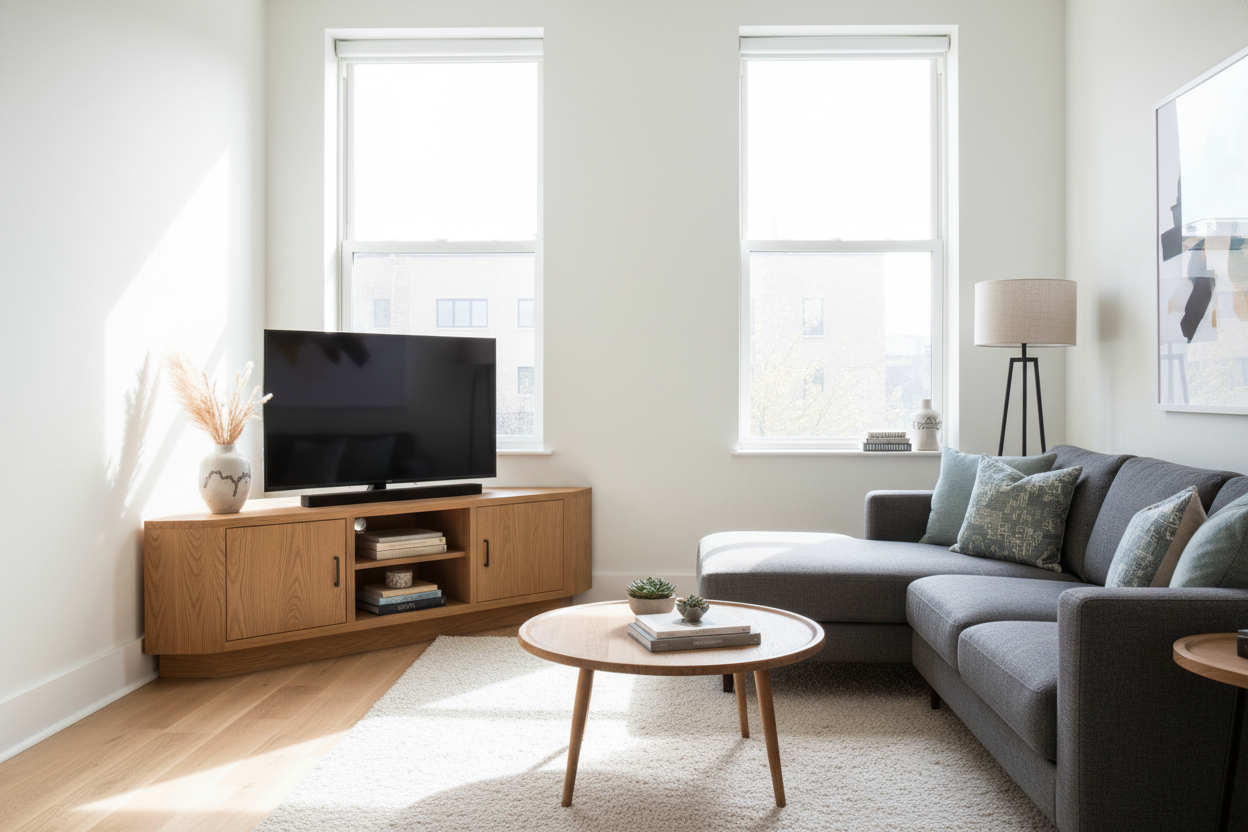
Glass furniture is meant to feel light and airy, but that effect is ruined if you jam it into a crowded corner between a bulky sofa and a radiator. It needs space for light to pass through it from all sides. If you are working with a tight floor plan, try tucking it into a corner display case. This allows you to use that awkward 'dead' space while keeping the center of the room open, maintaining that floating aesthetic without blocking your walking paths.
My Personal Experience
I once tried to display my entire collection of vintage cameras in an old retail case I found. It looked like a pawn shop window. I hated it for months before I realized the problem: I had no 'negative space.' I took out half the cameras, added two small potted plants (pothos are great because they handle the lower light inside a cabinet well), and stacked a few cameras on top of wooden blocks. Suddenly, it looked like a collection. The mistake was thinking that because I had the space, I had to fill it. Less is always more when you're dealing with 360-degree transparency.
FAQ
How do I keep the glass from getting covered in fingerprints?
Skip the blue spray. Use a mixture of distilled water and a splash of white vinegar with a high-quality microfiber cloth. And honestly? Use the handles. If your case doesn't have handles, add some small adhesive brass knobs. It saves you from wiping the glass every single day.
Is built-in lighting worth the extra cost?
Yes, but only if it is adjustable. If the light is too bright, it reflects off the glass and you can't see the items inside. Look for units with dimmable LEDs or warm-toned strips. Avoid anything that looks like a shop light.
Can I put a glass display case on carpet?
You can, but be careful. Because glass units are often heavy and have a small footprint, they can be wobbly on thick carpet. Always use the wall-anchoring hardware that comes with the unit. A falling glass cabinet is a disaster you don't want to deal with.


Leave a comment
This site is protected by hCaptcha and the hCaptcha Privacy Policy and Terms of Service apply.