










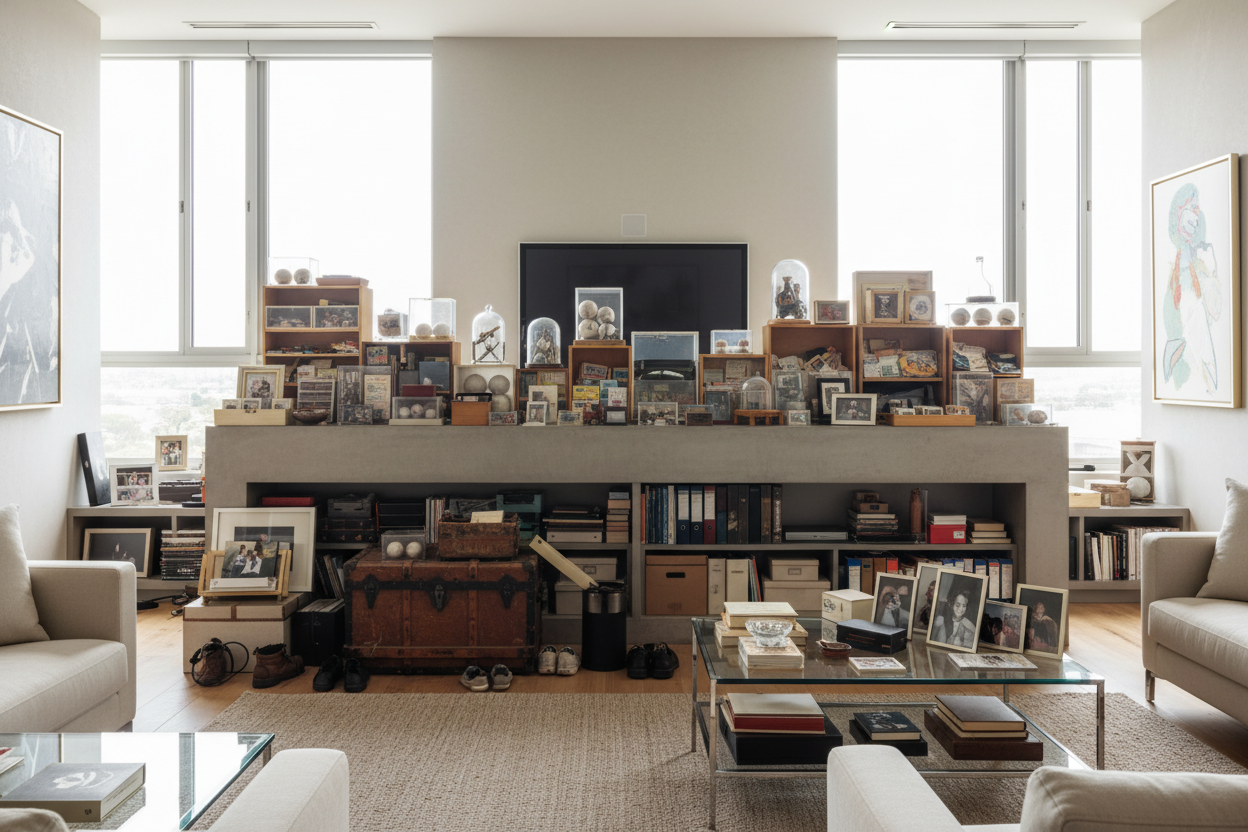
I remember the exact moment I realized our living room had been staged for a hostile takeover. I was moving a signed baseball—sitting in a scratched plastic cube—just to find the TV remote. Two feet away, a framed jersey was leaning precariously against a stack of actual books. It looked less like a home and more like a mid-tier sports bar at 2 AM. If you are struggling with memorabilia display boxes cluttering every flat surface, you are not alone, but you are likely doing it wrong.
- Consolidate small items into one high-quality cabinet instead of scattered cubes.
- Glass always beats acrylic for long-term clarity and scratch resistance.
- Integrated LED lighting is the difference between a collection and a storage unit.
- Mix in 'normal' decor like plants to soften the visual impact of sports gear.
The 'Man Cave Bleed' (And Why It Happens)
The 'Man Cave Bleed' is a slow creep. It starts with one signed puck on the mantle and ends with memorabilia display cases taking over the dining room. We do this because we value the items, but we treat the display as an afterthought. Scattering sports memorabilia display cases across various shelves creates visual noise that makes a room feel smaller and more chaotic.
The fix is containment. Instead of letting the collection breathe all over your furniture, you need to give it a designated 'zone.' A single, intentional sports display makes a much stronger statement than fifteen tiny boxes competing for attention. It tells people you’re a collector, not a hoarder who happened to find a Sharpie.
Stop Buying Single Cubes: The Case for a Dedicated Cabinet
I am begging you to stop buying those $15 acrylic cubes from the big-box craft stores. They static-attract every speck of dust in a five-mile radius and they look cheap. When you have twenty of them lined up, they just look like a wall of plastic. Consolidating those smaller items into a larger piece of furniture instantly makes the collection feel curated.
If you are tight on square footage, a corner display case is a massive win. It tucks the sports memorabilia display case into underutilized space, keeping the walkways clear while still giving your signed gear a pedestal. It turns a pile of sports memorabilia into a museum-quality installation.
Lighting Is the Difference Between 'Curated' and 'Cluttered'
Most sports memorabilia display cabinets fail because they are dark. If you put a dark leather glove inside a dark wood cabinet in a corner, you haven't displayed it—you’ve hidden it. Shadowy shelves make even the most expensive autograph display case look like a junk drawer. You need light to define the edges of the items and make the colors pop.
I’ve found that a display case curio cabinet with LED lights is the easiest way to solve this. Built-in lighting creates a focal point that draws the eye, making the sports display cabinet feel like a deliberate part of the architecture rather than a piece of furniture you just shoved against a wall. Just make sure the LEDs are cool-toned so they don't heat up and damage any sensitive signatures or fabrics.
How to Mix an Autograph Display Case With Regular Decor
The biggest mistake people make is thinking their memorabilia cabinet has to be 100% sports, 100% of the time. That’s how you end up with a room that feels cold and masculine in a way that doesn't play well with others. The secret is the 80/20 rule: 80% memorabilia, 20% 'life' stuff.
Toss in a trailing pothos plant on the top shelf or a few coffee table books at the base. This guide to choosing and styling offers some great tips on how to balance glass-fronted storage with the rest of your room. When you mix textures—like the rough leather of a baseball against the soft leaves of a plant—the whole sports memorabilia cabinet feels more integrated into the home.
Ditch the Cheap Plastic for Real Glass
Acrylic has its place, but that place isn't your main living area. It yellows over time when exposed to UV rays, and if you wipe it with the wrong cloth, it’s scratched forever. Real glass sports display cases have a weight and a clarity that plastic just can't mimic. It feels permanent and respectful to the item inside.
Moving to glass sports memorabilia display cabinets also changes the 'sound' of a room. Glass and solid wood dampen sound better than flimsy plastic, contributing to that 'quiet luxury' feel we’re all chasing. It turns your sports memorabilia display from a hobby into a legacy.
My Personal Lesson in Cheap Acrylic
A few years ago, I bought a 'bargain' acrylic display for a signed jersey. I thought I was being smart by saving $100. Within six months, the sun hitting the window turned the clear plastic into a hazy, yellowish mess. Worse, the static from the plastic actually pulled some of the fibers off the jersey every time I moved it. I ended up throwing the box away and buying a proper glass-fronted sports memorabilia display cabinet. I learned the hard way: if the item is worth displaying, it's worth a real glass case.
FAQ
Do memorabilia display boxes protect against fading?
Only if they are UV-rated. Standard glass or plastic will still let in rays that can fade ink over time. Keep your display out of direct sunlight regardless of the material.
How do I stop my sports memorabilia cabinet from looking 'messy'?
Group items by color or era. Don't just cram everything in. Leave 'white space' between items so the eye has a place to rest between the 1998 championship ball and the 2022 jersey.
Is a sports display cabinet hard to clean?
Glass is easy—just use a microfiber cloth and a bit of vinegar-based cleaner. Avoid ammonia on anything with specialized coatings. If you go with a cabinet, you only have to clean the exterior doors instead of fifty individual cubes.


Leave a comment
This site is protected by hCaptcha and the hCaptcha Privacy Policy and Terms of Service apply.