










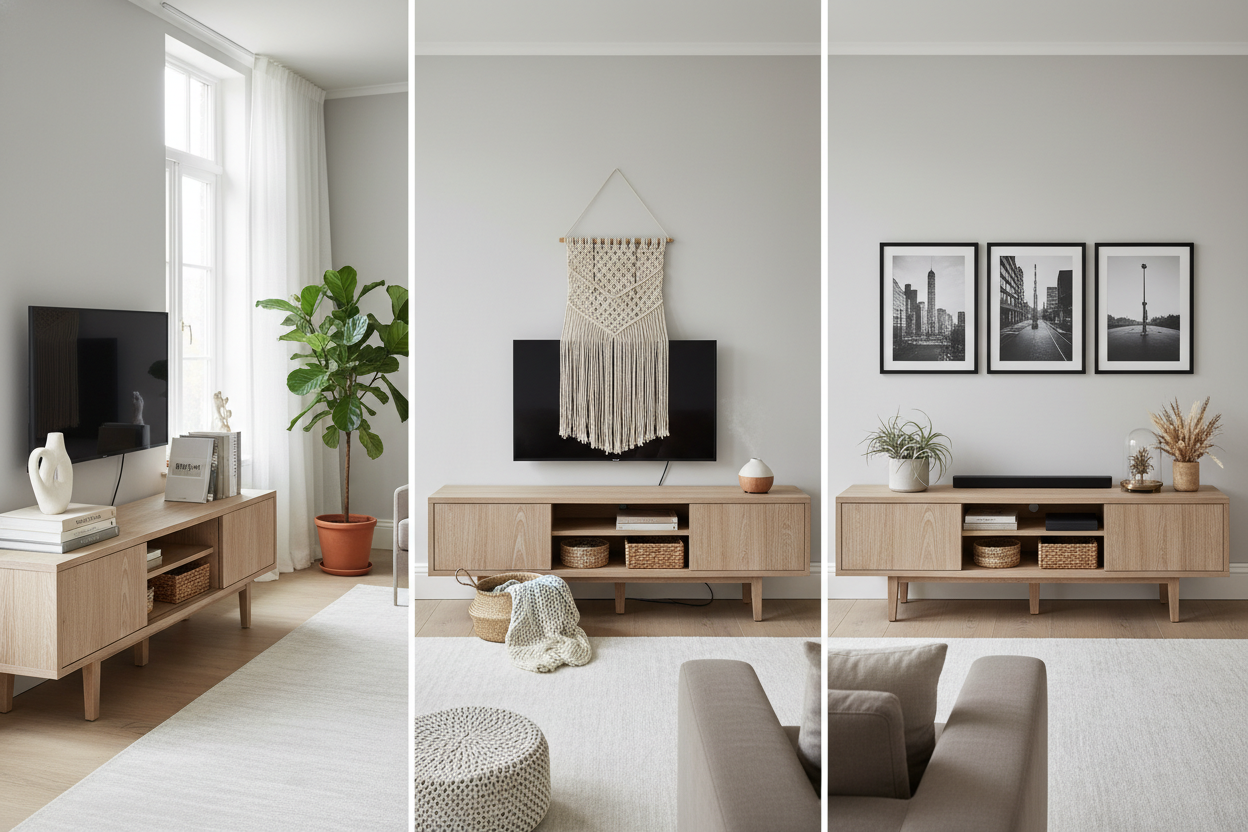
I remember staring at 14 different wood samples at 2 AM, trying to figure out if 'weathered' meant 'sophisticated' or 'this belongs in a rental with a Beach This Way sign.' A washed oak tv unit is the ultimate design trap. It looks airy and expensive in the showroom, but get it home and suddenly you are three steps away from a jar of decorative sea glass and a lifetime of regret.
- Use matte black or dark metals to ground the light wood grain.
- Texture is better than color—think glass, stone, or ceramics.
- Never buy the matching coffee table; mixing wood tones is mandatory.
- Large-scale, dark-leafed plants prevent the 'washed-out' look.
The Beach House Cliché (And Why We Fall for It)
Pale wood is a magnet for nautical tropes. If you pair a washed oak tv stand with a jute rug and white walls, you have basically built a sandbox in your living room. It is too much of one note. The wood needs visual weight to feel high-end. Without depth, that beautiful grain starts to look like the flimsy 1990s laminate we all spent the last decade trying to replace.
The problem is that we crave the brightness. We want that Scandinavian, sun-drenched vibe, but we forget that those rooms usually have massive architectural windows and 12-foot ceilings to carry the look. In a standard 12x14 living room, a pale unit can easily look like it is floating aimlessly against the wall. You need to anchor it before it drifts out to sea.
Rule 1: Anchor the Pale Wood With High Contrast
I learned this the hard way after I swapped my white oak unit for a solid wood TV stand black and realized I did not actually hate light wood—I just hated the lack of balance. You need something 'heavy' to sit on or near that pale surface. Contrast is what makes the oak look intentional rather than accidental.
Think about matte black hardware or deep, moody ceramics. If your unit has silver or brushed nickel handles, swap them out for oil-rubbed bronze or black iron. Place a stack of dark-spined coffee table books on the shelf. I also highly recommend a 'biological' anchor: a Rubber Tree or a ZZ plant. The deep, waxy green of the leaves provides a stark contrast that makes the oak grain pop instead of fading into your drywall.
Rule 2: Break Up the Wood Grain With Sleek Materials
A 70-inch slab of wood grain can be overwhelming. It is a lot of visual noise, especially if the 'wash' is heavy. To fix this, look for pieces that incorporate reflective or industrial surfaces. A storage credenza with sliding glass doors is a pro move here. The glass breaks up the monolithic wood front and adds a layer of sophistication that says 'curated apartment' rather than 'coastal bungalow.'
The glass reflects light differently than the matte, porous surface of the oak. It gives your eyes a place to rest. If your unit is solid wood, you can achieve this by styling it with glass vases or a marble tray. Anything that is not wood-on-wood will help elevate the piece. You want to mix the rustic nature of the oak with materials that feel 'town' rather than 'country.'
Rule 3: Mix Your Eras (Please Don't Buy the Matching Set)
Please, for the love of good design, stop buying the matching living room bundle. If you get the washed oak console, the coffee table should be walnut, metal, or even stone. I once helped a friend who bought the whole matching set and her living room looked like a hotel lobby in Myrtle Beach. It lacked soul because everything was the exact same shade of pale grey-beige.
You want to browse different TV stands as standalone focal points rather than parts of a uniform kit. Pair your oak unit with a vintage brass floor lamp or a cognac leather chair. That tension between the 'raw' look of the oak and the sleekness of mid-century or industrial elements is where the style actually happens. One-note rooms are boring; mixed rooms feel like they have been assembled over time by someone with actual taste.
My Personal Lesson in Undertones
I once bought a 72-inch 'weathered' unit that arrived looking suspiciously yellow in my north-facing living room. It was a beast to assemble—took me nearly three hours—only for me to realize it clashed horribly with my cool-toned grey floors. Tip: Check your undertones. If your oak has a pinkish or yellowish hue, it will fight with your flooring. I ended up keeping it but had to buy a massive charcoal rug to act as a buffer between the two woods.
FAQ
Does washed oak turn yellow over time?
Cheap veneers might, but quality kiln-dried oak usually holds its tone. However, keep it out of direct, 24/7 sunlight to prevent the finish from ambering or fading unevenly over the years.
What colors go best with a washed oak finish?
Stick to 'moody' tones like charcoal, navy, forest green, and even deep burgundy. Avoid pastels and light teals unless you are specifically going for that nursery or beach-cottage look.
Is washed oak hard to keep clean?
Actually, it is great at hiding dust compared to black or walnut finishes. Just skip the oily furniture polishes. A damp microfiber cloth is all you need; wax will just gunk up the open grain.


Dejar un comentario
Este sitio está protegido por hCaptcha y se aplican la Política de privacidad de hCaptcha y los Términos del servicio.