










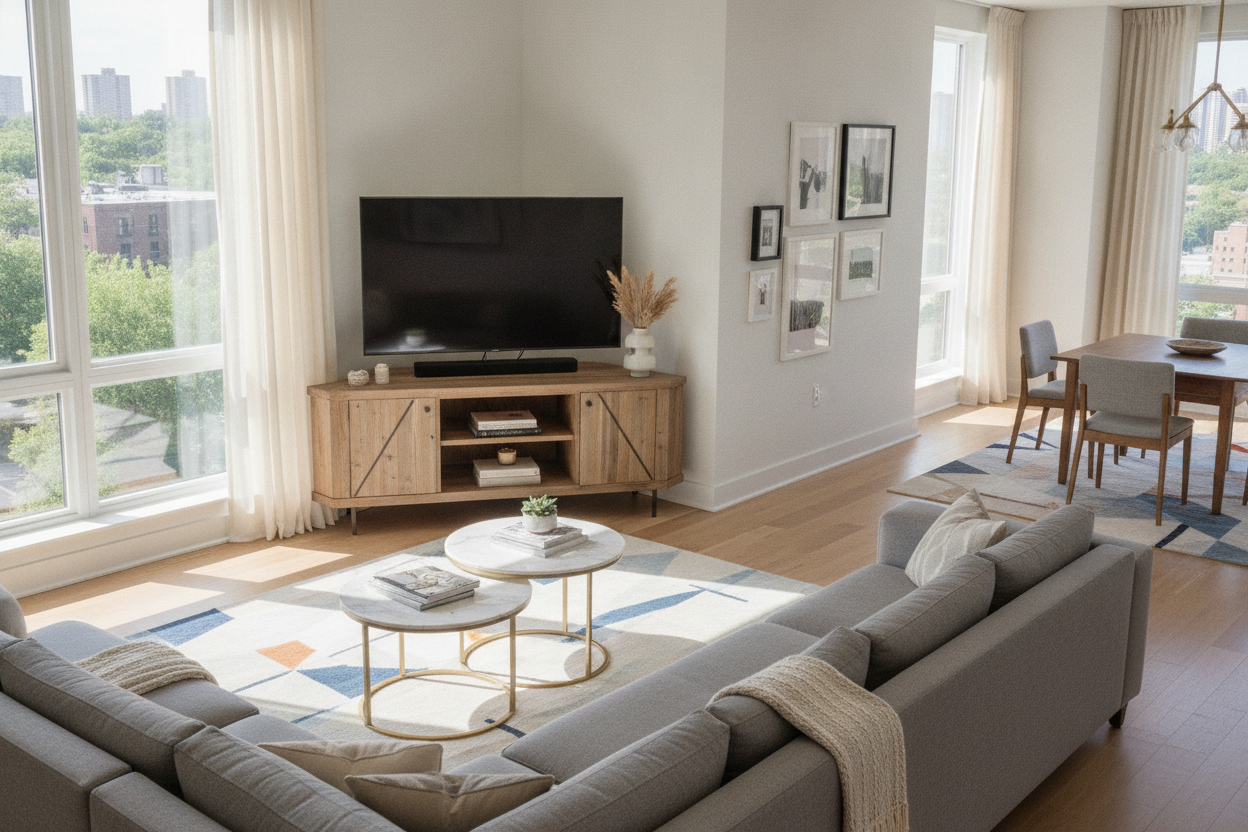
I spent three months staring at my 65-inch TV mounted on the longest wall of my apartment. It looked like a billboard for Netflix. Every time I walked from the kitchen to the bedroom, I felt like I was walking through a sports bar. Switching to a corner wall tv stand was the only thing that saved my sanity and actually made my living room feel like a home instead of a waiting room.
Quick Takeaways
- Free up your longest wall for a gallery wall or a massive sofa.
- Stop the TV from being the focal point of every room in an open-concept layout.
- Corners are usually dead space; utilizing them makes a small room feel significantly larger.
- Cable management is significantly easier when tucked into a 90-degree corner.
The Open-Concept Curse (And Why the Flat Wall Failed Me)
Open floor plans are a dream for natural light but a nightmare for furniture placement. Most people have one 'main' wall, and the default move is to slap the TV right in the center. The problem? It forces every other piece of furniture to salute the screen. In my place, that meant the back of my sofa was blocking the path to the dining table.
By choosing a tv stand for corner wall placement, you break that rigid command-center vibe. It allows the room to breathe. Instead of the TV shouting for attention from the moment you walk through the front door, it sits tucked away, ready for movie night but not demanding to be the star of the show during breakfast.
How a Corner Wall TV Stand Fixed My Traffic Flow
Most people forget that a room has a natural flow. When your TV is on a flat wall, the 'viewing zone' effectively cuts your floor plan in half. I finally gave up my main wall and realized that a tv corner setup creates a natural diagonal. This diagonal layout actually pushes the seating area back into the room’s corners, opening up a wide path for foot traffic.
It’s simple geometry. A standard 12x14 room feels cramped with a 20-inch deep media console sticking out from the long wall. Moving that bulk into the 'dead' space of a corner reclaimed nearly four square feet of walkable floor. It sounds small, but in a city apartment, that’s the difference between a cramped hallway and a functional living space.
Getting the Geometry Right: Freestanding vs. a TV Corner Wall Unit
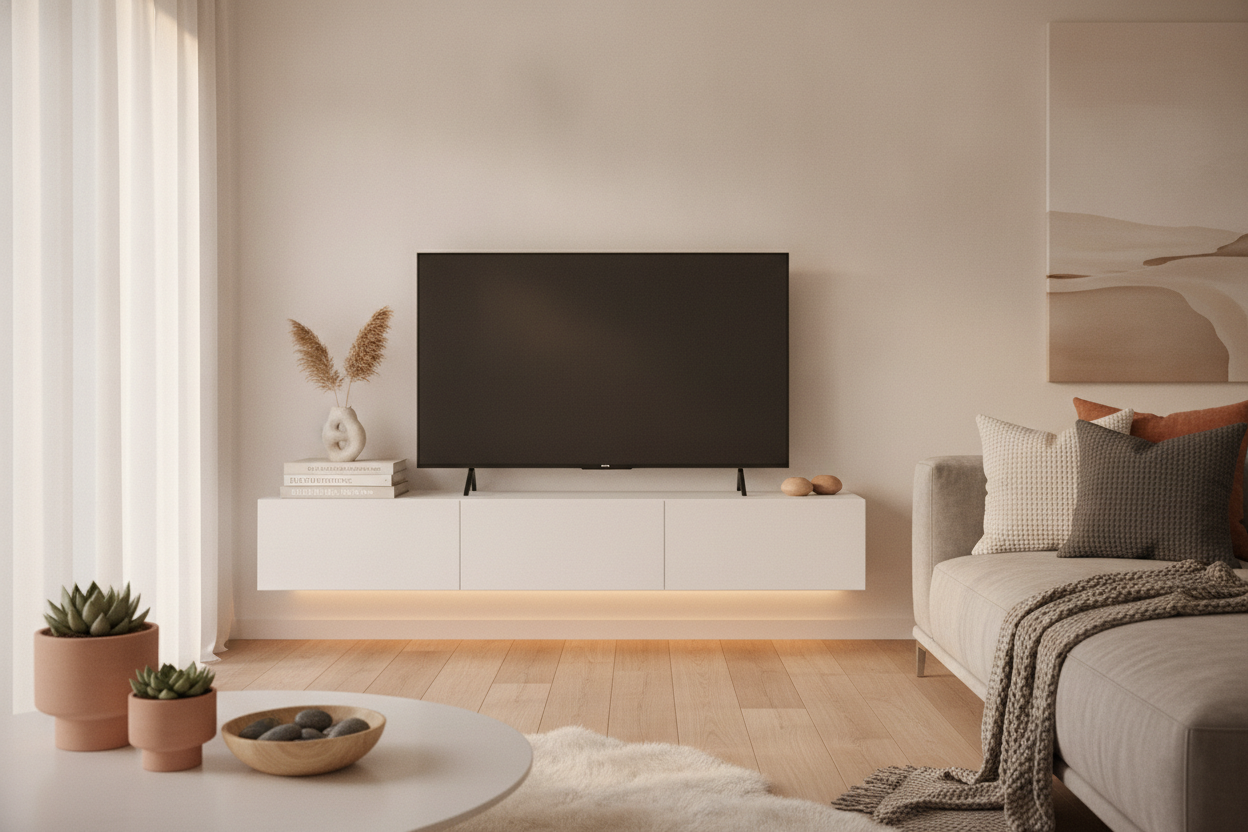
You have two main paths here. A freestanding corner tv table for living room use is the renter’s best friend. These are usually hex-shaped or have clipped corners so they sit flush against the baseboards. If you want a more built-in look, a floating tv corner wall unit is the way to go. It keeps the floor entirely clear, which tricks the eye into thinking the room is even bigger.
When shopping for TV stands, pay attention to the weight ratings. I’ve seen cheap 1/2-inch particle board shelves bow under the weight of a soundbar and a 55-inch screen. Look for units made with reinforced metal frames or solid wood tops. If your TV is over 50 inches, make sure the stand's footprint is wide enough so the screen edges don't hang over into the walkway—that's a recipe for a shattered screen.
Rules for Styling a TV Corner (So It Looks Intentional)
The biggest mistake people make with a corner tv stand design is leaving it isolated. A TV in a corner can look like an afterthought if you don't anchor it. I put a six-foot fiddle leaf fig on one side and a slim floor lamp on the other. This creates a 'zone' that feels like a deliberate design choice.
You can also use an asymmetrical gallery wall to bridge the gap between the TV and the rest of the room. Hang a few framed prints at varying heights on the wall adjacent to the stand. It draws the eye upward and away from the cables. Just keep the frames simple—thin black or oak wood—so the corner doesn't feel cluttered.
Finding the Perfect Corner TV Table for Living Room Setups
Before you buy, measure the depth of your media components. A lot of 'slim' corner units are only 15 inches deep at the center, which is fine for a streaming stick but won't fit an older receiver or a gaming console. You also need to ensure the back of the unit has a cut-out for airflow. I once fried a high-end receiver because I shoved it into a corner cabinet with zero ventilation.
If you move often, I highly recommend an adjustable TV stand for living room use. Some units feature articulating mounts or modular shelves that can work in a corner today and against a flat wall in your next apartment. It’s about buying furniture that adapts to your life, not the other way around.
FAQ
Will a corner TV stand fit a 65-inch TV?
Yes, but you need to check the width of the TV's legs. Many modern TVs have wide-set feet. Make sure the top surface of the corner stand is wide enough to support the base, or choose a stand with a built-in mounting bracket.
Does a corner TV cause neck strain?
Not if you angle your furniture correctly. Instead of facing your sofa squarely toward a flat wall, angle it diagonally to match the TV. This creates a cozy, conversational 'V' shape with your armchairs.
How do I hide the cables in a corner?
Corners are actually great for cable management because you can hide a cord management box right behind the unit. Since the stand sits at an angle, there is a natural triangular void behind it that is perfect for hiding power strips and bulky adapters.

Dejar un comentario
Este sitio está protegido por hCaptcha y se aplican la Política de privacidad de hCaptcha y los Términos del servicio.