










I remember staring at my first real apartment—a standard 12x15 box with 8-foot ceilings—and wondering why it felt so much like a cave. I had spent a month's rent on a low-slung, mid-century console that looked incredible in the showroom, but in my living room, it just looked like it was crouching. Every time I sat on the sofa, I felt like the walls were shrinking. It wasn't until I ditched the minimalist trend and swapped it for a tall entertainment unit that the room finally started to breathe.
Quick Takeaways
- Verticality creates the optical illusion of higher ceilings by drawing the eye upward.
- A tall unit frames the TV, preventing it from looking like a 'black hole' on a blank wall.
- They offer superior cable management and storage compared to shallow, low-profile consoles.
- Narrow depth (15-18 inches) is the secret to adding height without losing floor space.
The 'Bottom-Heavy' Living Room Problem
For the last decade, we have been obsessed with the 'low-profile' look. We want our sofas to sit on the floor, our coffee tables to be knee-high, and our TV stands to barely clear the baseboards. While that works in a glass-walled loft with 20-foot ceilings, it is a disaster for the rest of us living in standard builds. When all your furniture is concentrated in the bottom 24 inches of the room, you leave six feet of dead air above it. This makes your 8-foot ceilings feel oppressive, as if they are actively pressing down on you.
This 'bottom-heavy' layout drags the visual weight of the room to the floor. It’s the furniture equivalent of wearing horizontal stripes when you’re trying to look lean; it just widens the room and squashes the height. I’ve seen beautiful homes feel cluttered simply because the walls were too empty. You need something to bridge the gap between the floor and the ceiling, and a low-profile console just isn't up to the task. It leaves the TV floating in a sea of drywall, looking lonely and out of proportion.
How Vertical Lines Trick Your Brain
The human brain is easily fooled by architectural cues. If you give the eye a vertical path to follow, it will follow it all the way to the top. This is why pinstripe suits make people look taller and why skyscrapers have vertical columns. By introducing a freestanding entertainment center that reaches toward the crown molding, you are essentially creating a pinstripe for your living room. It fills that awkward negative space and tricks the brain into thinking the ceiling is several inches higher than it actually is.
It’s about more than just height, though; it’s about creating a sense of permanence. A tall unit mimics the look of expensive custom millwork. When you have a piece that fills the vertical plane, it feels like it was built for the room, rather than just dropped there. It adds a layer of architectural interest that most modern apartments desperately lack. Instead of looking at a blank wall, you're looking at a structured, intentional design that defines the entire space.
Swallowing the 'Black Hole' of Your Screen
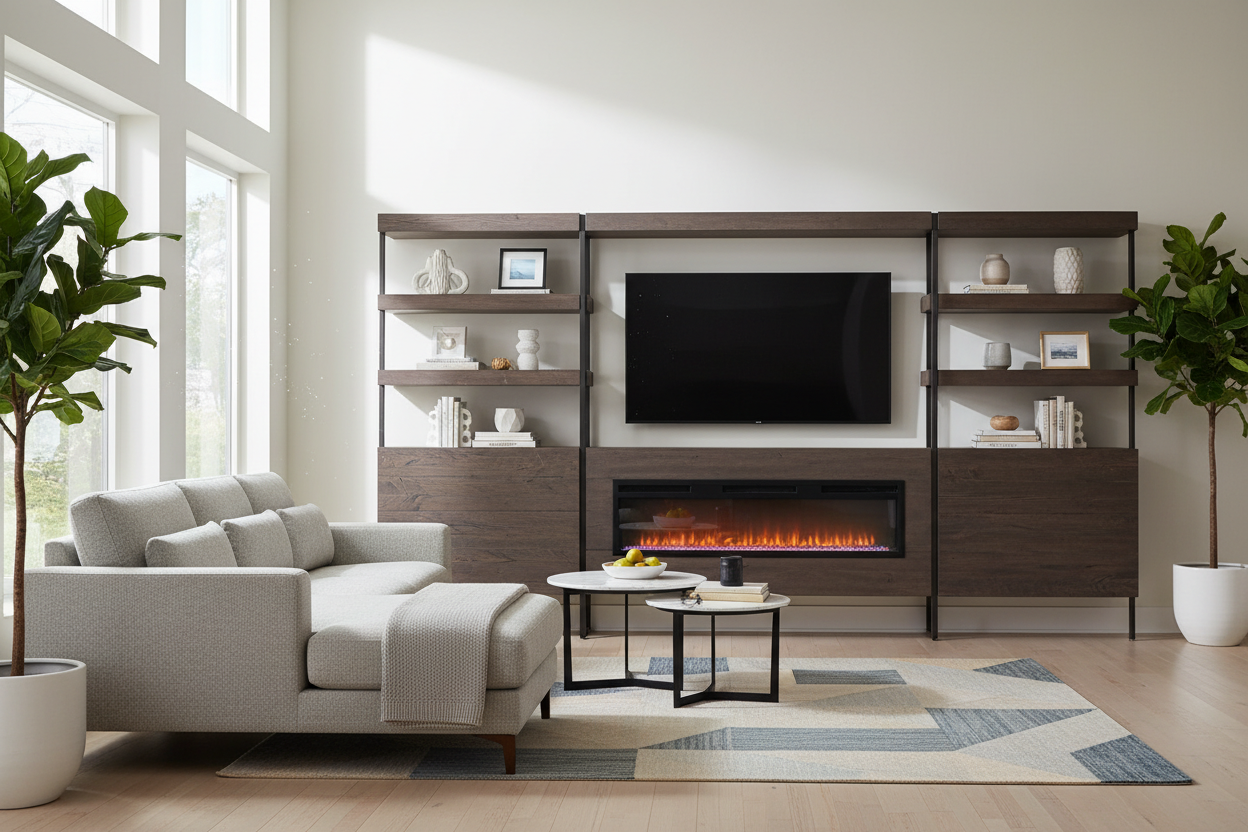
Let’s be honest: a 65-inch television is a giant black void when it’s turned off. On a low stand, it’s just a dark, heavy rectangle floating against a light-colored wall. It’s jarring and often ruins the vibe of a carefully curated room. When you frame that screen with vertical shelving and cabinetry, you’re integrating the tech into the decor. It’s a trick to see what designers actually think about making screens look like part of the furniture rather than an after-thought.
By surrounding the TV with books, ceramics, or even just clean cabinetry lines, you soften the harshness of the screen. The eye no longer stops abruptly at the black rectangle; it moves across the entire unit. I’ve found that using a tall unit with a dark interior back-panel can even make the TV 'disappear' when it's off, which is a massive win for anyone who hates that their living room looks like a sports bar. It turns the tech hub into a focal point that actually contributes to the room's style.
Hiding the Clutter (Because We All Have It)
My biggest pet peeve is the 'cable waterfall'—that mess of HDMI, power cords, and ethernet cables spilling out from behind a console like a tech-themed horror movie. Most low-profile stands have zero cable management because they assume you’re only plugging in one thing. A taller unit usually offers a modern design with ample storage space to tuck away the router, the gaming consoles, and the mountain of controllers we all seem to accumulate.
There is a genuine joy in being able to close a door on your clutter. In a tall unit, you can have dedicated 'zones'—tech at the bottom, display items at eye level, and seasonal storage at the very top. It moves the mess away from your line of sight. Instead of cramming everything into two shallow drawers, you have the vertical real estate to organize. I personally use the top cabinets of my unit for things I only need once a year, like holiday decor or old photo albums, which frees up my actual closet space for clothes.
Wait, Won't a Massive Cabinet Make My Room Feel Tiny?
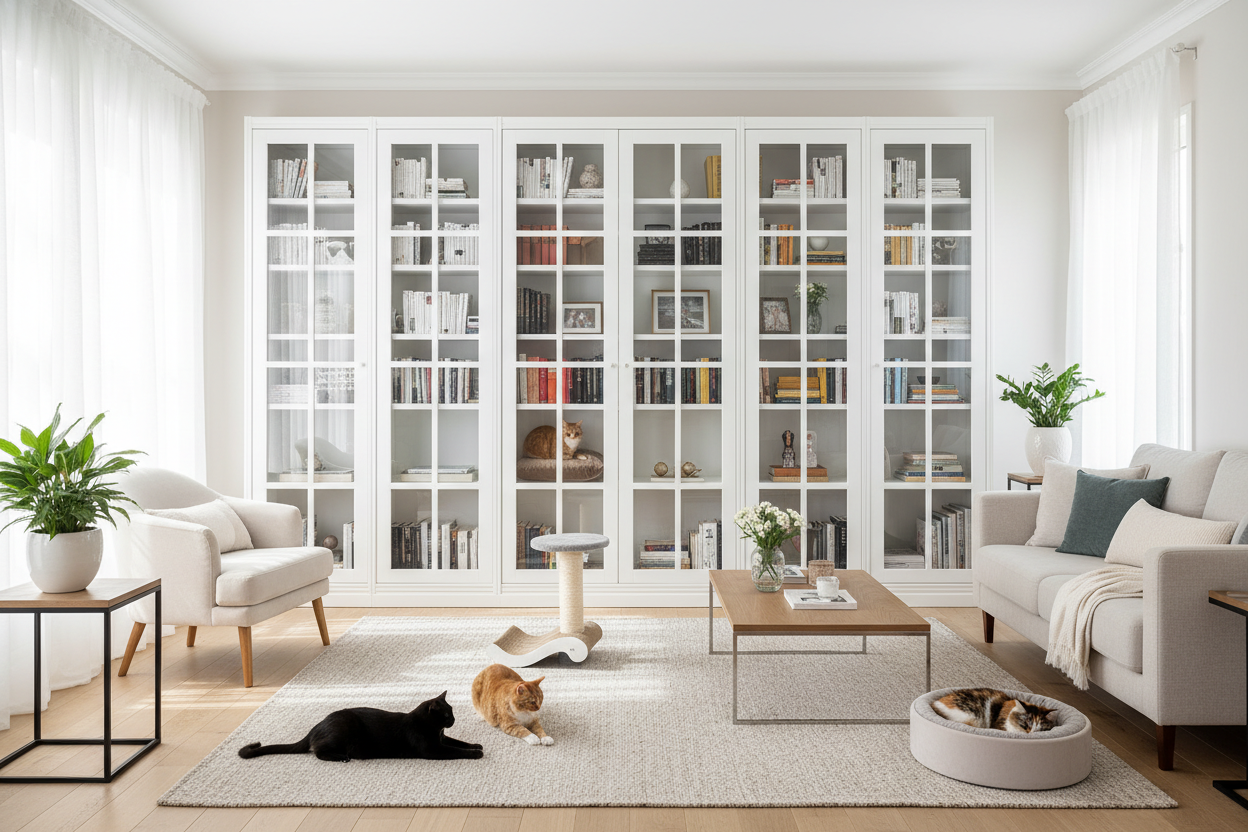
This is the number one fear I hear: 'If I put a huge piece of furniture in my small room, won't it feel crowded?' The answer is no, provided you understand the difference between volume and footprint. A piece that is 80 inches tall but only 15 inches deep takes up exactly the same floor real estate as a low console, but it carries its weight vertically. It’s about scale and sightlines. If you choose a unit with a slim profile, it actually makes the room feel more organized and 'held together.'
Proportions matter more than overall size. If you have a high bed or a deep, chunky sofa, you need furniture that can hold its own against those larger pieces. For example, you might find that your bedroom feels off-balance because your dresser is too low; in that case, you'd need an entertainment unit tall enough to match the visual height of your headboard. When the heights of your furniture vary and reach toward the ceiling, the room feels dynamic and layered rather than flat and cramped.
Personal Experience: The 24-Inch Mistake
A few years ago, I bought a massive pine hutch for my studio apartment. It was gorgeous, but it was 24 inches deep—a full two feet of floor space. I couldn't walk past it without hitting my hip, and it made the room feel like a storage locker. That’s when I learned the 'Slim-Tall' rule. I replaced it with a unit that was 84 inches high but only 16 inches deep. The difference was night and day. The room felt twice as big because I regained my walking path, but the height of the unit made the 9-foot ceilings look like they were 11 feet high. I’ll never go back to a low console again.
Frequently Asked Questions
How tall should my entertainment unit be?
Aim for at least 72 inches to get the vertical effect. If your ceilings are higher than 8 feet, look for units in the 80-90 inch range. You want the piece to feel like it belongs to the wall, not like a toy sitting against it.
Do I need to anchor a tall unit to the wall?
Yes. Absolutely. No exceptions. If it’s over 50 inches tall, use the anti-tip kit that comes with it (or buy a heavy-duty one). It only takes five minutes and prevents a disaster, especially if you have kids, pets, or live in an earthquake zone.
Can I use a tall unit with a wall-mounted TV?
Definitely. Many tall units come with a 'bridge' or a back panel designed exactly for this. You mount the TV to the wall, and the unit frames it. This is actually the best of both worlds because it looks custom-built but gives you the flexibility of a freestanding piece.

Dejar un comentario
Este sitio está protegido por hCaptcha y se aplican la Política de privacidad de hCaptcha y los Términos del servicio.