










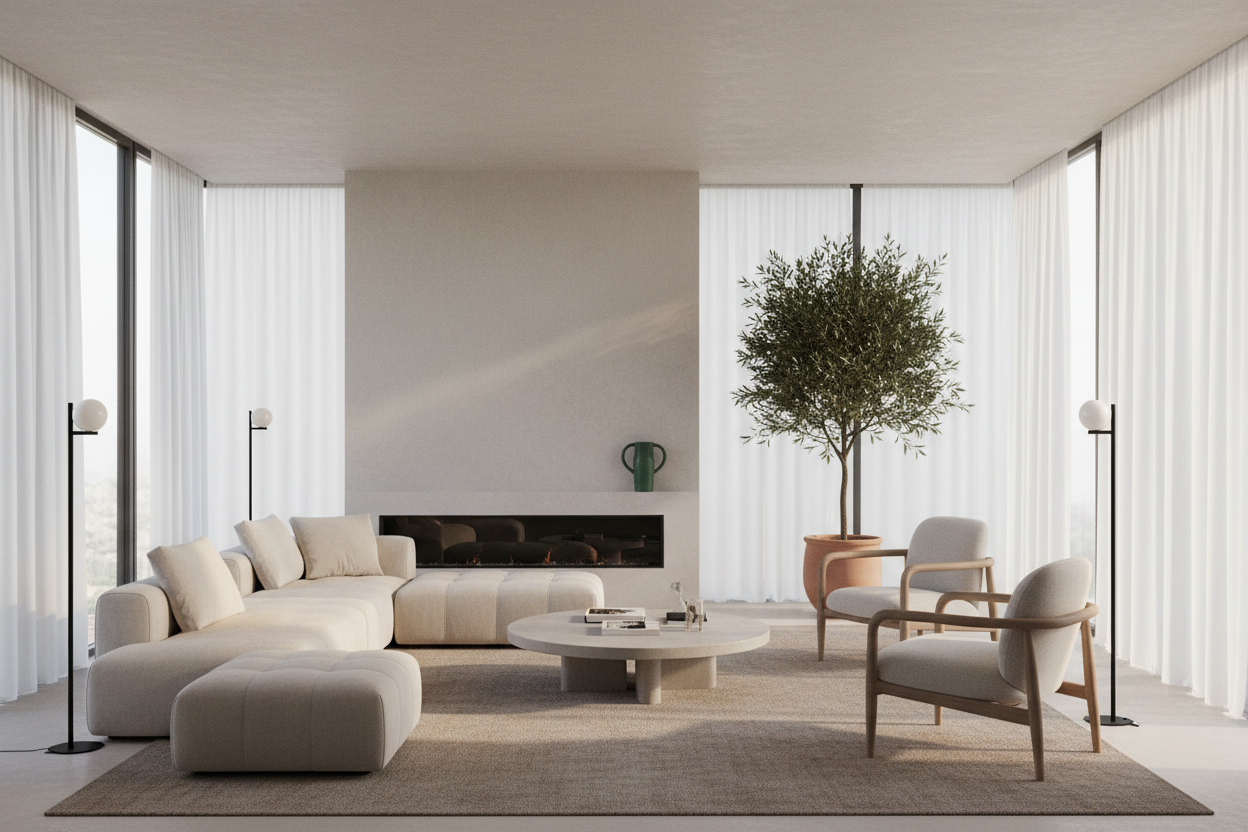
There is a fine line between a room that feels curated and calm, and one that feels stark or unfinished. Many homeowners fall into the trap of confusing "simple" with "plain," resulting in spaces that lack character or warmth. As designers, our goal is to strip away the unnecessary while amplifying comfort and texture. The secret to a successful simple furniture design living room lies not in buying less, but in selecting pieces with intention, ensuring every curve and joinery detail serves a purpose.
Key Elements of Minimalist Design
Before visiting the showroom, use this checklist to ensure your potential purchases align with a high-end, simplified aesthetic. These are the pillars of lasting design:
- Silhouette Over Ornamentation: Look for clean lines and geometric shapes rather than carved details or excessive tufting.
- Material Authenticity: Prioritize honest materials like solid oak, walnut, unlacquered brass, or full-grain leather that age gracefully.
- Visual Weight: meaningful design requires balancing "heavy" pieces (like a grounded sofa) with "light" pieces (like a glass coffee table).
- Functional Scale: Furniture must fit the room's proportions; oversized pieces in small rooms create claustrophobia, not coziness.
Curating the Perfect Layout
Simplicity in design often fails due to poor spatial planning rather than the furniture itself. When developing living room sitting area ideas, the flow of traffic is paramount. You want to encourage conversation without blocking pathways.
Defining the Conversation Circle
Avoid pushing all furniture against the walls. Floating your sofa and armchairs creates an intimate sitting area design that feels deliberate. In a simple layout, the negative space (the empty floor area) is just as important as the furniture. Allow at least 18 inches between the coffee table and the sofa edge for legroom, but no more than 24 inches, or the table becomes unreachable.
Selecting Materials for Longevity and Style
In a pared-back room, you cannot hide poor quality behind frills. The texture becomes your main decoration. When exploring sitting area furniture ideas, lean into tactile contrast.
Wood and Metal Finishes
For hard furnishings, distinguish between solid wood and veneers. While high-quality veneers are stable, solid wood allows you to sand down scratches over decades. For a simple aesthetic, matte or satin finishes are superior to high-gloss lacquers, which can feel dated and show dust instantly.
Upholstery and Ergonomics
A simple silhouette does not mean a stiff seat. Test the foam density. A high-resiliency foam wrapped in down provides that crisp look of a structured sofa but offers the "sink-in" comfort required for a main living space. Performance fabrics like Crypton or solution-dyed acrylics are excellent for maintaining that pristine, simple look without the fear of staining.
My Personal Take on Simple Furniture Design Living Room
I learned a hard lesson about "simple" design early in my career while furnishing a loft in Tribeca. I specified a stunning, ultra-low profile modular sofa. It looked architectural and incredible in the photos—pure, simple geometry.
However, I overlooked the "living" aspect of the living room. The seat height was only 14 inches (standard is roughly 17-18 inches). While it looked sleek, my clients—who were tall—found it undignified to get out of. Furthermore, the fabric was a beautiful, large-weave linen. Within six months, the friction from jeans had caused pilling that made the expensive piece look cheap. The lesson? True simplicity requires rigorous functionality. Now, I always check the "rub count" of a fabric and force myself to sit on a piece for at least 15 minutes in the showroom to ensure the foam doesn't bottom out.
Conclusion
Designing a space with simple furniture is an exercise in restraint and quality. By focusing on substantial materials, ergonomic silhouettes, and a layout that breathes, you elevate your home from merely furnished to thoughtfully designed. Trust the process, invest in fewer, better things, and let the quiet details speak volumes.
Frequently Asked Questions
How do I add warmth to a room with simple furniture?
Texture is the answer. If your furniture lines are clean and simple, layer in a nubby wool rug, a cashmere throw, or raw wood side tables. These organic elements prevent the room from feeling sterile or clinical.
Can I mix different wood tones in a simple design?
Absolutely. In fact, matching all wood tones perfectly can make a room look like a catalogue set. Try to keep the undertones consistent (e.g., all warm or all cool), but vary the darkness to add depth and a collected-over-time feel.
What is the biggest mistake in simple furniture layouts?
The most common error is poor scaling. Using small, "apartment-sized" furniture in a large room to make it look "minimal" actually makes the space look sparse and unanchored. Use fewer, larger pieces to fill the volume properly.


Dejar un comentario
Este sitio está protegido por hCaptcha y se aplican la Política de privacidad de hCaptcha y los Términos del servicio.