










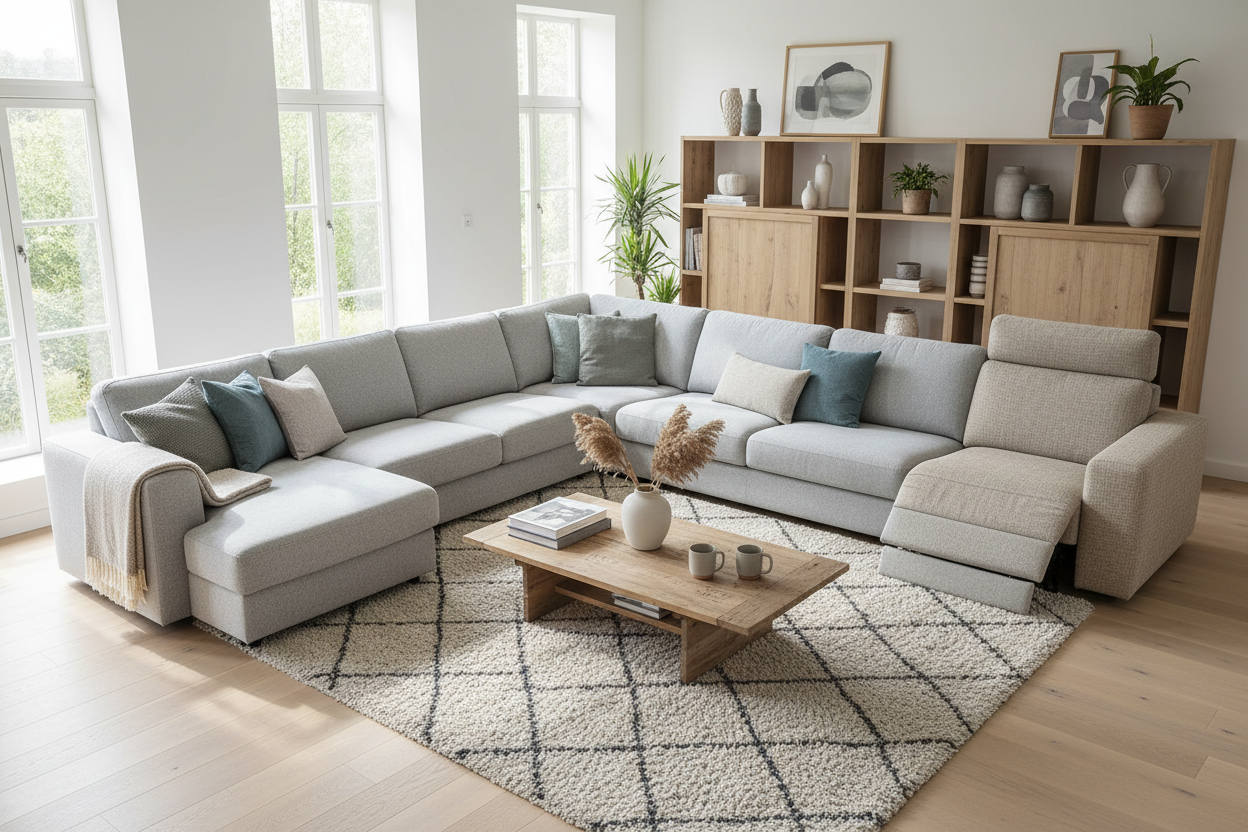
Selecting the primary seating for your living room is one of the most significant anchor decisions you will make in interior design. It dictates the traffic flow, the visual weight of the room, and ultimately, your comfort level. A frequent dilemma my clients face is balancing a desire for high-end aesthetics with a realistic budget. This is usually when the conversation turns to couches ikea sectional options. Are they merely a temporary fix, or can they serve as a legitimate, long-term design element? This guide breaks down the structural integrity and styling potential of these popular pieces.
Quick Decision Guide: Key Features to Consider
- Martindale Cycle Count: Check the fabric durability rating; look for covers rated above 15,000 cycles for general domestic use.
- Modularity: Prioritize series that allow you to add or subtract modules later as your space changes.
- Seat Depth: Standard depth is around 21-24 inches; anything deeper requires scatter cushions for ergonomic back support.
- Frame Material: Differentiate between particleboard frames (lighter, less durable) and solid wood or metal reinforcements.
- Cover Removability: Essential for families; ensure the entire frame cover is washable, not just the cushion casings.
Analyzing the Build: Structure and Silhouette
When evaluating mass-market furniture, you must look past the styling and examine the bones. Most Ikea sofas and sectionals utilize a combination of particleboard, fiberboard, and plywood. While this isn't heirloom quality like a kiln-dried hardwood frame from a custom joinery, it is engineered for flexibility. The key is to choose models where the stress points—the arms and base rails—are reinforced.
The Visual Weight and Scale
One design error I often see is poor scaling. Some sectionals have a bulky, ground-hugging silhouette that can make a small room feel claustrophobic. If you are working with limited square footage, look for models with exposed legs. Seeing the floor continue underneath the sofa tricks the eye into perceiving more space. Conversely, in a large open-plan room, a heavier, skirted base grounds the area and creates a distinct zone.
Comfort Mechanics and Ergonomics
Comfort is subjective, but ergonomics are science. Standard foam density in these pieces is often on the firmer side initially. This is actually a benefit; softer foam collapses quickly, leaving you with a sloppy-looking sofa within a year. For media rooms where lounging is the priority, you might consider an ikea reclining sectional. Unlike the bulky recliners of the 90s, modern iterations often hide the mechanism better, maintaining clean lines while offering lumbar support.
Elevating the Look: Customization is Key
To avoid the "showroom" look, you must customize. The modular nature of these pieces is their greatest strength. You aren't stuck with the stock layout. I frequently advise clients to upgrade the legs—swapping standard plastic or birch blocks for tapered walnut or brass legs instantly changes the furniture's character. Furthermore, third-party companies now produce luxury velvet and linen slipcovers specifically for these frames, allowing you to achieve a high-end designer look for a fraction of the cost.
Lessons from My Own Projects
I want to share a specific experience from a project I did for a young family in a Brooklyn brownstone. We used a Söderhamn sectional because we needed to navigate a notoriously narrow staircase. Here is the unpolished truth that the catalog won't tell you: the metal connecting clamps that hold the sectional pieces together are incredibly fiddly.
During installation, I realized that if you don't align them perfectly—and I mean to the millimeter—you end up with a visible, ugly gap between the modules that collects crumbs and breaks the visual line. We actually had to use heavy-duty zip ties underneath the frame in addition to the clamps to force the cushions to sit flush against each other. Also, a warning on the lighter weaves: avoid denim. I noticed distinct blue dye transfer on a beige cover after just three months of use. It washed out, but it’s a maintenance reality you need to be prepared for.
Conclusion
Ultimately, purchasing a mass-market sectional doesn't mean sacrificing style. It requires a discerning eye for fabric texture, a willingness to upgrade the hardware, and careful space planning. By treating the piece as a base structure to be built upon, you can curate a living space that feels sophisticated, inviting, and uniquely yours.
Frequently Asked Questions
How do I stop the sectional pieces from sliding apart?
While most models come with metal C-clamps or U-brackets, they can loosen over time, especially on hardwood floors. I recommend applying non-slip rubber pads to the feet of the sofa and using heavy-duty zip ties on the underside of the frame legs for extra security.
Can I wash all Ikea sofa covers?
Not all covers are created equal. While many ikea sofas and sectionals feature fully removable, machine-washable slipcovers, some leather or faux-leather options are fixed upholstery. Always check the care tag for the "removable" symbol before purchasing.
Is a sectional too big for a small apartment?
Not necessarily. A sectional can actually save space by utilizing dead corners and eliminating the need for a separate armchair. Look for "apartment-sized" modular series with slimmer arm profiles to maximize seating width without overwhelming the room.

Dejar un comentario
Este sitio está protegido por hCaptcha y se aplican la Política de privacidad de hCaptcha y los Términos del servicio.