











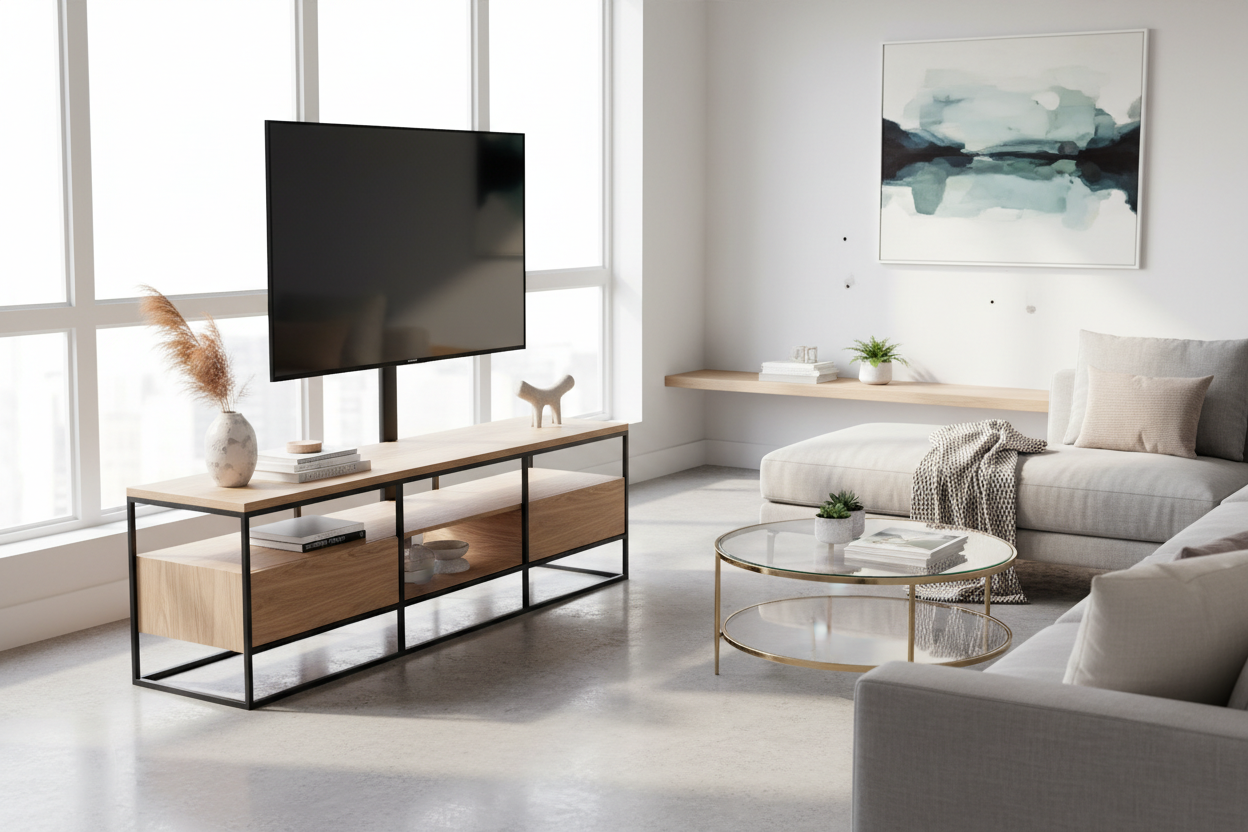
I live in a house built in 1912. The walls aren't just walls; they're layers of mystery dust and brittle wood slats hidden behind crumbly plaster. When I finally upgraded to a 65-inch screen, the thought of drilling into that history sent a chill down my spine. I knew a standard wall bracket would likely just rip a hole the size of a dinner plate before hitting anything solid.
I spent three nights staring at my wall, debating if I should risk the structural integrity of my living room or just settle for the ugly plastic legs that came in the box. Then I discovered television stand mounts. It was the middle ground I didn't know existed—a way to get that clean, floating aesthetic without the permanent commitment of a power drill.
- No Damage: Perfect for renters or owners of historic homes with tricky walls.
- Safety First: Much harder for toddlers or pets to tip over than standard TV legs.
- Cable Management: Most integrated mounts have hollow spines to hide the spaghetti of wires.
- Adjustability: You can swivel and change the height without re-drilling holes.
The Plaster Wall Nightmare (And Why I Put the Drill Away)
Lath and plaster is the enemy of the modern DIY enthusiast. Traditional wall brackets assume you have modern studs spaced perfectly every 16 inches. In my house? It’s a guessing game. Every time I’ve tried to sink a heavy-duty anchor into these walls, I’ve been rewarded with a shower of white dust and a hole that refuses to hold weight. This is where tv stand mounting becomes a literal lifesaver.
Instead of fighting the architecture, I decided to work with gravity. By using a stand with an integrated bracket, I stopped worrying about whether my TV would end up face-down on the hardwood by morning. It’s about peace of mind. If you’ve ever heard a mysterious 'crack' in the middle of the night after hanging a heavy picture, you know exactly why I opted for this route.
The 'Cheat Code' for Historic Homes: Bracketed Consoles
The magic of these units is the 'spine.' It’s a heavy-duty steel pillar that bolts to the back of the furniture and holds the TV aloft. When choosing the perfect TV stand for style and function, you want to look for one where the bracket feels like a part of the frame, not a flimsy afterthought. You get the height you want—eye level is crucial, people—without the anxiety of a wall collapse.
These tv stands and mounts allow you to tuck your soundbar and consoles directly underneath the screen. It creates a cohesive look that mimics a professional wall installation. The best part? When you decide to rearrange the room (which I do every six months), you just slide the furniture. No patching drywall, no repainting, no regrets.
The Physics of Getting the Floating Look Right
You can't just slap a 65-inch screen onto a tiny end table and hope for the best. Physics is a cruel mistress. To make this work, you need a base with enough depth and weight to counterbalance the screen. I’ve found that a wider footprint is always better for stability. For instance, a 70.9 inch stand with dual side cabinets provides the necessary 'grounding' to support a high-mounted screen without it looking top-heavy or wobbly.
The Toddler Test: Are They Actually Tip-Proof?
If you have kids or a high-energy dog, those 'chicken feet' plastic legs that come with TVs are a disaster waiting to happen. They are remarkably easy to slide or tip. A heavy-duty adjustable tv mount stand actually bolts the screen to the furniture itself. It turns the TV and the console into one single, heavy unit that is much harder to knock over.
For parents, browsing for solid, grounding TV stands is the smartest move you can make for living room safety. I’ve seen my toddler grab the edge of the console, and because the TV is secured to the bracket—and the bracket is part of the heavy wooden base—nothing budged. That’s a win in my book.
How to Retrofit the Console You Already Own
If you already have a vintage credenza or a media unit you love, you don't have to start from scratch. You can buy a universal tv stand attachment. These are essentially free-standing pedestals with a flat base that slides underneath your existing furniture. The weight of the console (and the TV) holds the base in place, giving you the 'mounted' look without buying a whole new set of furniture. It’s the ultimate hack for keeping your style while upgrading your tech.
Frequently Asked Questions
Will a stand mount hold a 75-inch TV?
Most heavy-duty mounts are rated for specific weight limits rather than just screen size. Check the VESA pattern and the weight capacity—usually, high-quality steel mounts can handle up to 100 lbs easily.
Can I adjust the height later?
Yes, that’s the main perk. Unlike a wall mount where you're stuck with the height you drilled, these usually have 3-5 height settings you can change with a few bolts.
Is it hard to assemble?
If you can put together a basic bookshelf, you can handle this. It’s mostly just bolting the vertical spine to the base and then attaching the VESA plate to the back of your TV.


Dejar un comentario
Este sitio está protegido por hCaptcha y se aplican la Política de privacidad de hCaptcha y los Términos del servicio.