










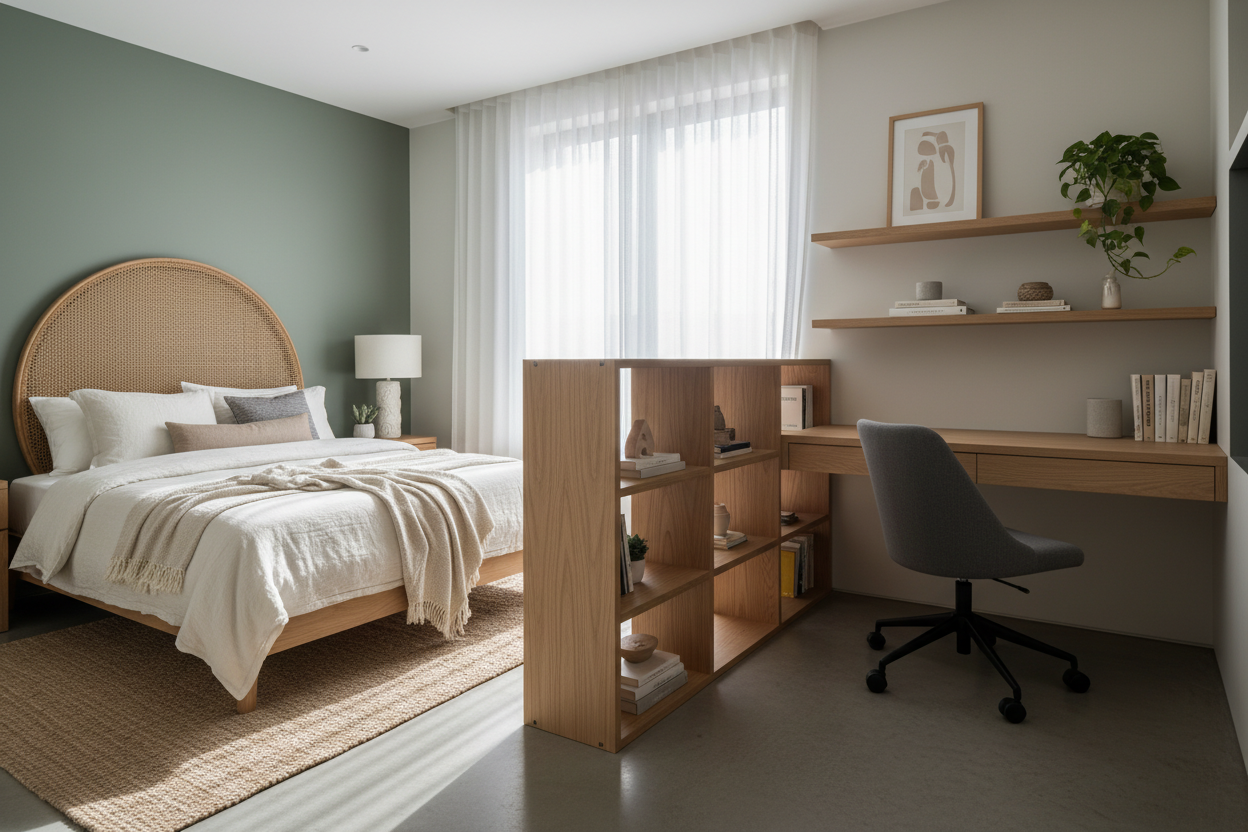
It usually starts with a compromise. You need a place to work, but the only available square footage is next to your nightstand. Suddenly, you are trying to relax at night while your monitor stares back at you, reminding you of tomorrow's deadlines. Getting a bedroom and study room combined right is one of the most common layout requests I receive, and it is notoriously tricky. When you force a high-energy work zone into a low-energy rest space, neither functions well.
In this guide, we will break down exactly how to partition your room, select dual-purpose furniture, and maintain a peaceful atmosphere so you can actually log off at the end of the day and reclaim your sanctuary.
Quick Decision Guide
- Create physical distance: Keep your desk at least 36 inches away from the edge of the bed to maintain distinct, comfortable pathways.
- Control the lighting: Use task lighting for the desk and warm, ambient lighting for the sleep zone to signal the brain when work is over.
- Match visual weight: Avoid heavy executive desks in a sleeping space; opt for visually light, open-leg tables.
- Hide the clutter: Prioritize closed storage to keep laptops and papers out of sight when you are trying to wind down.
Mastering the Layout in Tight Quarters
When dealing with a small bedroom and study room combined, your floor plan is your first line of defense against a cluttered mind. The goal is to ensure your bed is not the main focal point from your desk chair, and vice versa.
Strategic Placement
If you are exploring small bedroom study room ideas, start by looking at your windows. Placing your desk perpendicular to a window reduces screen glare while giving you a necessary view to rest your eyes. Never face your desk directly toward the bed. If your layout forces them close together, use a physical barrier like a slatted wood screen or an open bookcase. This creates a psychological boundary, making the bedroom with study area design feel intentional rather than haphazard.
Furniture That Works Harder
In a shared space, every piece of furniture needs to justify its footprint. A simple study room design relies on pieces that blend seamlessly into a residential aesthetic, avoiding that harsh, corporate cubicle look.
Desks and Storage
For interior design bedroom study table selections, I always steer clients toward warm materials like solid oak or walnut rather than cold metal and glass. A clever study room bed design might incorporate built-in nightstands that extend into a floating desk, saving precious floor space. When considering study room cabinet design, closed storage is non-negotiable. Being able to physically shut a drawer on your laptop is vital for a comfortable study room that still feels like a bedroom at night. If you lack floor space, look to the walls. Creative study room wall art mixed with floating shelves can draw the eye upward, making a small study space feel expansive.
Rethinking Unused Real Estate
Sometimes the best room for study is the one you carve out of thin air. If your primary bedroom is too cramped, you have to get creative with the architectural quirks of your home.
The "Cloffice" and Nooks
One of my favorite small home study ideas is repurposing an underutilized reach-in closet. A closet study space allows you to tuck away a desk, install overhead shelving, and literally close the doors on your workday. If a closet isn't an option, look for awkward alcoves. A custom-cut piece of butcher block can turn a useless corner into an elegant study room. When browsing study room pinterest boards or looking at pictures of study rooms in homes, notice how often the most successful study lounge ideas utilize these weird, transitional spaces rather than taking up the center of a room.
Designer's Honest Take: What Actually Works
A few years ago, I designed a downtown condo for a client who insisted on fitting a massive, traditional mahogany desk into her primary bedroom. She wanted a traditional study room ideas vibe, but the room was only 12 by 14 feet. I warned against it, but we went ahead. Within a month, she hated it. The desk dominated the room, making her feel like she was sleeping in a corporate office. The heavy visual weight of the piece completely ruined the room's relaxing atmosphere.
We ended up swapping it for a slender, wall-mounted mid-century desk and used a cozy, upholstered dining chair instead of a rolling ergonomic eyesore. It completely fixed the room's energy. The honest downside? A minimalist desk means zero deep storage. She had to become ruthlessly organized and digitize most of her paperwork. But the trade-off was worth it to get her bedroom back.
Frequently Asked Questions
How do I separate a study area in a bedroom?
Use visual anchors like a distinct area rug under the desk, paint zoning (like deep blue study room ideas for the work alcove), or physical dividers like a folding screen or tall plants. The key is to make the study setup ideas feel like a distinct zone, not just furniture pushed against a wall.
Is a small living room with study area better than the bedroom?
It depends on your household. A living room study area is great if you live alone or work while others are out. However, if you need quiet focus while family members are watching TV, a bedroom study area is usually the better, more private option.
What is the best desk depth for a small home study?
For laptop work, a desk depth of 20 to 24 inches is perfectly adequate. If you use dual monitors, you will want at least 28 inches of depth to maintain proper ergonomic distance from the screens.

Dejar un comentario
Este sitio está protegido por hCaptcha y se aplican la Política de privacidad de hCaptcha y los Términos del servicio.