










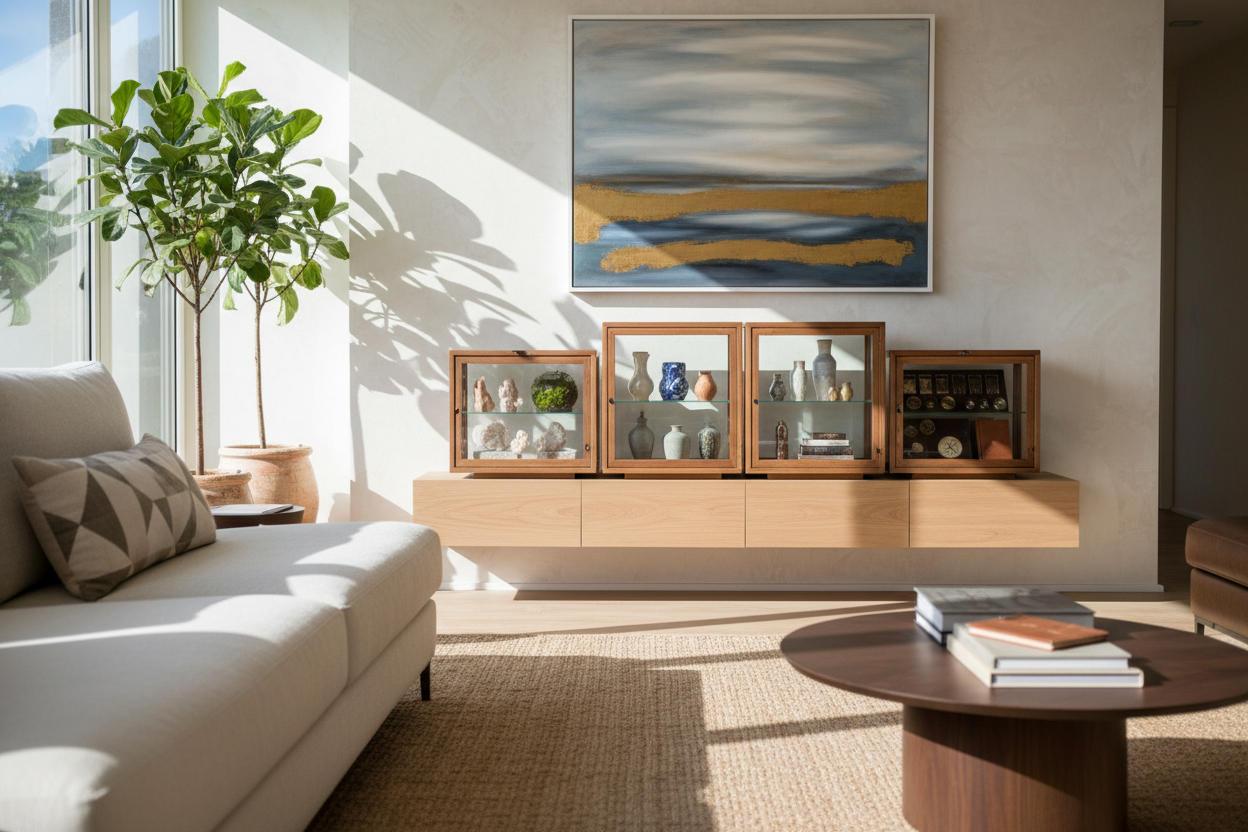
Have you ever stared at a blank, narrow wall or an awkward corner and thought, 'Something is missing, but a bookshelf is too heavy'? It is a common design dilemma. You want a place to showcase your favorite travel finds, family heirlooms, or vintage pottery without overwhelming the room's footprint. The solution is often a wooden display cabinet small enough to tuck into tight spaces but striking enough to act as a focal point. By the end of this guide, you will know exactly how to choose, place, and style these compact pieces for maximum visual impact without sacrificing valuable square footage.
Quick Decision Guide
- Measure the swing: Always account for an extra 15 to 20 inches of clearance for glass doors to open comfortably.
- Check the visual weight: Glass-front panels reduce the heaviness of solid wood, making tight rooms feel more open.
- Mind the lighting: Dark corners swallow dark wood; opt for lighter finishes like white oak or add internal puck lights.
- Anchor the piece: Even compact cabinets need to be secured to the wall, especially in homes with pets or children.
Maximizing Awkward Footprints
Finding the Right Proportion
One of the biggest mistakes I see in North American homes is the scale mismatch. People buy a massive curio cabinet that swallows their dining room, or they pick something so tiny it looks like dollhouse furniture. When sourcing small wooden display cabinets, the sweet spot for narrow walls or corners is typically between 24 and 30 inches wide.
Pay attention to the height as well. A taller silhouette draws the eye upward, emphasizing vertical negative space and making standard eight-foot ceilings feel higher. If you are placing it in a hallway, ensure you maintain a minimum of 36 inches of walkway clearance so the flow of traffic remains uninterrupted.
Wood, Glass, and Longevity
Choosing the Right Frame
The materials you select dictate both the aesthetic and the lifespan of your piece. Solid woods like walnut, oak, and cherry offer unmatched durability and a rich, organic texture that ages beautifully. However, they are heavy and represent a larger upfront investment.
If you are drawn to a small wood and glass display cabinet, inspect the glass thickness. Tempered glass is a non-negotiable safety feature. The combination of a warm wood frame and crisp glass panels creates a beautiful tension between traditional warmth and modern lightness. Just be wary of cheap paper veneers over particleboard; they tend to peel at the edges when exposed to the humidity fluctuations typical in homes with forced-air heating.
Curating Your Collection
The Art of Shelf Styling
A display cabinet is only as good as what you put inside it. Cramming every shelf full of tiny trinkets creates visual clutter. Instead, embrace negative space. Group items in odd numbers—threes and fives—and vary the heights. Pair a tall ceramic vase with a low, textured wooden bowl and a stack of two vintage books.
Designer's Honest Take
A few years ago, I was designing a transitional living room in a 1920s bungalow. The space was notoriously tight, and the client desperately wanted to display her grandmother's ironstone collection. I sourced a stunning, narrow arched-top walnut cabinet. It fit the alcove perfectly and looked incredible on installation day.
But here is the unpolished truth: I completely underestimated her Golden Retriever's tail. Because the cabinet was lightweight and had a glass front that went almost down to the floor, it was constantly covered in nose smudges and took a terrifying wobble every time the dog walked by. We ended up having to anchor it to the plaster wall with heavy-duty toggles and swapped the bottom glass pane for a solid wood panel. It taught me that a piece must survive the reality of the household, not just look good on a mood board.
Frequently Asked Questions
How do I light a dark display cabinet?
If your cabinet does not come with built-in lighting, battery-operated LED puck lights are an easy retrofit. Stick them to the underside of the top panel or shelves to cast a warm, museum-like glow over your items.
What is the best way to clean wood and glass cabinets?
Avoid harsh chemical sprays on the wood. Use a slightly damp microfiber cloth for dusting the frame, and apply a dedicated glass cleaner strictly to the panes. Spray the cloth, not the glass, to prevent drips from seeping into the wood joints.
Can I put a display cabinet in a bathroom?
It is generally not recommended unless the wood is specifically sealed for high humidity. The moisture from showers can warp solid wood and cause veneers to peel over time. Stick to living rooms, dining spaces, or hallways.

Dejar un comentario
Este sitio está protegido por hCaptcha y se aplican la Política de privacidad de hCaptcha y los Términos del servicio.