










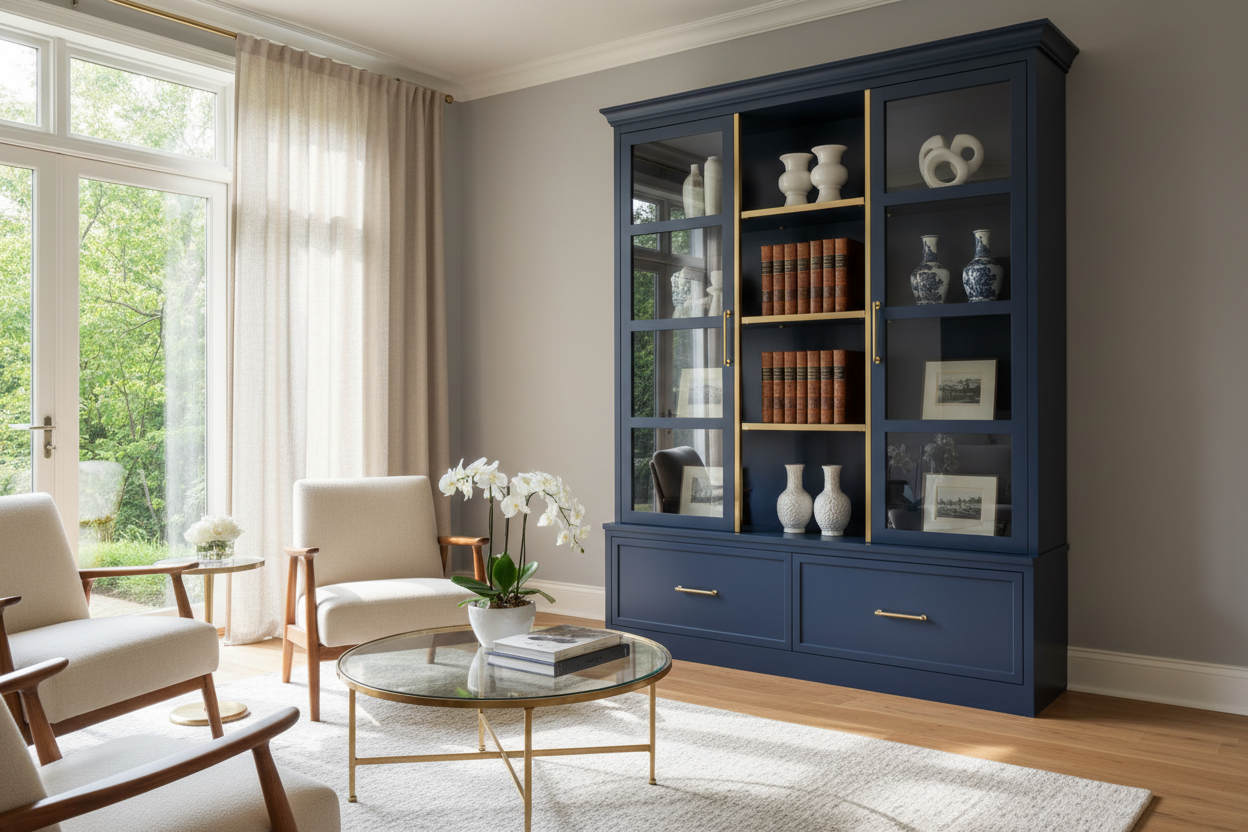
We have all seen it: a dining room or living space that feels functionally complete but visually flat. You have the sofa, the rug, and the coffee table, yet the room lacks a true focal point. Often, the instinct is to paint an accent wall or buy a massive piece of art. But in my fifteen years of designing residential interiors, I have found a more practical solution that solves both storage and aesthetic dilemmas.
Adding a blue display cabinet instantly grounds a room. It introduces architectural interest and color without overwhelming the space. Whether you are leaning toward a moody transitional aesthetic or a crisp coastal vibe, this piece works hard. In this guide, I will walk you through exactly how to select, size, and style these cabinets so they look like custom millwork rather than an afterthought.
Quick Decision Guide
- Watch the undertones: A navy blue display cabinet reads as a neutral in most rooms, while brighter cobalts demand the room be designed around them.
- Mind the swing clearance: Always leave a minimum of 36 inches of walkway space in front of the cabinet so glass doors can open fully without hitting other furniture.
- Lighting is non-negotiable: Dark cabinet interiors absorb light. Opt for units with built-in LED lighting or mirrored backs to keep your displayed items visible.
- Mix open and closed storage: Choose a silhouette with glass on top and solid wood doors on the bottom to hide everyday clutter while showcasing curated decor.
Space Planning and Visual Weight
Balancing the Room Layout
A tall, solid piece of furniture carries significant visual weight. If you place a large navy display cabinet right next to a heavy stone fireplace, that side of the room will feel visually tipped over. Instead, use the cabinet to balance the room. If your sofa and heavy lounge chairs sit on the left side of your open-concept living area, position the cabinet on the right wall to anchor the opposite side.
Pay attention to ceiling height as well. In a standard North American home with 8-foot ceilings, a cabinet that is 80 inches tall leaves just enough breathing room at the top. If you push a cabinet flush against a ceiling without proper crown molding, it looks cramped. Always leave at least 12 to 18 inches of negative space above the piece, or take it all the way up with custom trim.
Material Quality and Hardware Pairings
Choosing the Right Build
When you are buying casegoods, the material dictates the lifespan. Solid wood frames with high-quality MDF panels are actually ideal for painted pieces like a blue display cabinet. Solid wood expands and contracts with the seasonal humidity swings typical in North American homes, which can cause paint to crack at the joints. An MDF core for the doors and side panels ensures the painted finish remains smooth and durable over time.
Hardware as Jewelry
The hardware you choose completely dictates the cabinet style. Unlacquered brass against a dark blue finish is a classic pairing that brings warmth and a high-end, traditional feel. If you prefer a more contemporary look, matte black or knurled nickel hardware instantly modernizes the silhouette.
Styling the Shelves (The Curated Look)
The biggest mistake I see clients make is treating a display cabinet like a storage locker. It is not meant to hold every book you have ever read. The secret to a high-end look is negative space. Start by placing your largest items first—perhaps a large ceramic vase or a stack of oversized art books. Then, step back. Group items in odd numbers (threes and fives) and leave at least thirty percent of the shelf space completely empty so the eye has a place to rest.
Lessons from My Own Projects
A few years ago, I sourced a stunning, deep matte navy blue display cabinet for a client dining room in Chicago. On paper, it was exactly what the space needed. The exterior color perfectly tied into their adjacent living room rug. But I learned a hard lesson about dark interiors.
Once it was delivered and we started styling it with the client collection of ironstone pottery, the pieces completely disappeared. The dark blue interior swallowed all the natural light from the nearby window. We had to scramble to retrofit hardwired puck lights into the top of the cabinet and line the back panel with a subtle, light-reflecting grasscloth wallpaper. It looked incredible in the end, but the caveat remains: if you buy a dark cabinet, you absolutely must plan for interior lighting, or your beautiful display items will get lost in the shadows.
Frequently Asked Questions
Can I put a navy display cabinet in a small room?
Yes, but proportion is everything. In a smaller space, look for a cabinet with a narrower width (around 30 to 36 inches) and glass panels on the sides as well as the front. Glass sides allow light to pass through, reducing the visual bulk of the piece.
What colors pair best with a blue cabinet?
Navy and dark blues pair beautifully with warm tones like mustard yellow, terracotta, and rich cognac leather. If you want a calmer, more monochromatic look, stick to crisp whites, warm creams, and natural wood tones like white oak or walnut.
How do I clean and maintain the painted finish?
Avoid harsh chemical cleaners, which can degrade the paint over time. Dust regularly with a dry microfiber cloth. For smudges or fingerprints on the wood, use a barely damp cloth with a drop of mild dish soap, then immediately wipe it dry. Use standard glass cleaner for the doors, but spray it onto the cloth first, not directly onto the glass, to prevent drips from seeping into the wood frame.

Dejar un comentario
Este sitio está protegido por hCaptcha y se aplican la Política de privacidad de hCaptcha y los Términos del servicio.