










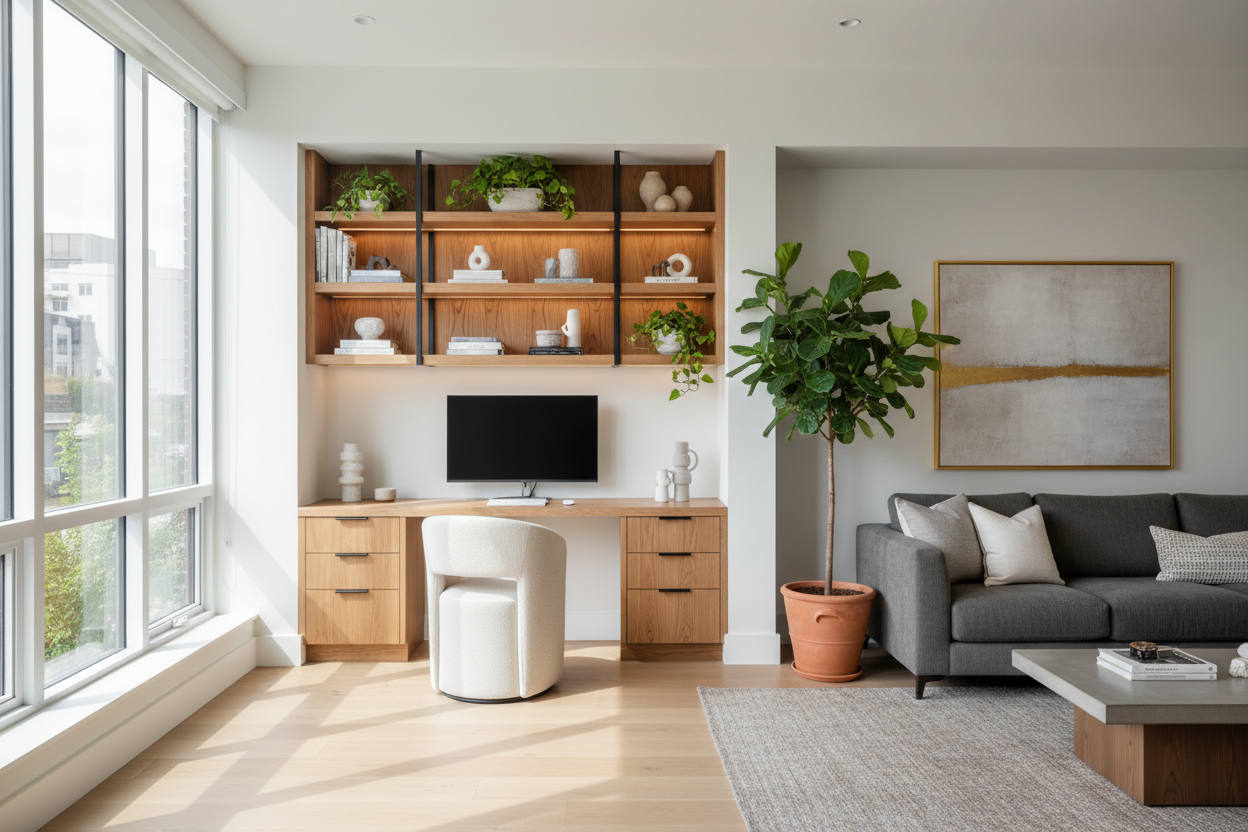
Most of us have experienced the slow creep of work materials into our living spaces. What starts as a laptop casually placed on the dining table eventually turns into a chaotic pile of monitors, cables, and paperwork that dominates the room. If you are tired of freestanding furniture that never quite fits your alcove or clashes with your baseboards, built in offices at home offer a permanent, tailored solution. They anchor a room and provide a level of visual quiet that standalone desks simply cannot match.
But committing to custom millwork is a significant investment. You cannot just rearrange it when you get bored. In this guide, we will break down the exact dimensions you need, which materials actually hold up to daily wear, and whether going custom makes sense for your specific floor plan.
Quick Decision Guide
- Standard desk depth should be a minimum of 24 inches to accommodate a monitor and keyboard comfortably, though 30 inches is ideal for multiple screens.
- Always plan for hardwired power and cable management channels inside the cabinetry before the millwork is installed.
- Painted MDF is excellent for shelving, but the primary work surface requires solid wood or high-pressure laminate to prevent scratching.
- A thoughtful built in home office design can add value to your property, provided it does not permanently eliminate a necessary bedroom closet.
Space Planning & Layout Constraints
Nailing the Dimensions
The biggest mistake homeowners make with built-ins is treating them like standard cabinetry. Kitchen counters sit at 36 inches high, but a standard desk needs to sit at 29 to 30 inches high to ensure proper ergonomics. You also need to account for knee clearance. I recommend leaving a minimum width of 30 inches of open space beneath the desk for your legs and chair. If you are using a high-end ergonomic chair with wide armrests, you may need to increase that clearance to 36 inches so you can tuck the chair away fully.
Navigating Small Footprints
In smaller North American homes or apartments, built-ins are often squeezed into awkward architectural moments—under stairs, in hallway niches, or inside converted closets (the 'cloffice'). When working with negative space, visual weight matters. Instead of heavy base cabinets that touch the floor, consider a floating desk design anchored securely to the wall studs. This exposes the floor beneath, tricking the eye into perceiving the room as more spacious than it actually is.
Material Selection & Build Quality
The Work Surface vs. The Shelving
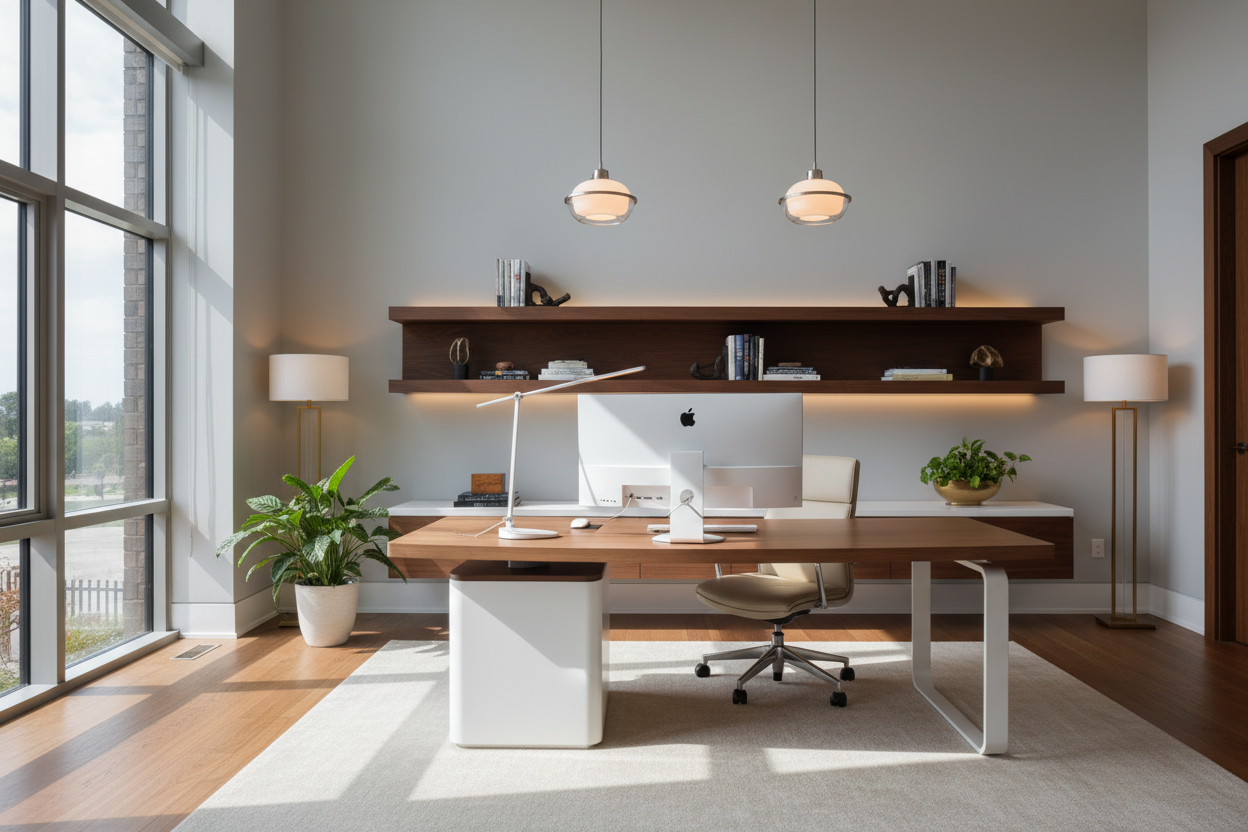
Not all parts of your built-in need to be made from the same material. Upper shelving handles relatively light duty—books, decorative objects, and maybe a small plant. For these, cabinet-grade plywood or MDF with a high-quality veneer works perfectly and saves money. However, the desktop itself takes a beating. From heavy monitors to pen pressure and sliding coffee mugs, you need a surface that fights back. Solid white oak, walnut, or even a remnant slab of quartz are vastly superior to a painted wood top.
Value, Cost, and Longevity
Does It Add Resale Value?
Built-in furniture is generally viewed as a premium upgrade by potential buyers, signaling a custom, high-end home. However, longevity depends entirely on how seamlessly the design integrates with the home's architecture. If the built-in matches the existing trim, crown molding, and baseboards, it feels like it has always been there. If you force an ultra-modern, high-gloss built-in into a traditional craftsman home, it will feel jarring and may be viewed as a teardown project by the next owner.
Designer's Honest Take
I have designed dozens of custom workspaces over the last 15 years, and I will be the first to admit that my early projects had functional flaws. A few years ago, I created a stunning, moody dark green built-in for a client's suburban den. I specified a painted wood desktop to match the cabinetry perfectly. It looked incredible in the portfolio photos.
However, within three months of the client sliding a keyboard, resting coffee mugs, and bumping their chair against the edge, the paint was heavily chipped. The matte finish also highlighted every single fingerprint and smudge. I learned the hard way that high-traffic work surfaces require serious durability. Now, I always specify a stained hardwood or a durable composite for the actual desktop, reserving the matching paint strictly for the upper shelving and base cabinets.
Frequently Asked Questions
How deep should a built-in desk be?
A built-in desk should be at least 24 inches deep. If you use dual monitors or prefer to have paperwork spread out in front of your keyboard, aim for 28 to 30 inches of depth to prevent eye strain and crowding.
Can I put a built-in office in a bedroom?
Yes, but be mindful of resale value. If you build a desk into a bedroom, do not remove or block the closet. In most North American real estate markets, a room must have a closet to legally be listed as a bedroom. Build the desk on an adjacent wall instead.
Are built-in home offices cheaper than buying furniture?
Generally, no. Custom millwork requires skilled carpentry, quality materials, and professional installation. While you can buy a freestanding desk for a few hundred dollars, a custom built-in will typically start around $2,000 and can easily exceed $5,000 depending on the size and finishes. You are paying for a permanent architectural upgrade, not just a piece of furniture.

Dejar un comentario
Este sitio está protegido por hCaptcha y se aplican la Política de privacidad de hCaptcha y los Términos del servicio.