










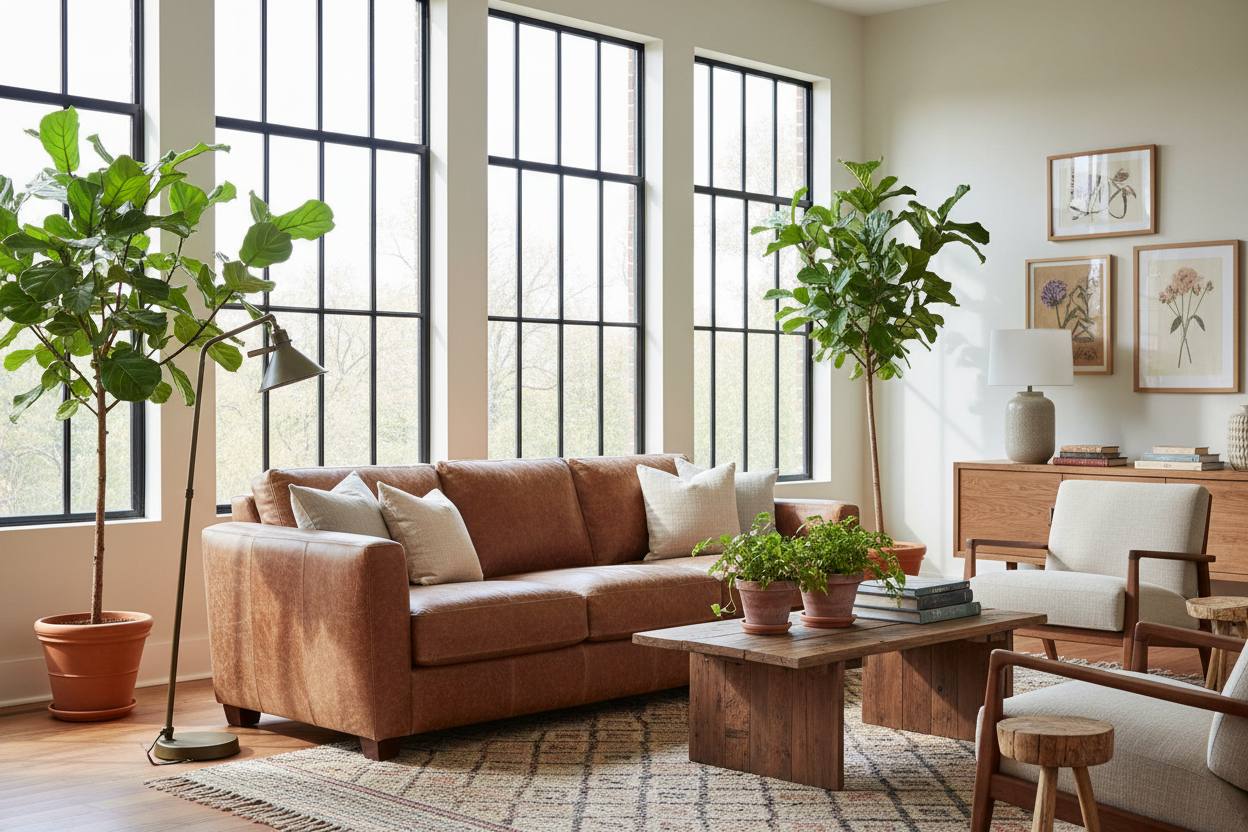
There is a distinct, tactile warmth to aged hide that factory-fresh furniture simply cannot replicate. It is the difference between a showroom vignette and a home with history. Whether you are hunting for a Mid-Century Modern gem or a broken-in Chesterfield, buying a brown leather couch used is a strategic design move. It adds instant patina and soul to a living room, acting as an anchor for your aesthetic—but only if you know what to look for beneath the surface.
Quick Decision Guide: What to Inspect
- Leather Grade: Distinguish between full-grain (desirable patina) and bonded leather (prone to peeling).
- Frame Integrity: Lift one front corner; the opposite leg should rise immediately. If it touches the floor, the frame is twisted.
- Suspension: Press down on the deck. You should feel firm resistance (springs), not a hollow sinking feeling.
- Cushion Density: Check for "pancaking" in high-traffic spots, which indicates blown-out foam.
- Aroma: Leather absorbs odors. Avoid pieces with heavy smoke or mildew smells, as these are nearly impossible to remove completely.
Assessing Material Quality and Patina
As a designer, I always tell clients that imperfections in leather are not necessarily defects; they are the narrative of the piece. However, you must discern between character and damage. When evaluating a 2nd hand brown leather sofa, look for scratches that sit on the surface versus cracks that penetrate the hide. Surface scuffs on aniline leather can often be buffed out or conditioned to enhance the vintage look, adding to that coveted "lived-in" charm.
Conversely, deep cracking or peeling indicates the leather has dried out beyond repair or, worse, that the piece is made of bonded leather (scraps glued together). Avoid bonded leather at all costs; it does not age—it disintegrates.
Space Planning and Visual Weight
Brown leather is visually heavy. It absorbs light rather than reflecting it. When integrating a used brown leather sofa into your floor plan, you must balance this "weight" with lighter elements. If you place a dark cocoa sofa on dark hardwood floors, the piece will disappear into a muddy abyss.
Creating Contrast
To make the sofa pop, anchor it with a rug in a lighter tone—think cream wool, jute, or a faded vintage Oushak. This creates a visual boundary between the floor and the furniture, allowing the silhouette of the couch to stand out.
Ergonomics and Structural Integrity
A sofa can look beautiful but sit terribly. In the second-hand market, suspension is the first thing to go. When testing a candidate, sit in the center and the corners. You are checking for the "hammock effect," where you roll toward the middle. This usually implies the sinuous springs have detached from the frame clips.
While foam can be replaced, repairing a broken frame or retying eight-way hand-tied springs is a costly restoration job that often exceeds the value of the purchase. Ensure the piece feels solid and the joinery doesn't creak when you shift your weight.
Lessons from My Own Projects
I once sourced a stunning 1970s cognac Italian sectional for a loft project in Chicago. Visually, it was a masterpiece. However, I made a rookie mistake: I didn't inspect the back of the sofa thoroughly because it was pushed against a warehouse wall during the viewing.
When we delivered it to the client's home, we intended to float it in the center of the room. That's when we saw it—the back panel was completely sun-bleached, three shades lighter than the front. The previous owner had kept it against a window for decades. We ended up having to drape a sheepskin over the back to hide the discoloration until we could get it professionally dyed. The lesson? Always walk 360 degrees around the piece and check for uneven fading, especially if you plan to float the furniture away from walls.
Conclusion
Sourcing pre-owned furniture is about patience and an eye for potential. A quality leather sofa is an investment in comfort that improves with age. By focusing on structural integrity and authentic materials, you can acquire a statement piece that brings sophistication and warmth to your home for a fraction of the retail price.
Frequently Asked Questions
How do I clean a used brown leather sofa safely?
Start with a vacuum using a soft brush attachment to remove dust from crevices. Use a pH-neutral leather cleaner specifically designed for the leather type (aniline vs. pigmented). Always test in an inconspicuous spot first. Follow up with a high-quality leather conditioner to restore moisture.
Is it worth reupholstering a vintage leather couch?
Generally, no, unless the frame is of exceptional quality (e.g., kiln-dried hardwood, famous designer brand). Good leather hides are expensive, and labor costs are high. It is often more cost-effective to find a piece where the leather is still in good condition.
How do I style a dark leather couch in a small room?
To prevent the room from feeling cramped, pair the sofa with glass or acrylic coffee tables to maintain sightlines. Use light-colored throw pillows and a textured throw blanket to break up the large expanse of dark leather.



Dejar un comentario
Este sitio está protegido por hCaptcha y se aplican la Política de privacidad de hCaptcha y los Términos del servicio.