










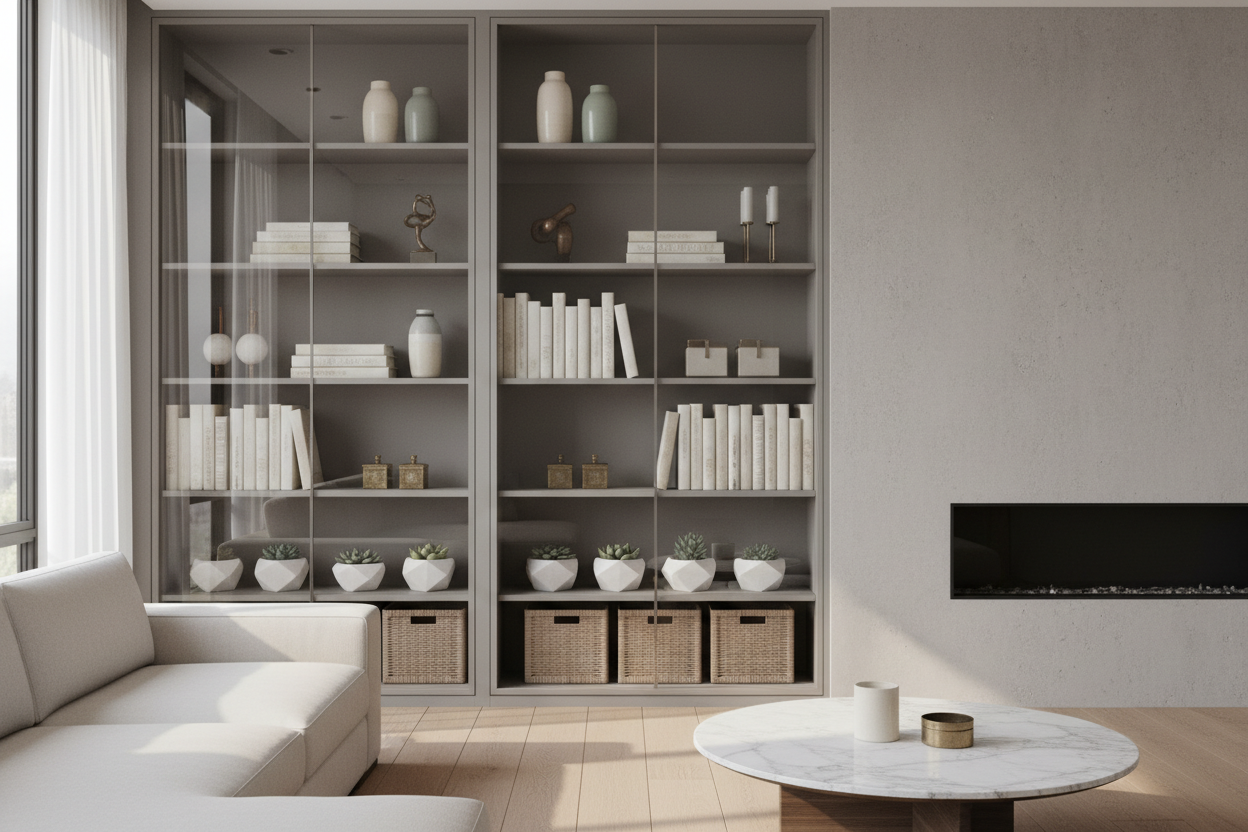
We have all seen it: a beautiful piece of furniture pushed against a wall, stuffed to the brim with a chaotic mix of paperbacks, framed photos, and random souvenirs. Instead of adding character to the space, a poorly styled cabinet display just makes the entire room feel heavy and disorganized. You bought the piece to show off your favorite items, but the result looks more like a thrift store shelf than a curated focal point.
Styling a living room display requires a deliberate balance of proportion, texture, and negative space. Whether you are dealing with built-ins, an antique curio, or a sleek metal unit, this guide will walk you through exactly how to arrange your items so they feel intentional, personal, and visually striking.
Quick Decision Guide
- Embrace negative space: Leave at least 30 percent of your shelf space completely empty so the eye has room to rest.
- Vary your heights: Mix tall vases with low, horizontal stacks of coffee table books to keep the visual rhythm active.
- Consider the backdrop: Paint or wallpaper the back panel of your cabinet to add depth and contrast to your objects.
- Lighting is non-negotiable: Even the best arrangement falls flat in the dark. Use puck lights or LED strips to highlight your pieces.
Selecting the Right Silhouette
Matching Visual Weight to Your Room
Before you even think about what goes inside, you have to consider the scale of the furniture itself. In a standard North American suburban family room with eight-foot ceilings, massive solid-wood living room display cabinets can quickly overpower the space. If your room is on the smaller side, look for a living room display case with glass sides or slim metal framing. These materials reduce the visual weight of the piece, allowing light to pass through and making the room feel more open.
Modern vs. Traditional Forms
Your architectural surroundings should inform your furniture choices. Modern display cabinets for living room environments often feature clean lines, matte black finishes, and minimal hardware, pairing perfectly with transitional or contemporary decor. If you live in an older home with heavy crown molding, a wood veneer or solid oak piece might bridge the gap between architectural history and modern living.
The Art of the Arrangement
Mastering the Zig-Zag Method
When styling display units for living room walls, the biggest mistake is grouping all heavy items on one shelf and small items on another. Instead, use the zig-zag method. If you place a visually heavy object—like a large ceramic bowl—on the left side of the top shelf, place the next heavy object on the right side of the shelf below it. This forces the eye to travel back and forth across the entire living room display unit.
Layering Textures and Materials
A successful arrangement relies on contrast. If you have a lot of glossy glass or polished metal objects, anchor them with organic textures. A rough terracotta pot, a woven rattan basket, or a stack of linen-bound books will warm up the arrangement. Avoid lining things up in a straight row. Push larger items toward the back and layer smaller, more detailed pieces slightly in front.
Value and Longevity
Where to Splurge and Where to Save
When budgeting for a living room display, put your money into the structural materials and hardware. Solid wood frames and tempered glass doors will withstand years of use without sagging or warping. You can absolutely save money on the decor items inside by sourcing vintage books, thrifted ceramics, and framing your own photography.
Designer's Honest Take
I will be completely honest: I used to push open-shelving concepts on almost all my clients because they look incredibly airy in photos. But after living with a massive, open-concept walnut unit in my own home, I learned a harsh lesson about dust. Within two weeks, my carefully curated ceramics were coated in a fine gray film.
I also learned that wire management for interior lighting is a nightmare if the piece does not come pre-drilled. I ended up having to route cables down the back legs with black zip-ties—a very unglamorous fix. If you hate dusting or have pets, invest in closed glass doors. It saves you hours of maintenance, and the glass reflects ambient room light beautifully.
Frequently Asked Questions
How do I light a dark cabinet?
If your unit does not have built-in lighting, rechargeable LED puck lights are the easiest retrofit. Stick them to the underside of each shelf. For a more diffused glow, run a warm-white LED strip down the interior front edges, hiding the tape behind the frame.
What size objects work best on shelves?
Scale is crucial. Avoid objects smaller than a grapefruit, as they tend to look like clutter from across the room. Group smaller items together on a decorative tray to give them more collective visual weight.
Is it okay to put a TV in a display unit?
Yes, but you need to balance the big black box. Flank the television with asymmetrical arrangements of books and art to soften its harsh rectangular shape. Make sure the surrounding shelves have enough breathing room so the wall does not feel chaotic.

Dejar un comentario
Este sitio está protegido por hCaptcha y se aplican la Política de privacidad de hCaptcha y los Términos del servicio.