










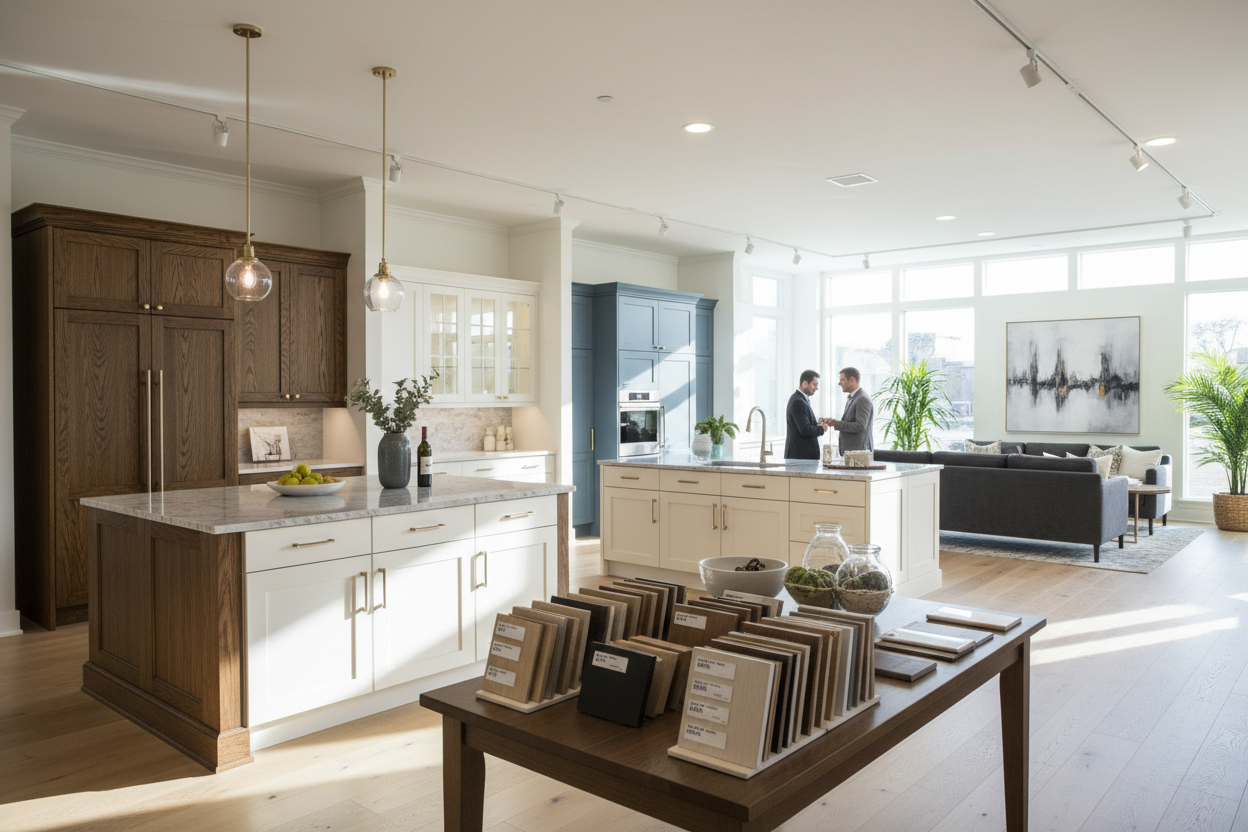
I remember walking into my first kitchen renovation project with a client who'd spent weeks scrolling online cabinet galleries. She had beautiful screenshots, but when we stood in her actual 10x12 kitchen with 8-foot ceilings, none of those images translated. The proportions were all wrong. That's when I realized the irreplaceable value of visiting cabinet stores in my area in person. It's not just about seeing doors and drawers—it's about experiencing scale, texture, and getting real-time answers from people who know cabinetry inside and out.
Quick Takeaways Before We Dive In
- Local stores let you test drawer glides (soft-close should be silent) and feel door finishes (painted vs. stained has different texture).
- Bring your kitchen's exact measurements, including ceiling height and window/door placements.
- Ask about lead times—quality custom cabinets often take 6-8 weeks, while stock options might be 2-4.
- Look beyond the display; ask to see sample boxes to check interior construction like dovetail joints.
Why Local Cabinet Stores Matter More Than You Think
When you're searching for 'kitchen cabinet stores in my area,' you're looking for more than a transaction. Online shopping gives you endless options, but it lacks the tactile experience. In a showroom, you can open and close a drawer 20 times to test the glide mechanism. You can see if a Shaker-style door's recessed panel is ½-inch or ¾-inch deep—that subtle difference changes the entire look. I've had clients fall in love with a maple finish online, only to visit a store and realize the grain pattern was too bold for their minimalist style. Local stores also provide immediate problem-solving. Last month, a client discovered her plumbing stack would interfere with a standard 24-inch deep base cabinet. The store designer sketched a 22-inch deep custom solution on the spot, something impossible through a website chat.
What to Look for in Kitchen Cabinet Stores Near You
Not all kitchen cabinet stores in my area are created equal. Here's what separates the worthwhile visits from the time-wasters. First, examine construction. Ask to see a cross-section or sample box. Quality cabinets use ¾-inch thick shelves (not ½-inch) and have adjustable hinges with at least 110-degree opening. Check the box interior—dovetail or dowel joints last longer than staples. Second, assess customization. Can they modify standard sizes? For tricky spaces, a good store should offer solutions like a corner kitchen pantry cabinet set that maximizes every inch. Third, inquire about installation. Do they have certified installers, or do they subcontract? Proper installation requires shimming boxes perfectly level—even a ⅛-inch tilt causes doors to swing open. Finally, evaluate design expertise. The best stores employ designers who ask about your cooking habits, not just your style preferences.
Questions to Ask at Kitchen Cabinets in My Area
Walking into a showroom can feel overwhelming with all the finishes and styles. Having specific questions turns you from a browser into an informed buyer. Start with materials: 'What's the core material—plywood, particleboard, or solid wood?' Plywood boxes resist moisture better in humid climates. For doors, ask about the finish process. Factory-applied catalyzed varnish is more durable than onsite staining. Next, warranties: 'Does the warranty cover both materials and labor? For how long?' Quality cabinets typically offer lifetime warranties on boxes and 5-10 years on finishes. Lead times are crucial: 'If I order today, when will delivery occur?' Remember, custom paint colors add 1-2 weeks. Installation questions matter too: 'Will installers handle disconnecting/reconnecting my sink and appliances?' Always verify they're insured. I once saved a client from a huge headache by asking this—the store used uninsured subcontractors.
Beyond Kitchen Cabinets: What Else Local Stores Offer
Great kitchen cabinets in my area stores understand your kitchen is part of a whole-home flow. Many offer complementary pieces that create cohesion. For example, a dining room might benefit from a matching buffet cabinet with storage using the same door style and finish. I recently designed a kitchen where we extended the cabinetry into the living room with built-in bookshelves—all sourced from one local store. They also provide design consultations that look at traffic patterns. A good designer will ensure there's 42-48 inches between island and cabinets for comfortable movement. Some stores even have kitchen islands collection displays showing different configurations (with vs. without seating). Don't overlook specialized storage like tray dividers, spice pull-outs, or trash/recycling centers—these details make daily life smoother.
Making the Most of Your Local Cabinet Store Visit
Preparation transforms a casual browse into a productive session. First, bring detailed measurements: overall room dimensions, ceiling height, window/door locations (include trim width), and appliance sizes. Note electrical outlets and plumbing lines—their placement affects cabinet configuration. Second, create an inspiration board with photos, paint swatches, and flooring samples. This helps the designer visualize your vision. Third, schedule a consultation rather than dropping in; you'll get undivided attention. During the visit, ask to see both display items and warehouse samples. Displays show styling, but samples reveal true color and grain. To visualize how displays might work in your space, check resources like this display cabinet styling guide. For custom needs, inquire about built-in china cabinet solutions—local stores often have craftsmen who can create seamless built-ins.
Personal Experience: When Local Stores Fall Short
In my 200+ projects, I've seen the full spectrum. One store had beautiful displays but used particleboard boxes with vinyl wrapping—fine for a rental, but not for a forever home. Another had excellent quality but terrible communication; my client's cabinets arrived two weeks late with no warning. The best stores balance quality, service, and transparency. I always recommend visiting at least three stores to compare. Don't be swayed by flashy showrooms alone—ask to speak with past clients if possible.
Frequently Asked Questions
How much should I budget for cabinets from a local store?
For semi-custom cabinets (modified standard sizes), expect $10,000-$25,000 for an average kitchen. Full custom starts around $30,000. This includes boxes, doors, drawers, and basic hardware. Installation adds 15-20%.
What's the difference between stock, semi-custom, and custom?
Stock cabinets come in set sizes (3-inch increments) with limited finish options. Semi-custom allows some size modifications and more finishes. Custom is built to your exact specifications—ideal for odd angles or specific storage needs.
How do I know if the quality is good?
Check the drawer glides—full-extension with soft-close are standard in quality cabinets. Look for ½-inch thick door/drawer fronts (not ⅜-inch). Ask about the box construction—plywood with hardwood face frames is durable.
Should I buy cabinets and hire separate installers?
I recommend using the store's installers if they're certified. They know the product intricacies. If you hire separately, ensure they have cabinet-specific experience—general contractors often lack the specialized tools and knowledge.


Dejar un comentario
Este sitio está protegido por hCaptcha y se aplican la Política de privacidad de hCaptcha y los Términos del servicio.