










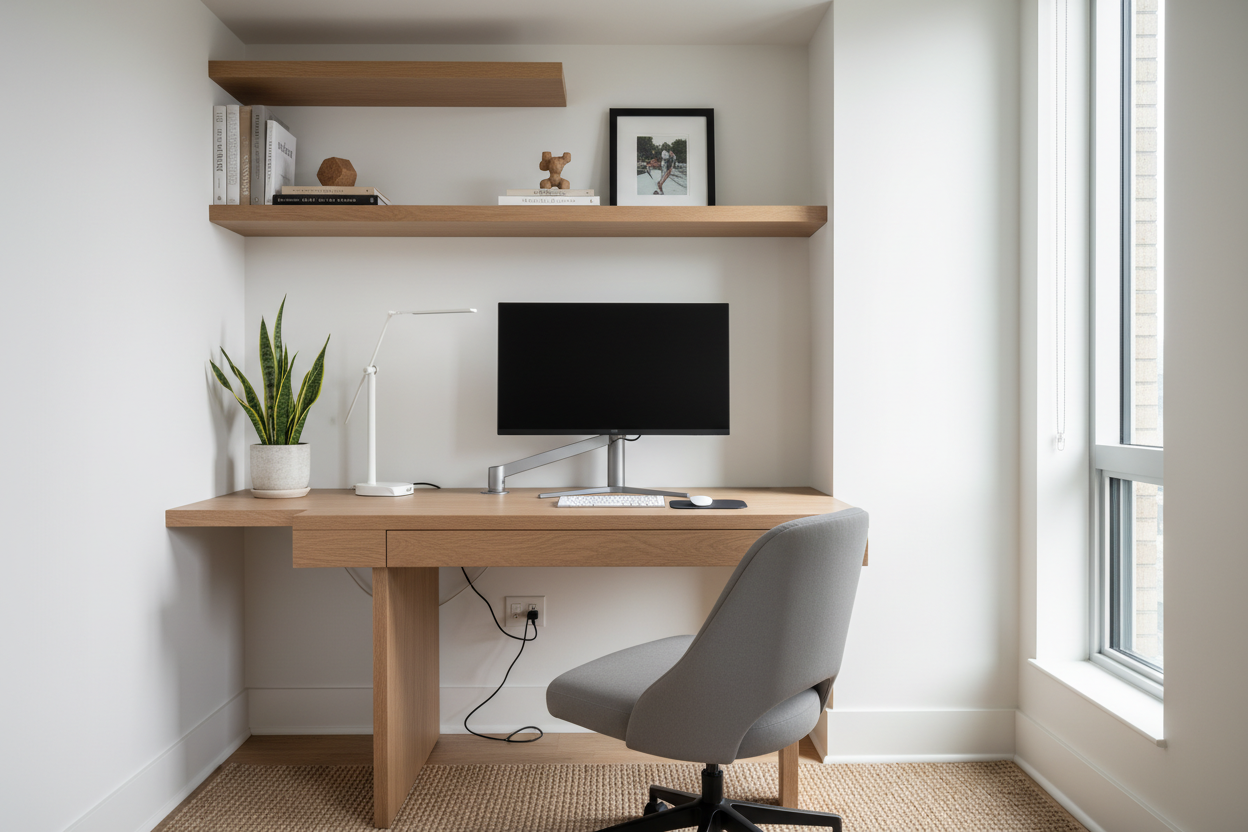
In interior design, the challenge isn't just fitting furniture into a room; it is about respecting the negative space around it. When dealing with limited square footage, a bulky workstation can instantly make a room feel claustrophobic. The solution lies in a curated small desk set that balances functional density with visual lightness. Whether you are carving out a workspace in a studio apartment or repurposing a hallway niche, the goal is to select pieces that offer architectural interest without overwhelming the floor plan.
Quick Decision Guide: Key Features to Look For
- Visual Weight: Opt for legs with a slender silhouette or glass tops to keep the room feeling open.
- Material Integrity: Solid wood or high-grade veneer ensures longevity; avoid hollow-core composites if you plan to clamp monitor arms.
- Ergonomics: Ensure the chair armrests slide fully under the desk surface to save space when not in use.
- Integrated Storage: Look for shallow drawers or vertical hutches to minimize desktop clutter.
Curating Materials for Longevity and Style
When I walk clients through a showroom, I ask them to touch the underside of the desk. In a compact setup, you interact with the furniture more intimately than in a large office. The finish matters. For a warm, organic feel, walnut or white oak sets act as a focal point, bringing texture to neutral walls. However, if your goal is for the furniture to 'disappear,' a small desk computer setup featuring acrylic or tempered glass is superior. These materials reflect light rather than absorbing it, maintaining the ambient brightness of the room.
Ergonomics in a Compact Footprint
A common misconception is that a smaller desk means sacrificing comfort. This is false. The key is verticality. For a small pc desk setup, you need to ensure the depth is sufficient (at least 20 to 24 inches) to keep the monitor at an arm's length. If the desk is shallow, wall-mounting your screen is non-negotiable to protect your eyesight.
The Chair-Desk Relationship
The chair is half the equation. In a set, the chair must complement the desk's scale. A high-back executive chair often looks ridiculous paired with a writing bureau. Instead, look for mid-century modern task chairs or low-profile designs that provide lumbar support without the visual bulk. The upholstery should offer a tactile contrast to the desk material—think velvet against brass or leather against timber.
Strategic Layouts and Lighting
Placement dictates function. Avoid pushing the desk flush against a wall if you can float it perpendicular to a window; this controls glare on your screen and anchors the space. Lighting is also critical. A massive floor lamp will crowd a small desk set. Instead, utilize articulate sconces or slender task lamps that clamp to the edge, preserving precious surface area for your notebook and coffee.
Lessons from My Own Projects: The "Clamp" Incident
I learned a hard lesson early in my career regarding material quality in small sets. I specified a sleek, budget-friendly desk for a client's alcove. It looked fantastic—minimalist white with a matte finish. However, the client decided to install a heavy-duty dual monitor arm for their computer setup.
Within two weeks, they called me in a panic. The desk surface was bowing and cracking. It turned out the desk was a honeycomb hollow core (essentially cardboard inside), and the pressure from the C-clamp had crushed the internal structure. Since then, I always advise clients: if you plan to mount hardware, you must invest in solid wood, ply, or high-density MDF. It’s a detail you don't see in the catalog photos, but it defines the lifespan of your furniture.
Conclusion
Designing a workspace in a limited area requires intentionality. It is not about buying the smallest furniture available, but about finding pieces with the right proportions and finishes. A well-chosen desk set transforms a cramped corner into a sanctuary of productivity and style.
Frequently Asked Questions
What is the minimum depth for a functional small desk?
For laptop use, 18 inches is acceptable. However, if you are using an external monitor and keyboard, aim for a minimum of 24 inches deep to maintain proper focal distance and wrist support.
How do I hide cables in a small desk set with open legs?
Open silhouettes are beautiful but unforgiving with wires. Use clear zip ties to run cables down the back of a desk leg, or invest in a desk with a built-in modesty panel or cable tray mounted underneath the top.
Can I mix and match a desk and chair instead of buying a set?
Absolutely, and as a designer, I often prefer it. Buying a set ensures the wood stains match perfectly, but mixing materials—like a metal desk with a fabric chair—creates a more curated, custom look.

Dejar un comentario
Este sitio está protegido por hCaptcha y se aplican la Política de privacidad de hCaptcha y los Términos del servicio.